
How To Avoid A Roofing Scam After A Hailstorm
In This Guide
Quick Answer
Post-hail scams in Colorado follow scripts: the covered deductible (illegal under SB38), the guaranteed claim, the sign-today contract, the out-of-state crew that vanishes. The defences are equally scripted: paper before signatures, counts before scopes, and never paying a deductible to anyone but your insurer's process. This guide names the pitches, the law behind the biggest one, and the checks that take two minutes each.
The Deductible Pitch — Illegal, And The Brightest Red Flag
The pitch wears many costumes: 'we'll cover your deductible', 'we'll eat it', 'we'll credit it against the job', a rebate, a 'sign allowance'. Colorado law SB38 names them all: a roofing contractor may not pay, waive, absorb or rebate any part of a homeowner's insurance deductible, and the contract must state that the homeowner is responsible for it. A company opening with this offer is announcing — in their first minute with you — that their business model includes breaking the law with your claim as the instrument.
The risk is not theoretical. Insurers who identify deductible absorption can deny the claim or pursue the difference, and the homeowner signed the paperwork. The pitch also selects its victims: it works best in the first shocked 48 hours, on the doorstep, with a contract already out. Your defence costs one sentence: 'Show me where the contract states my deductible responsibility, as SB38 requires.' Legitimate roofers will point at the paragraph. Scammers will change the subject.
Guaranteed Claims And Other Impossibilities
No contractor can guarantee an insurer's decision — adjusters decide scopes, and they answer to the policy, not to your roofer. A company guaranteeing approval, a full roof, or a cheque amount is selling certainty it does not own. Closely related: the inflated-scope promise — 'we'll get items added' — which in practice means supplements for damage that does not exist, a fraud the homeowner's name sits on. Honest pros talk in evidence: counts, photographs, and the supplement process for genuine gaps.
The 'free roof' framing belongs to the same family. A claim-funded replacement still costs the deductible, any ACV gap, and your time; calling it free is the tell that the pitch is aimed at your signature rather than your roof. In Colorado the truthful sentence is less exciting: hail damage is usually covered, minus your deductible, if the evidence is documented. Companies that say exactly that are describing the actual system.
The Sign-Today Contract
Pressure is a method, not a mood. The contract produced before the inspection report, the discount that expires tonight, the crew 'in your street this week only', the assignment-of-benefits form that hands your claim to the contractor — each is designed to convert the storm's adrenaline into a signature before the evidence exists. Hail claims run on windows measured in months. Nothing true about your roof expires tonight except a scammer's patience.
Colorado gives you structural protection: roofing contracts carry required terms, deductible language and cancellation rights in the conditions SB38 and consumer law set out. Use them. Take every document home unsigned, read it at the kitchen table, compare it with the inspection report, and sign — if you sign — on a day when nobody is standing on your doorstep watching you do it.
Not Sure What Your Gutters Need?
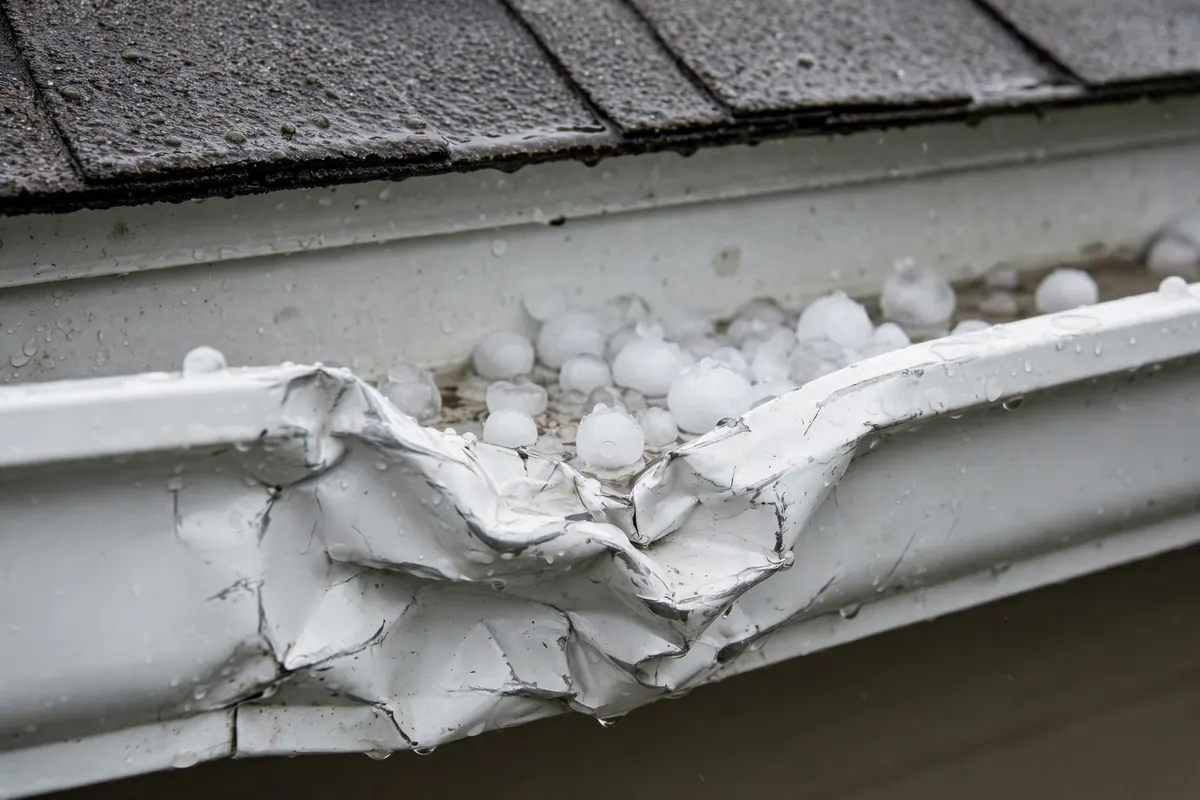
One free call connects you with a local pro who can look at the whole roof edge — gutters, flashing and shingles — and tell you honestly what is worth fixing.
📞 Call (800) 555-0100Free Call · Answered 24/7 · Local Pros Near You
Storm Chasers And The Vanishing Warranty
After every major Colorado hail event, out-of-state crews follow the storm track: rented yards, magnetic signs, local-looking numbers routed elsewhere. Some do competent work; the structural problem is the warranty — a workmanship promise from a company that will be three states away when the leak appears, effectively unenforceable. Local presence is not a guarantee of quality, but it is a precondition of accountability: a company with a yard, a history and a name in the county can be found in year three.
Checks take minutes: the company's physical address, its time in business, whether the contract names the same entity that knocked, whether permits will be pulled in the county under that name. A legitimate local pro answers these without heat. The chaser's whole model depends on you not asking, because their season is measured in weeks and your roof's consequences are measured in decades.
Payment Traps: Deposits, Cash And Front-Loading
Money should follow work, in stages the contract names: materials delivered, work completed, final payment against the finished, documented job and the released holdback. The traps invert that: large cash deposits before materials exist, cheques made to individuals rather than the contracting company, 'final' payments demanded before the walkthrough. Insurance cheques add a wrinkle — mortgage companies are often co-payees on larger claims, a normal process your contractor should explain, not 'work around'.
Never hand over the insurer's cheque endorsed in blank, and never let anyone hold your entire claim proceeds against a promise. The legitimate flow leaves you holding leverage at every stage: evidence before signature, materials before major payment, completion before final payment. A contractor who structures it that way unprompted has told you most of what you need to know.
The Two-Minute Checks That Settle It
Run these on any company, including us: Will the inspection produce counts and photographs you keep? Does the contract state your deductible responsibility in SB38's terms? Is the company local, named consistently, and pulling permits? Are claim outcomes described as evidence-based, never guaranteed? Is any signature being requested before the report exists? Five questions, two minutes, and the scams in this guide have nowhere left to stand.
And keep perspective: most Colorado roofers are legitimate tradespeople working a hard, seasonal trade, and the claim system — for all its paperwork — exists to make storm damage whole. The scams skim the system's edges in the first chaotic days. Slow down by exactly one day, demand paper, and the system works the way it was built to: your roof, documented, repaired, and paid for minus a deductible you paid yourself, in the open.
The insurance adjuster who climbs your roof works from the same test squares and photos, which is why meeting them with documentation ready matters. Every policy sets a filing window — often a year or two from the storm date — and hail found after it closes is usually the owner's bill. The scope of loss is the insurer's line-by-line statement of what they agree is damaged — the document every repair quote is measured against.
Hail Damage Roof Help In Your City
Every topic in this guide lands on a real roof somewhere — city pages with their own hail records, housing data and local pros:
Avoiding Roofing Scams — Questions Homeowners Ask
The pitches, the law and the two-minute checks.
Still Have Questions? Call Free
A real person answers 24/7 and connects you with a local pro who can check your roof.
📞 (800) 555-0100Reviewed By Hamza
Lead Roofing & Storm Restoration Specialist
Hamza is an exterior restoration specialist with deep expertise in hail damage assessment, storm-related leak diagnostics, and impact-resistant roofing installations across high-altitude and severe-weather climates. He works directly with homeowners to identify hidden structural bruising and ensure long-lasting, code-compliant roof repairs.
Updated October 26, 2026
Guides From The Blog
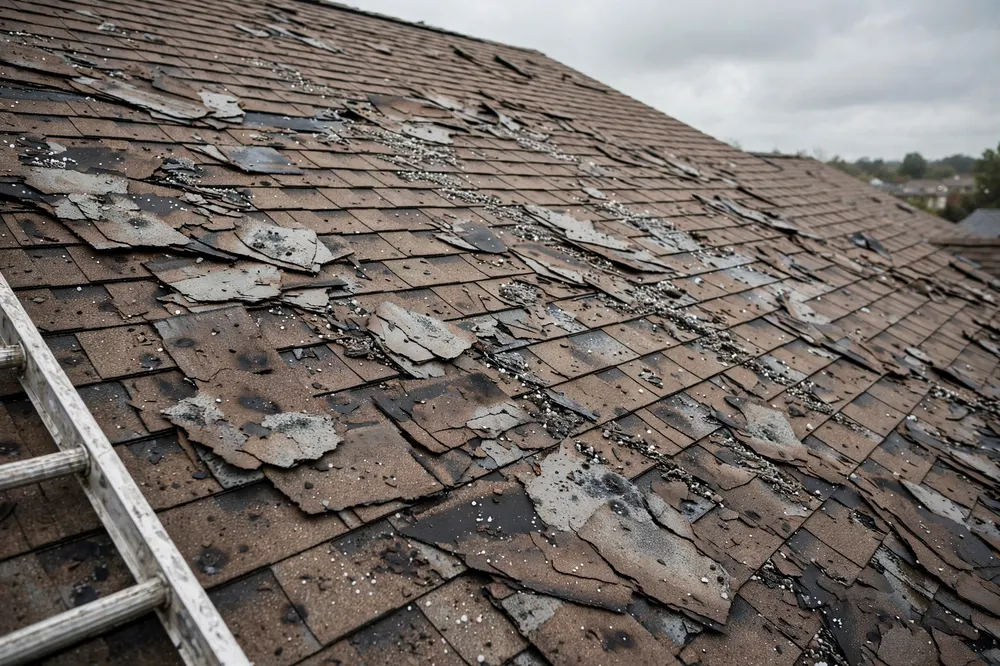
The scam's mirror image: what a legitimate free inspection actually looks like.
Want The Boring, Honest Version?
One free call, a local pro, an inspection that ends with photographs in your hands and no signature requested. That is the whole pitch.
📞 Call (800) 555-0100Free Call · Answered 24/7 · Local Pros Near You