
What Happens During A Hail Damage Roof Inspection?
In This Guide
Quick Answer
A hail damage roof inspection is a measurement exercise: test squares chalked and counted on every slope, soft metals read for the storm's size, the attic checked for leaks, and everything photographed and dated against the NOAA storm record. Its written report is what a claim stands on. This guide walks through the inspection step by step, so you know what a thorough one looks like — and what a shortcut looks like too.
Before The Ladder: The Ground Survey
A thorough inspection starts at ground level, reading the storm's signature where it is easiest to see. Gutters and downspouts for dents and granule load; vents, caps and the AC unit for impact marks; siding on the facing walls; debris in the yard; screens and soft metals anywhere they exist. This survey sizes the storm before the roof is touched — and sometimes dates it, by comparing the freshness of marks across materials.
Inside, the ceilings and the attic hatch come next: stains old and new, damp insulation, daylight through the deck. Only then does the ladder come out, with the inspector already knowing which slopes faced the storm and what sizes of stone to expect up there. Homeowners can watch for this order of work; inspectors who start on the roof start with the hardest evidence and skip the easiest.
Test Squares: The Count That Decides
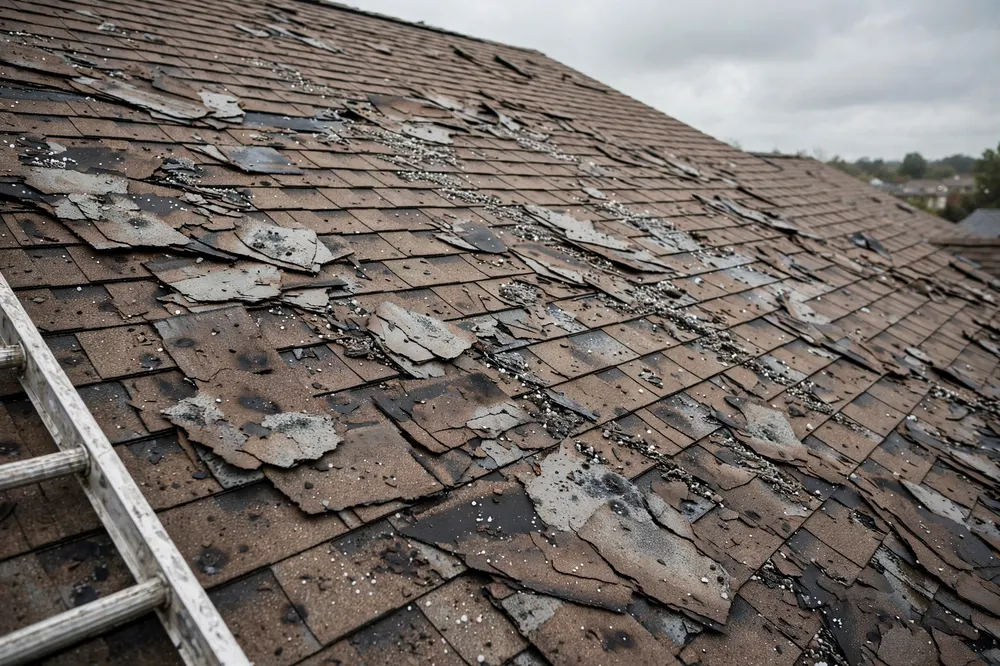
On each slope, the inspector chalks a 10-by-10-foot square — 100 square feet, the roofer's unit — and examines every shingle inside it. Hail hits are marked with chalk: the round fractures, the bruised mats found by hand pressure, the splits at tab edges. The count per square, per slope, is the inspection's central product. It is the number insurers use in their own guidelines, the number the adjuster will reproduce, and the number that separates repair slopes from replacement slopes.
Circles are also drawn outside the squares wherever notable damage sits, but the squares do the deciding because they are a fair sample: randomly placed on the slope's field, not chosen where damage clusters. Ask where the squares were placed and see the photographs. A count without squares is an opinion, and opinions are what claims founder on.
Reading Soft Metals And Flashing
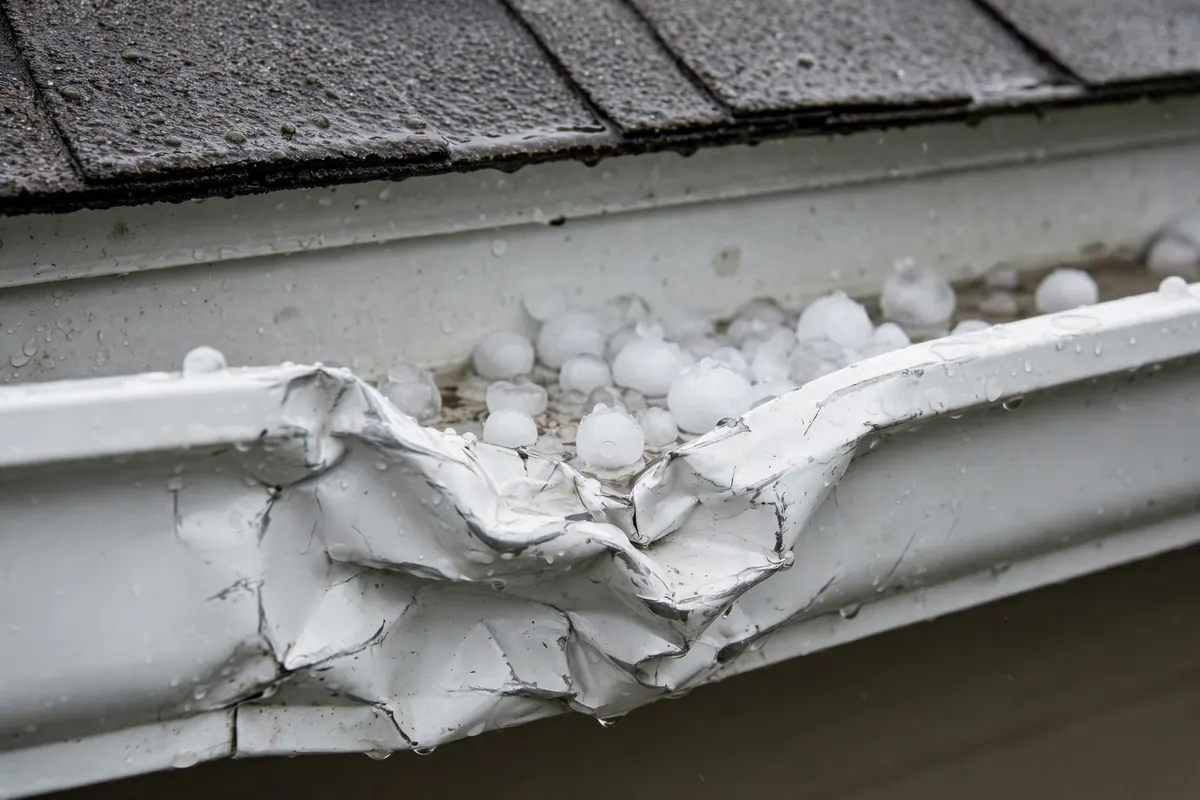
Metal tells the storm's story in a plainer hand than shingles. Vent caps, flashing, drip edge, valley metal and gutters dent in proportion to the stones that struck them, and they do not heal, blister or confuse the record with age the way shingles can. Inspectors photograph the metals slope by slope because adjusters read them as corroboration: if the metals on the north face are peppered and the test squares there are full, the storm's account balances.
The metals are also checked as components in their own right — creased flashing, split vent bases, crushed gutter runs all enter the scope as line items. The inspection that reports only shingles has missed half the claim and most of the leaks.
Not Sure What Your Gutters Need?
One free call connects you with a local pro who can look at the whole roof edge — gutters, flashing and shingles — and tell you honestly what is worth fixing.
📞 Call (800) 555-0100Free Call · Answered 24/7 · Local Pros Near You
Bruising, Granules And The Hand Test
The decisive hail injury to a shingle is often invisible: the mat fractured under an intact surface. Inspectors find it by hand, pressing across suspect spots for the soft, spongy give of broken fiberglass — bruising — against the firm feel of sound shingle and the hard bump of a superficial mark. Granule loss is read the same way, in handfuls and in the gutters: fresh, heavy loss means the surface has been knocked years into its future in an afternoon.
This is why drone photographs and ground surveys, useful as they are, do not replace the roof-level visit for claim purposes. A drone can show the pattern of marks; only the hand can certify the mat. Ask any inspector how they check for bruising — the answer should involve getting on the roof and touching it.
The Report: What You Should Walk Away With
The inspection's deliverable is a file: dated photographs of every slope, the squares and the marks inside them; the metals; the attic findings; the counts tabulated by slope; and a written conclusion separating storm damage from wear, naming a storm date consistent with the NOAA record for your county. Plus, where work is needed, an itemised scope. You keep the file regardless of who does the work — it is the claim's foundation and the roof's medical record in one.
Keep it with the house papers. The next inspector, adjuster, buyer or roofer starts from it. A company that will not leave the file is telling you the file serves them, not you — which inverts the whole arrangement and is the surest shortcut-detector in the process.
Inspection Versus Adjuster Visit
The inspector and the adjuster do the same climb with different employers. The inspector builds your file; the adjuster verifies it against your policy. Their methods rhyme — the adjuster also chalks squares and reads metals — which is precisely why a proper inspection predicts the claim's outcome so well. The best arrangement is both on the roof together, walking the same squares; differences get settled on the spot, in chalk, instead of by letter over months.
If the two counts disagree materially, the supplement process exists, armed with the inspection's photographs. But in practice, a thorough inspection converts the adjuster meeting from an argument into an audit — and audits are how claims get paid in full.
A drone inspection covers steep or fragile slopes without foot traffic, and its images pair with the chalked test squares from the ladder work. The insurance adjuster who climbs your roof works from the same test squares and photos, which is why meeting them with documentation ready matters.
Hail Damage Roof Help In Your City
Every topic in this guide lands on a real roof somewhere — city pages with their own hail records, housing data and local pros:
Hail Damage Roof Inspection — Questions Homeowners Ask
Inside the inspection: the method, the report and the adjuster's visit.
Still Have Questions? Call Free
A real person answers 24/7 and connects you with a local pro who can check your roof.
📞 (800) 555-0100Reviewed By Hamza
Lead Roofing & Storm Restoration Specialist
Hamza is an exterior restoration specialist with deep expertise in hail damage assessment, storm-related leak diagnostics, and impact-resistant roofing installations across high-altitude and severe-weather climates. He works directly with homeowners to identify hidden structural bruising and ensure long-lasting, code-compliant roof repairs.
Updated October 26, 2026
Guides From The Blog
The inspection's two sequels: the claim meeting, and the repair-or-replace decision.
Book The Real Thing
One free call books an inspection with test squares counted on every slope and the report left in your hands — free, and without obligation.
📞 Call (800) 555-0100Free Call · Answered 24/7 · Local Pros Near You