
Repair Or Replace After Hail? The Honest Decision Checklist
In This Guide
Quick Answer
The repair-or-replace decision after hail is made by counts and age, not opinions: functional hits per test square on each slope, how far the damage spreads, and how much service life the roof had left before the storm. Localised damage on a young roof repairs; widespread damage, heavy granule loss or an old roof replaces. This guide sets out the decision the way pros and adjusters actually make it.
The Count Decides First
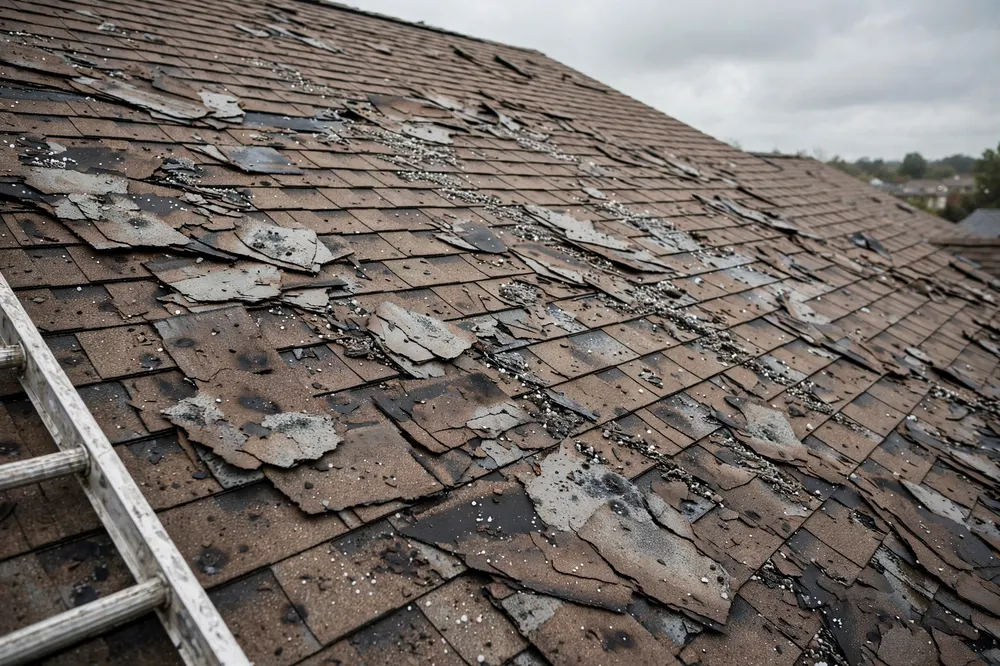
Start where adjusters start: hits per test square, slope by slope. A slope with a handful of functional hits in a sound field is a repair candidate. A slope whose squares fill with chalk on every face is not — patching it means weaving dozens of shingles into a mat that is itself compromised, and the patches inherit the slope's remaining life, which the count just told you is short. Insurer guidelines formalise thresholds; pros use the same numbers because they have to defend the same scope.
Granule loss votes alongside the hits. A slope can pass its hit count and still fail on surface: granules stripped across the field mean the asphalt is now ageing in direct sun, and the slope's remaining years shrink whether or not individual shingles cracked. The count that matters is of functional damage, honestly defined — and granule loss at scale is functional.
The Age Decides Second
The same damage means different things at different ages. On a five-year-old architectural roof, a repaired slope returns nearly its full expected life — repair is buying back a young asset. On a seventeen-year-old roof, the storm has damaged a covering already inside its final years: replacement restores decades, repair restores seasons. The claim's value moves with the same logic; an insurer replacing a young roof and one replacing an old roof are settling different losses, and ACV policies price that difference directly.
Age also governs repairability itself. Old shingles turn brittle: lifting courses to weave in repairs breaks neighbours faster than they can be replaced, and the repair consumes the slope it touches. A pro who attempts a delicate repair on a brittle roof and stops to show you the breakage is giving you the age verdict in physical form.
The Middle Cases: Slope By Slope
Most Colorado storms produce neither a patch nor a whole roof, but a map: the facing slopes totaled, the sheltered slopes clean, one slope in between. The honest scope follows the map — replace the failed slopes, repair the marginal one if its counts and age allow, leave the clean slopes alone. Slope-by-slope replacement is a normal claim outcome, and the ridge lines where new meets old are detailed properly so the map does not show as a patchwork of leaks.
Matching enters here legitimately. A replaced slope sits beside weathered slopes, and colour difference is expected and usually acceptable at slope scale — the industry unit. Where the marginal slope's repair would leave the street elevation a chequerboard, the matching argument can pull it into the replacement scope. Evidence first, aesthetics second, both in writing: that is the order that survives adjuster review.
Not Sure What Your Gutters Need?
One free call connects you with a local pro who can look at the whole roof edge — gutters, flashing and shingles — and tell you honestly what is worth fixing.
📞 Call (800) 555-0100Free Call · Answered 24/7 · Local Pros Near You
The Money View: Claim Value And Timing
Inside a claim, the owner compares deductibles, not job prices — which changes the decision's shape. If the claim is open anyway, the marginal cost of full replacement over slope repair may be small, while the value difference (a whole new roof, a released depreciation holdback on an RCV policy, a reset clock) is large. Against that, filing behaviour has its own costs to weigh. The pro's job is to show both scopes' arithmetic; the owner's job is to decide with the policy, not the sales pitch, open on the table.
Timing is the silent term. The filing window runs from the storm date; a decision to 'repair now, replace later' can strand the replacement outside the claim entirely. If replacement is even plausibly the destination, decide inside the window, with the counts fresh. Storm files do not improve with age.
Who Should Make The Call
Formally: the insurer approves scope, the owner chooses the contractor and accepts the work. Informally, the decision is made by whoever holds the best evidence in the first fortnight — which is why the inspection matters more than the argument. Get your counts, in photographs, from an inspector who will show you the squares. Then let any second voice — another pro, the adjuster — work from the same numbers.
And be suspicious of the decision that arrives pre-made. 'Totaled' declared from the driveway, 'repairable' declared by an insurer who has not climbed — both are positions, not findings. The roof itself, counted properly, makes this decision with very little ambiguity in most cases. Your task is to get it counted.
After The Decision: Doing It Once
Whichever way the decision falls, do it completely. A repair done to full scope — boots, flashing and sections included — closes the storm's account. A replacement done to full scope — deck, membrane, metals, ventilation — resets the roof's life and its file. Half-measures in either direction are how homeowners meet the same storm twice: once in the weather, once in the paperwork.
Then the file closes and the rhythm resumes: annual inspection, post-storm checks, the roof back to being uninteresting. In Hail Alley, that is the prize — not the new roof, but the years of not thinking about it.
Bruising is the soft, spongy spot a thumb finds where a stone crushed the mat without breaking the surface — the most argued-over mark in any hail claim. Roof age decides how much hail a shingle can take — the same stone that scuffs a five-year-old roof can crack a fifteen-year-old one open. The insurance adjuster who climbs your roof works from the same test squares and photos, which is why meeting them with documentation ready matters. A pipe boot's rubber seal cracks with age and UV, hail speeds the cracking, and a split boot is a classic slow leak that stains ceilings months later.
Hail Damage Roof Help In Your City
Every topic in this guide lands on a real roof somewhere — city pages with their own hail records, housing data and local pros:
Repair Or Replace A Roof — Questions Homeowners Ask
The decision, broken into the questions that actually decide it.
Still Have Questions? Call Free
A real person answers 24/7 and connects you with a local pro who can check your roof.
📞 (800) 555-0100Reviewed By Hamza
Lead Roofing & Storm Restoration Specialist
Hamza is an exterior restoration specialist with deep expertise in hail damage assessment, storm-related leak diagnostics, and impact-resistant roofing installations across high-altitude and severe-weather climates. He works directly with homeowners to identify hidden structural bruising and ensure long-lasting, code-compliant roof repairs.
Updated October 26, 2026
Guides From The Blog
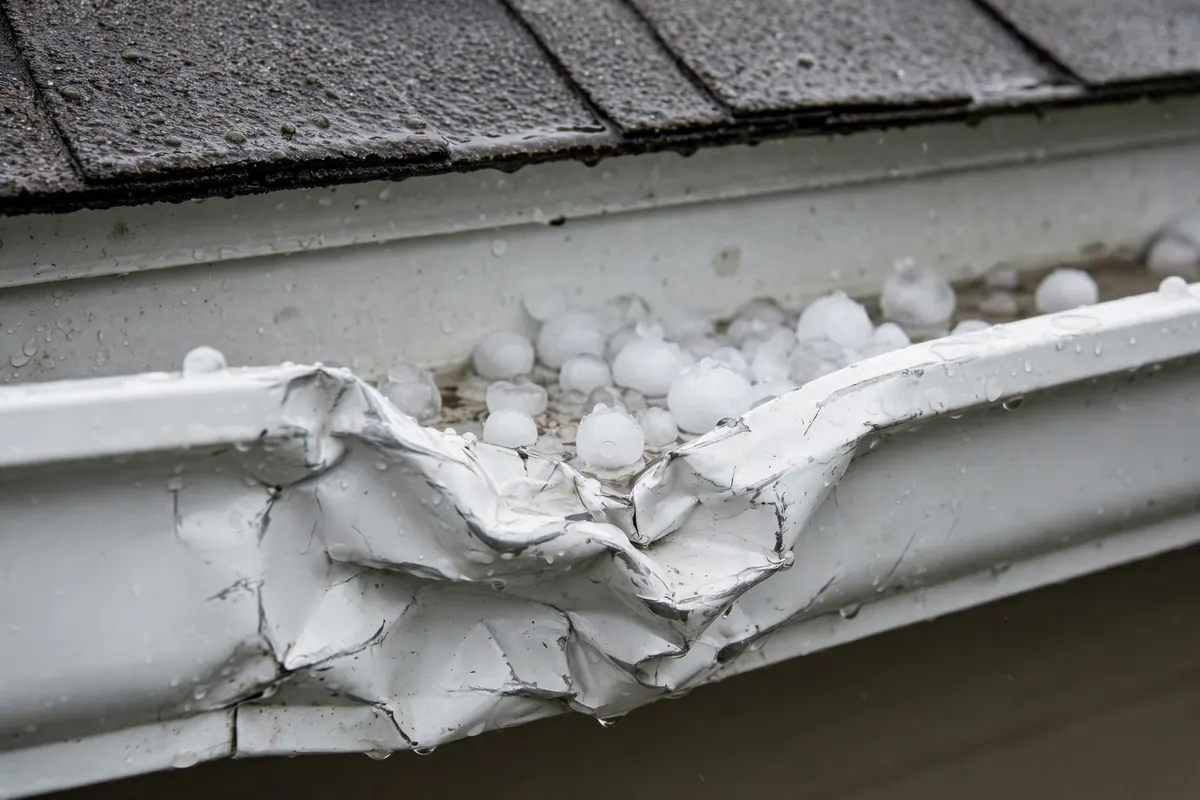
Two inputs to the decision: the count itself, and the hits-per-slope threshold insurers use.
Get The Count Before The Decision
One free call books the inspection whose counts make this decision for you — repair or replace, evidenced either way.
📞 Call (800) 555-0100Free Call · Answered 24/7 · Local Pros Near You