
Flashing Damage After Hail: Signs, Leaks And Repairs
In This Guide
Quick Answer
Flashing — the metal sealing your roof's joints at chimneys, walls, valleys and vents — dents, creases and lifts under hail, and flashing failures start a disproportionate share of post-storm leaks. Flashing is rarely repaired by bending it back; damaged sections are replaced and re-integrated with the shingles around them. This guide explains where flashing lives, how hail hurts it, and what a proper flashing repair involves.
Where Flashing Lives On Your Roof
Everywhere the roof changes direction or something passes through it, flashing does the waterproofing the shingles cannot. Step flashing climbs the joint where a slope meets a wall, one piece per shingle course. Counter flashing caps it from the wall side. Chimneys get a full kit — apron, step, counter and a cricket behind wide stacks. Valleys carry valley metal, vents and pipes get boot flashing, and every eave ends in drip edge. It is the most metal on your roof and the least visible from the ground.
The system works by laps: each piece sheds water onto the one below, in the direction of flow. That is why flashing cannot be assessed piece by piece — a sound piece under a creased one still leaks — and why repairs are done in sections that preserve the lap order.
How Hail Damages Flashing
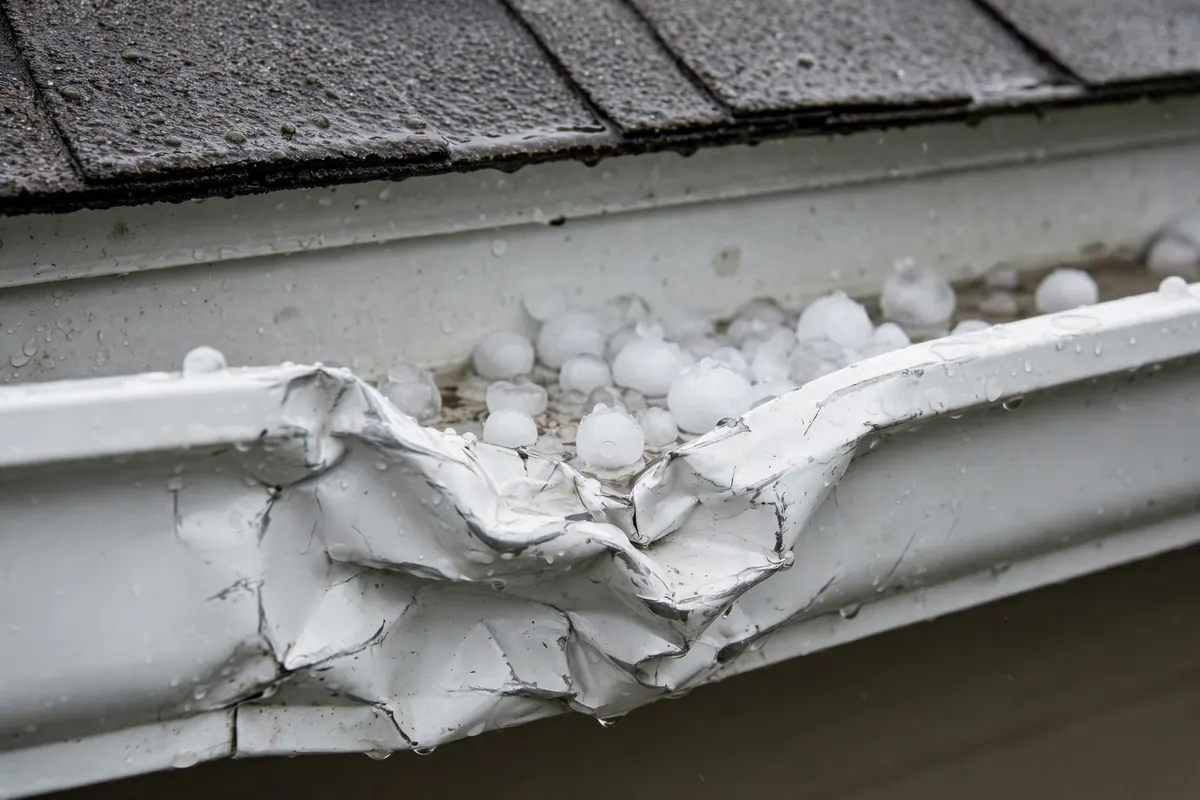
Flashing metal is thin and unsupported at its bends — exactly where hail hits hardest. Stones dent flat sections, crease step flashing at its fold, and lift exposed edges. A crease is the serious injury: it breaks the metal's line, holds water instead of shedding it, and can crack the metal's coating or the metal itself along the fold. Dents in wide flat valleys also slow water and catch debris, building the dams that push water sideways under shingles.
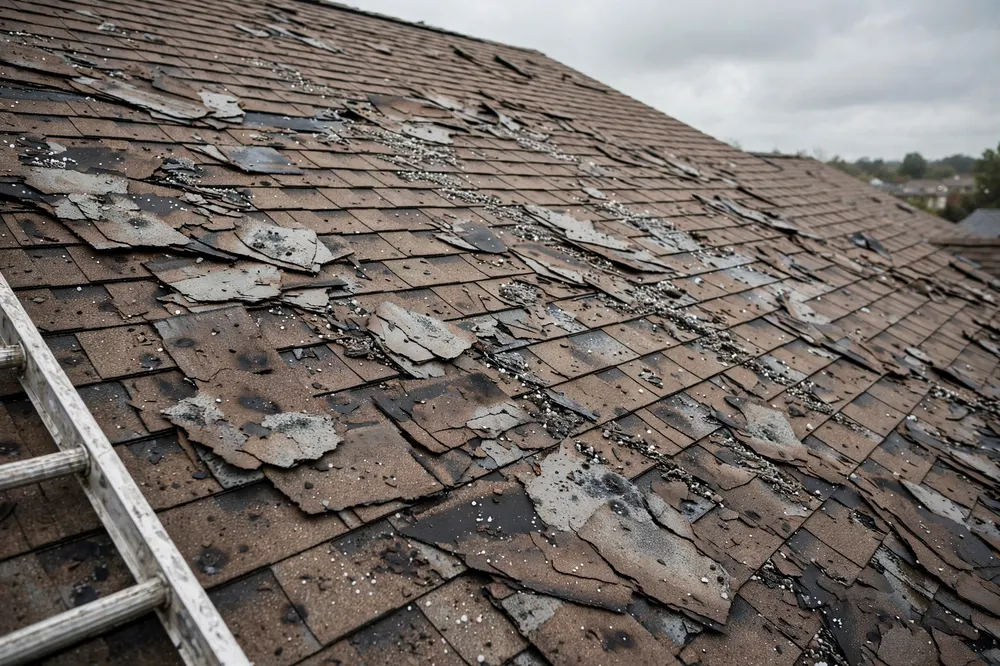
Hail's second attack is indirect: it loosens the sealant and fasteners around flashing, and the wind that rides with a hailstorm works lifted edges. The result is flashing that looked untouched in June and leaks in October, when driving rain first finds the opened lap. This is why flashing is a named stop on every proper post-storm inspection, not an afterthought.
Step Flashing, Counter Flashing And Chimneys
The wall joint is the most common flashing leak in Colorado homes, and the most mis-repaired. Step flashing is woven with the shingles — one piece per course, lapped in sequence — so replacing it means lifting the shingles along the wall and rebuilding the sequence, not sliding a new strip over the old. Counter flashing, set into the wall or mortar joint above, must overlap the step flashing's top edge; leave a gap and the joint drinks.
Chimneys multiply the joints: an apron flashing at the front, step flashing up both sides, counter flashing over all, and a cricket — a small peaked diverter — behind chimneys wide enough to dam debris and snow. Hail dents any of them; water needs only one failure. A chimney leak 'fixed' three times with sealant is almost always a flashing kit asking to be rebuilt once, properly.
Not Sure What Your Gutters Need?
One free call connects you with a local pro who can look at the whole roof edge — gutters, flashing and shingles — and tell you honestly what is worth fixing.
📞 Call (800) 555-0100Free Call · Answered 24/7 · Local Pros Near You
Valleys, Vents And Drip Edge
Valley metal takes the roof's fastest water, concentrated from two slopes. Hail dents along a valley interrupt that flow, and debris lodges in the dent line — the inspection reads valley dents as both damage and a future leak mechanism, which is why adjusters photograph valleys carefully. Open metal valleys with heavy denting are replacement items; closed shingle valleys fail differently, at their cut line.
Vent flashing and pipe boots fail at their seals: hail cracks the rubber boot, dents the metal base and breaks the sealant ring. Drip edge, the thin metal at the eaves, dents visibly and serves inspectors as a hail gauge — its damage is usually minor in itself, but a drip edge that has lifted lets wind-driven rain behind the gutter line. Each piece is small; together they are the roof's entire defensive perimeter.
The Repair: Replacement, Not Straightening
Bent flashing does not bend back. The metal work-hardens at the crease, its coating cracks, and its laps no longer sit where they were fitted. Proper repair removes the damaged section — lifting the shingles that interlock with it — and installs new metal in the original lap order, resealed and fastened out of the water path. It is slower than a tube of sealant and it lasts decades instead of a season, which is the whole difference.
Sealant has its place in flashing work — as a specified component in certain joints, renewed during repairs — but as a repair in itself it is a postponement. The honest quote for flashing damage itemises the sections, the metal, and the shingle work needed to reach them. Where a claim is open, flashing damage belongs inside it: it is storm damage with photographs, like everything else the hail touched.
Flashing In The Claim And In The Inspection
Document flashing the way the roof is documented: close photographs of creases and dents with a ruler or coin for scale, located by joint. Adjusters read flashing evidence fluently — it corroborates the storm's direction and size — and flashing lines are standard items in a scope of loss. Damage found during other work (a valley opened during a slope replacement) is supplement material with the same photographs.
For the homeowner, the practical habit is simple: after hail, ask the inspector specifically what the flashing showed. The answer separates thorough inspections from slope-only glances, and in Colorado's leak statistics the joints outnumber the open slopes as water sources year after year. The metal you never notice deserves the first questions.
Gutters record a storm in dents along their length, and crushed runs are replaced when they can no longer hold their line. Soft metals — vents, caps, flashing and gutter runs — dent before shingles break, so they are the first place a pro looks for the storm's signature. Ice & water shield, the self-sealing membrane at eaves and valleys, matters in Colorado because meltwater backs up under shingles on cold nights. The insurance adjuster who climbs your roof works from the same test squares and photos, which is why meeting them with documentation ready matters.
Hail Damage Roof Help In Your City
Every topic in this guide lands on a real roof somewhere — city pages with their own hail records, housing data and local pros:
Roof Flashing Repair — Questions Homeowners Ask
Flashing: the metal you never notice until it leaks.
Still Have Questions? Call Free
A real person answers 24/7 and connects you with a local pro who can check your roof.
📞 (800) 555-0100Reviewed By Hamza
Lead Roofing & Storm Restoration Specialist
Hamza is an exterior restoration specialist with deep expertise in hail damage assessment, storm-related leak diagnostics, and impact-resistant roofing installations across high-altitude and severe-weather climates. He works directly with homeowners to identify hidden structural bruising and ensure long-lasting, code-compliant roof repairs.
Updated October 26, 2026
Guides From The Blog
Flashing's fellow travellers: the boots beside it, and the leaks both cause.
Leak At A Chimney Or Wall Joint?
That is flashing's signature. One free call books an inspection that checks every flashing line on the roof — and photographs what it finds for the claim.
📞 Call (800) 555-0100Free Call · Answered 24/7 · Local Pros Near You