
Roof Leak After A Hailstorm: Finding The Real Source

In This Guide
Quick Answer
A leak that appears after a hailstorm usually starts at a hail-cracked shingle, a split around a vent or boot, or flashing the storm bent — often some distance upslope from the stain on your ceiling. The repair follows the water's real path: trace the entry point, then patch, seal or rebuild that section. This guide explains how pros find the true source, what the repair involves, and when a leak means the whole slope is done.
Why The Stain Is Not Where The Leak Is
Water obeys the deck, not the ceiling plan. It enters at a cracked shingle, a split boot or a lifted flashing, runs down the underside of the decking or along a rafter, and drops where the path ends — sometimes a room away from the entry point. That is why painting over the stain, or patching the shingle directly above it, so often 'fixes' nothing. A proper leak repair begins by tracing the water's route backwards from the stain to the roof.
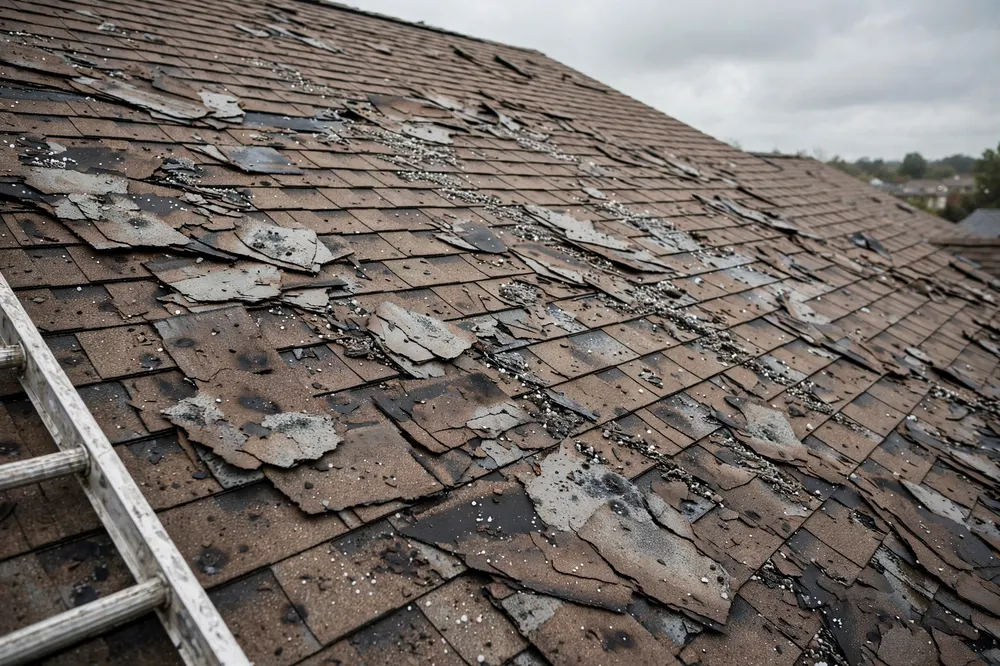
Hail makes this harder by multiplying the candidates. A single storm can crack tabs across a slope, split the seal on two pipe boots and crease the flashing at a wall joint — three entry points feeding one stain, or three separate slow leaks. The pro's job is to test and eliminate them in order, from the attic where access allows, marking each suspect on the roof above.

The Usual Suspects After Hail
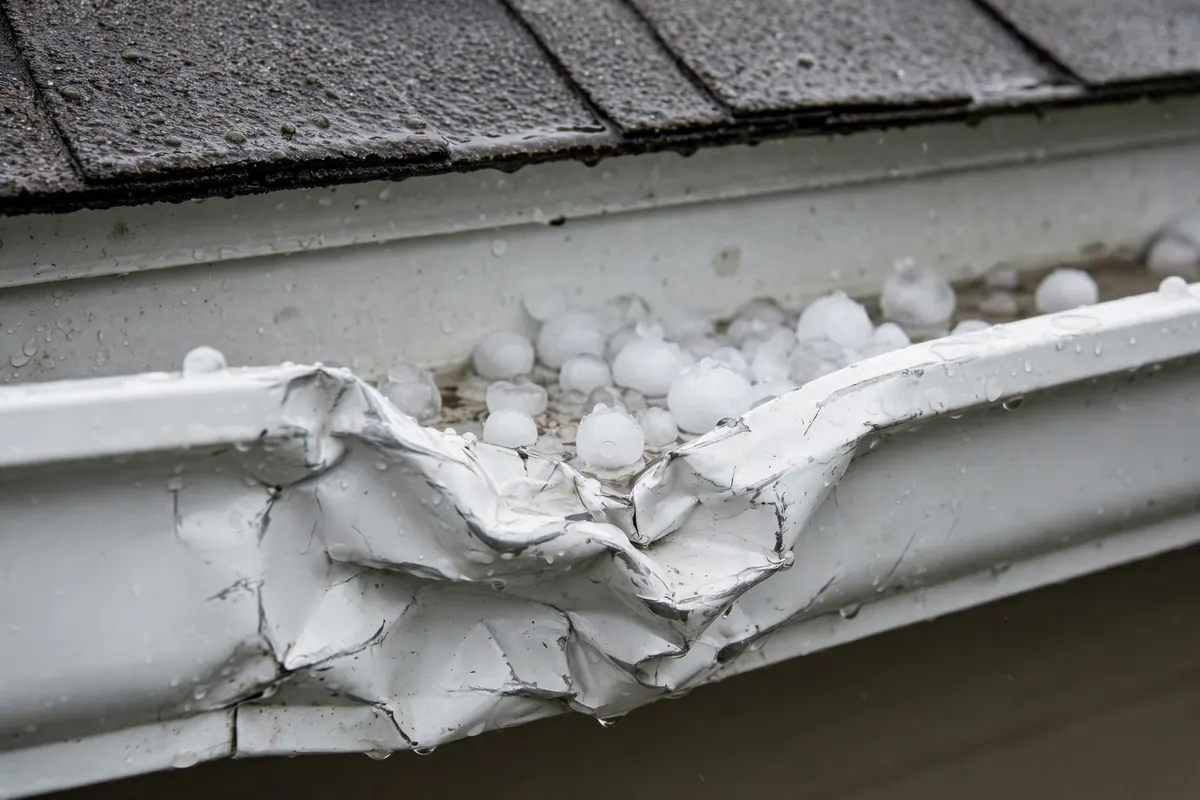
Pipe boots head the list: their rubber seals age and crack, and hail accelerates the splitting until rain finds the gap around the pipe. Next come hail-cracked shingles themselves, especially where stones struck tabs already lifted by wind or age. Flashing at chimneys, walls and valleys is third — bent or creased by stone impact, it channels water under the covering instead of over it. Ridge caps and cracked vents complete the regular line-up.
Notice what is absent: the wide middle of a healthy slope rarely leaks, even after hail. Water needs an opening plus a path, and openings live at penetrations and edges. That is why a leak repair, honestly scoped, is usually a section repair — boots, flashing and the damaged shingles around them — unless the slope's test squares show damage so widespread that the section is the slope.
How A Pro Traces A Leak
The method is unglamorous and effective. Inside, the stain's shape and timing are noted — which rains bring it, how fast it grows. In the attic, the pro looks for daylight, damp decking and water tracks on rafters and insulation, working upslope from the stain. On the roof, suspects are checked in turn: boot seals, flashing laps, cracked tabs, nail exposures. Where doubt remains, a controlled hose test on a dry day settles it section by section.
You should see the evidence, not just hear the conclusion: photographs of the entry point, and an explanation of the path the water took. That file matters twice — once for the repair decision, and again for the claim, because a leak traced to hail damage belongs in the storm's claim, with the storm's date in the NOAA record behind it.
Not Sure What Your Gutters Need?
One free call connects you with a local pro who can look at the whole roof edge — gutters, flashing and shingles — and tell you honestly what is worth fixing.
📞 Call (800) 555-0100Free Call · Answered 24/7 · Local Pros Near You
The Repair Itself: Patch, Section Or Slope
A single split boot or cracked flashing is a small, defined job: the failed part is replaced, the surrounding shingles lifted and re-sealed, and the area tested. A cluster of cracked shingles in one area means a section repair — shingles out, underlayment checked, new shingles woven in so the patch sheds water with the slope, not against it. The work is fiddly and the weave is the craft; a surface patch smeared on top is not a repair.
When the count says the slope is peppered — functional hits throughout the test squares, granule loss everywhere — section repairs become false economy, and the honest scope is the slope or the roof, usually through the claim. A good pro shows you the counts behind that recommendation. What you should never accept is the reverse journey: a whole roof sold off the back of one split boot.
Temporary Fixes And Their Limits
While the repair is scheduled, water still needs keeping out: a tarp or a sealed temporary patch — a dry-in — does that job for days to weeks. Buckets, towels and moved furniture handle the inside. What temporary measures cannot do is stop the slow damage: every rain until the real repair rewets decking and insulation, and sealant smeared over a cracked boot buys weeks, not seasons.
Two homeowner fixes deserve a warning. Roofing cement troweled over shingles in the rain rarely bonds, often traps water, and complicates the real repair. And climbing up to attempt any of it on a wet, granule-stripped roof is how leaks turn into injuries. The dry-in belongs to the emergency pro; the ladder belongs in the garage until the roof is dry and the harness is on.
Leaks And The Insurance Claim
A post-storm leak is claim evidence with a deadline. The damage belongs to the storm that caused it — keep the inspection's photographs and the storm date together, and open the claim inside your policy's filing window even if the repair itself is small. Insurers cover the resulting damage to the roof; the interior damage — ceilings, insulation, paint — is usually part of the same claim, which is another reason to dry and document early rather than repaint and forget.
If the adjuster's first scope misses the entry point, the supplement route exists: the traced path, photographed, is strong supplement material. And remember the Colorado constant: your deductible is yours — no contractor may legally pay it for you under SB38, whatever the doorstep pitch says.
The roof decking under the shingles must be solid before new material goes on; hail-rotted or leak-softened boards are replaced during the tear-off. Granules are the roof's sunscreen; once hail knocks them loose in quantity, the asphalt beneath ages in fast-forward. Bruising is the soft, spongy spot a thumb finds where a stone crushed the mat without breaking the surface — the most argued-over mark in any hail claim. Gutters record a storm in dents along their length, and crushed runs are replaced when they can no longer hold their line. Ice & water shield, the self-sealing membrane at eaves and valleys, matters in Colorado because meltwater backs up under shingles on cold nights. Attic ventilation decides how fast a wet roof deck dries after a leak — and how much heat and ice trouble a roof sees in winter. The insurance adjuster who climbs your roof works from the same test squares and photos, which is why meeting them with documentation ready matters. Colorado SB38 is the state consumer-protection law for roofing work: written contracts, honest deductible handling and no pressure tactics after a storm.
Hail Damage Roof Help In Your City
Every topic in this guide lands on a real roof somewhere — city pages with their own hail records, housing data and local pros:
Roof Leak Repair — Questions Homeowners Ask
Leak questions, answered in the order homeowners ask them at the worst moment.
Still Have Questions? Call Free
A real person answers 24/7 and connects you with a local pro who can check your roof.
📞 (800) 555-0100Reviewed By Hamza
Lead Roofing & Storm Restoration Specialist
Hamza is an exterior restoration specialist with deep expertise in hail damage assessment, storm-related leak diagnostics, and impact-resistant roofing installations across high-altitude and severe-weather climates. He works directly with homeowners to identify hidden structural bruising and ensure long-lasting, code-compliant roof repairs.
Updated October 26, 2026
Guides From The Blog
The leak's companions: the emergency page's logic in guide form, and the inspection that finds the source.
Leak Getting Worse?
If water is coming in now, use the emergency route — one free call and a pro can typically dry the roof in within 30–60 minutes. For leaks that only show in rain, book the inspection and get the source traced properly.
📞 Call (800) 555-0100Free Call · Answered 24/7 · Local Pros Near You