
Freeze-Thaw: How Winter Finishes The Damage Hail Started
In This Guide
Quick Answer
Freeze-thaw damage is what Colorado's daily temperature swing does to a roof all winter: meltwater enters every crack and lap by day, freezes and expands at night, and prises the damage wider — turning summer's hairline hail fractures into February's leaks. It is the mechanism that makes hail damage 'appear' months later, and the reason damaged roofs here deteriorate on a schedule. This guide explains the cycle, its favourite targets, and how to slow it.
The Cycle Itself
Colorado's Front Range and high country can cross the freezing line daily for months: afternoons in the forties under a mile-high sun, nights in the teens. Water is the only common liquid that expands as it freezes — by roughly a tenth of its volume — and in a confined crack that expansion is a hydraulic wedge with no off-switch. Melt enters a hail fracture at noon; by 2 a.m. it is ice, pushing the fracture's walls apart; by the next noon it has melted deeper into the widened crack. A hundred cycles a winter is a slow-motion crowbar, applied nightly, to every flaw on the roof.
No single cycle is dramatic, which is the danger: freeze-thaw does not announce itself. It converts the roof's inventory of small summer damages — hairline mat fractures, lifted sealant lines, a boot's first split — into open water paths at a rate no homeowner observes, because the work happens at night, inside the materials.
Why Hail Damage And Freeze-Thaw Are Partners
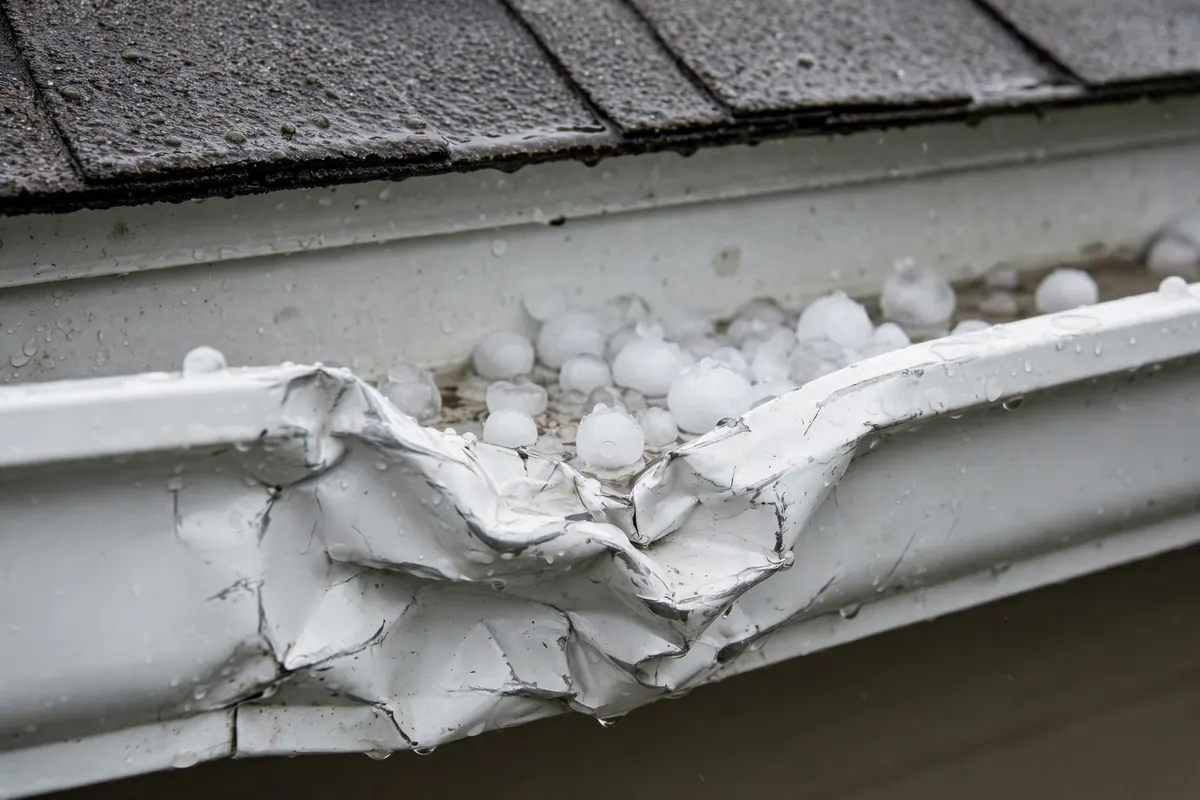
Hail supplies the cracks; winter works them. This partnership explains the most confusing fact in Colorado roofing: the ceiling stain that arrives in February for a storm that fell in June. The hail fracture was watertight under summer's running rain. Freeze-thaw wedged it open; snowmelt — slow, sustained, ponded behind ice — is a more searching leak-test than any rainstorm, and the opened fracture fails it. Insurers know this mechanism intimately, which is why hail claims filed months after the storm, supported by inspection evidence tying the damage to the storm date, are normal rather than suspect.
The same partnership punishes delay. A damaged roof inspected and scoped in autumn enters winter as a documented claim in progress. The same roof ignored enters winter as a deterioration experiment, and by spring the question 'what did the hail do' has acquired a winter's worth of noise. The filing window runs regardless; freeze-thaw is simply its most physical expression.
The Favourite Targets
Sealant lines go first: the adhesive strips that bond shingle courses and the caulked joints at flashing are the roof's most freeze-sensitive materials, embrittled by age and pried by ice in the laps they seal. Lifted tabs follow — each freeze under a lifted edge raises it further for the wind. Pipe boots split along their hail-started cracks. Valleys and low areas, where meltwater lingers longest, take the heaviest cycling, and ice dams at the eaves are freeze-thaw's architecture — melt, pond, freeze — assembled into the roof's most reliable leak machine.
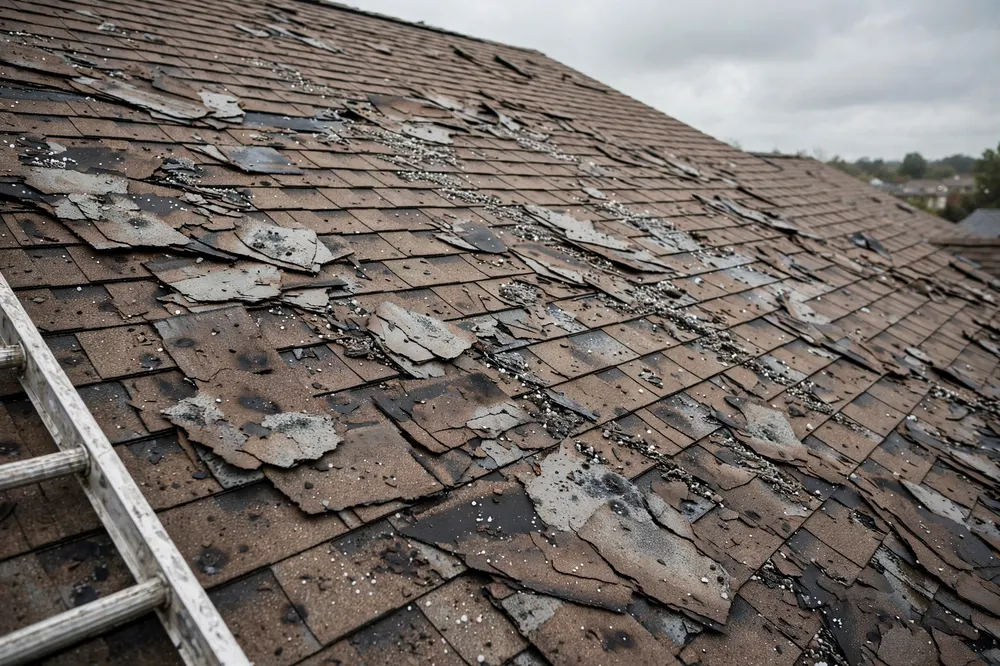
Inside the wall, the cycle works on whatever the water reaches: decking edges swell and soften, fastener holes widen, and the deck's surface begins the rot that a later tear-off will discover. The targets share a theme: freeze-thaw attacks interfaces — laps, seals, joints, edges — which is why a roof's winter condition is read at its details, not its open fields.
Not Sure What Your Gutters Need?
One free call connects you with a local pro who can look at the whole roof edge — gutters, flashing and shingles — and tell you honestly what is worth fixing.
📞 Call (800) 555-0100Free Call · Answered 24/7 · Local Pros Near You
Reading Freeze-Thaw Damage
The signs are seasonal and specific. Leaks that occur in thaws rather than in rain point at meltwater paths — ice dams, valley ice, opened laps above the stain. Spring inspections find the winter's work: sealant lines cracked in rows, tabs lifted that lay flat in October, boot splits widened, new granule loads in the gutters from surfaces the ice scoured. An inspector reads the difference between a winter of normal ageing and a winter that worked over hail damage in the freshness of the fractures the thaw exposes.
For the claim file, the reading has a practical use: it restates the storm's damage at a second date, corroborating the original attribution. A slope whose June bruises are February's open cracks, photographed at both seasons, is a slope whose story no adjuster argues with. Seasonality, documented, is evidence.
Slowing The Cycle: Maintenance And Materials
You cannot repeal the weather, but the cycle's access points are maintainable. Sealant and flashing checks in autumn — the between-storm maintenance this site preaches — close the interfaces before the wedges arrive. Pipe boots at the age of splitting are replaced in daylight, not discovered in January. Ice-and-water shield at eaves and valleys forgives the melt that does get in. And attic ventilation and insulation keep the roof's surface colder and more even, shrinking the melt supply that feeds the whole machine.
Material choices at replacement carry the same logic forward: flexible, polymer-modified shingles (the Class 4 family) tolerate the cycling better than brittle standard mats; sound decking and renewed underlayment deny the water its indoor paths. A Colorado roof is specified against two opponents — the summer's hail and the winter's wedge — and the honest quote argues both.
The Spring Reckoning
Spring is when freeze-thaw presents its accounts: the leaks, the lifted tabs, the gutter granules, the stains that bloomed in the thaw. Meet it with the inspection rather than the paintbrush. The spring inspection — this site's standing annual recommendation — is timed exactly here: after the winter has declared what it did, before the hail season opens the next account. Damage found now files under the storm it belongs to, with the winter as its witness, while the windows still run.
Homeowners who adopt that rhythm stop experiencing their roof as a series of surprises. The cycle still runs — Colorado guarantees the weather — but it runs against a maintained, documented, membrane-backed roof, which is the only version of the contest the house reliably wins.
Bruising is the soft, spongy spot a thumb finds where a stone crushed the mat without breaking the surface — the most argued-over mark in any hail claim. Class 4 impact-resistant shingles carry the top UL impact rating and shrug off stones that would bruise a standard shingle — a common upgrade after a Colorado claim. Snow load is the quiet weight a Colorado roof carries for weeks at a time, and a hail-weakened deck feels it more than a sound one. The insurance adjuster who climbs your roof works from the same test squares and photos, which is why meeting them with documentation ready matters.
Hail Damage Roof Help In Your City
Every topic in this guide lands on a real roof somewhere — city pages with their own hail records, housing data and local pros:
Freeze-Thaw Roof Damage — Questions Homeowners Ask
The winter mechanism behind half the leaks in this state's spring.
Still Have Questions? Call Free
A real person answers 24/7 and connects you with a local pro who can check your roof.
📞 (800) 555-0100Reviewed By Hamza
Lead Roofing & Storm Restoration Specialist
Hamza is an exterior restoration specialist with deep expertise in hail damage assessment, storm-related leak diagnostics, and impact-resistant roofing installations across high-altitude and severe-weather climates. He works directly with homeowners to identify hidden structural bruising and ensure long-lasting, code-compliant roof repairs.
Updated October 26, 2026
Guides From The Blog
Freeze-thaw's two partners: the membrane that forgives it, and the shield at the eave.
Roof Already Carrying Hail Damage Into Winter?
Get it counted and scoped before the cycle does its winter work — one free call books the inspection.
📞 Call (800) 555-0100Free Call · Answered 24/7 · Local Pros Near You