
Ice & Water Shield At Altitude: When Colorado Code Requires It
In This Guide
Quick Answer
Ice-and-water shield is a self-sealing waterproof membrane stuck directly to the deck under the shingles, placed where water backs up: eaves, valleys, around penetrations and on low-slope sections. In Colorado — where meltwater refreezes nightly and ice dams are a season, not an event — it is the layer that decides whether a backed-up roof leaks or merely looks dramatic. This guide explains where it goes, why codes and manufacturers expect it, and what happens without it.
What The Membrane Is
Ice-and-water shield is a rubberised asphalt (or butyl) membrane supplied in rolls with a peel-off backing: the roofer sticks it directly to the bare deck, where it adheres and — its signature property — seals around the nails and fasteners driven through it afterward. Unlike felt or synthetic underlayment, which are water-shedding layers, this membrane is genuinely waterproof and self-healing at penetrations. It is installed as a targeted defence, not a whole-roof covering: its cost and its inability to let the deck breathe argue for placing it exactly where water misbehaves.
The product exists for one scenario: water travelling where gravity-based defences fail — backed up behind an ice dam, ponded on a low slope, driven uphill by wind, or sitting in a valley melt. In that scenario shingles and felt are sieves and the membrane is the hull. Colorado's winters manufacture the scenario weekly, which is why the membrane is standard practice here rather than a cold-climate luxury.
Where It Goes: Eaves First
The eaves are the primary placement: the membrane runs from the roof's edge up-slope far enough to cover the zone where ice dams back water up — building practice and many local codes measure it to a point at least 24 inches inside the exterior wall line, which on wide overhangs can mean two courses of membrane. The logic is precise: the dam forms at the cold eave, the ponded meltwater sits above it, and the membrane must underlie the entire ponded zone, not just the edge where the ice is visible.
Valleys are the second placement — a strip centred on the valley catches the concentrated melt that valleys carry. Around penetrations and at roof-to-wall joints it serves as the belt under the flashing's braces. And on low-slope shingled sections (2-to-4-in-12), the specification often becomes full coverage: the whole slope gets the membrane beneath the shingles, because slow water treats the entire slope the way a dam treats the eave.
Ice Dams: The Failure It Prevents
An ice dam builds when attic heat melts snow mid-roof and the water refreezes at the unheated eave, ridge upon ridge, until a pond of meltwater stands behind it — against shingles designed to shed running water, not to hold standing water back. The pond finds every nail hole and lap and enters the deck, the wall and the ceiling below, in January, weeks after the snow that authored it. Without the membrane, this is a leak with perfect deniability: the roof 'looks fine' on every dry inspection.
With the membrane correctly placed, the same dam becomes a photograph instead of a claim: the ponded water sits on a sealed, self-healing surface and drains harmlessly when the thaw comes. This asymmetry — one layer, two outcomes — is why inspectors ask about membrane placement on every Colorado replacement quote, and why its absence in a cheap quote is the loudest line in the document.
Not Sure What Your Gutters Need?
One free call connects you with a local pro who can look at the whole roof edge — gutters, flashing and shingles — and tell you honestly what is worth fixing.
📞 Call (800) 555-0100Free Call · Answered 24/7 · Local Pros Near You
Codes, Manufacturers And The Warranty Link
Colorado's local codes — adopted with the state's freeze climate in view — commonly require the membrane at eaves in the configurations described, and shingle manufacturers' installation instructions assume or require it in cold regions and low slopes. The practical consequence: a roof installed without it may be non-compliant with both the jurisdiction and the product's own specification, which clouds the manufacturer's warranty position precisely when the roof is damaged by the water the membrane would have stopped.
The homeowner's move is simple and happens on paper: the replacement quote should state the membrane's placement explicitly — eaves to the code line, valleys, penetrations, full coverage on low slopes — as a line in the scope, not as an assumption. What is written is installed; what is 'standard' is negotiable in ways you will not see from the ground.
The Membrane And Hail: A Supporting Role
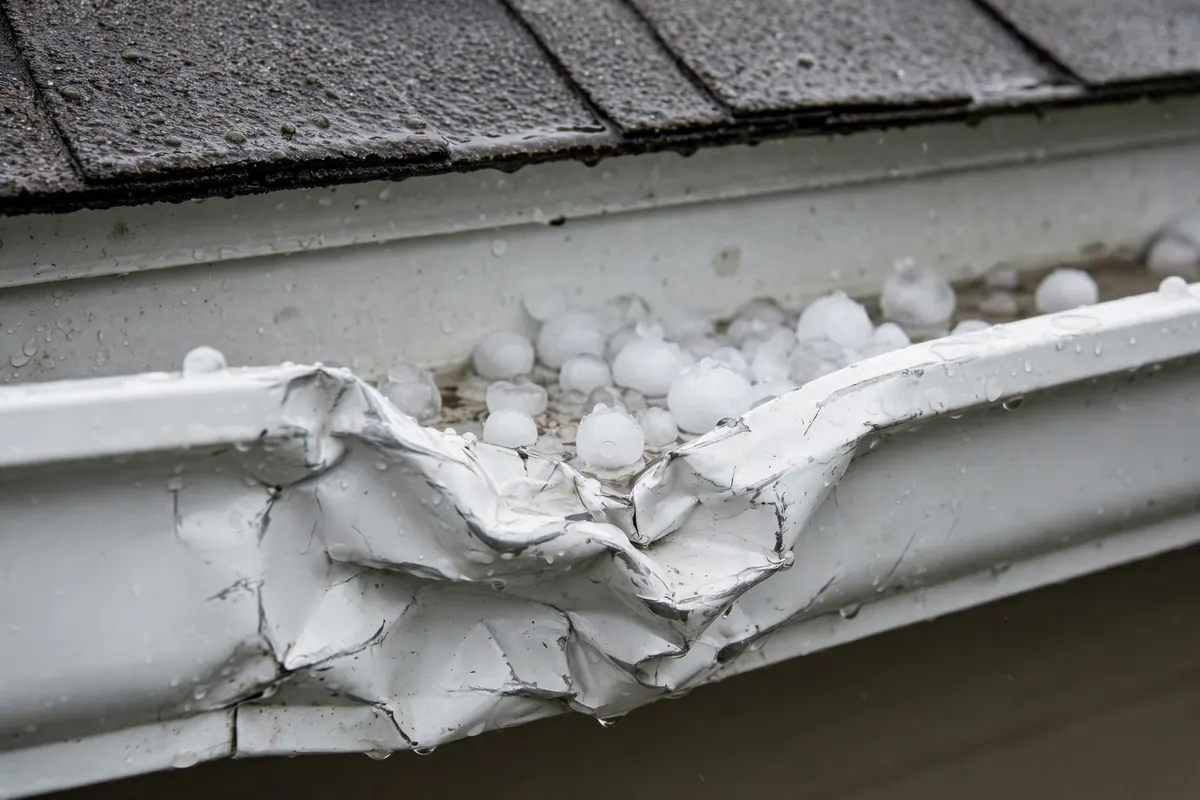
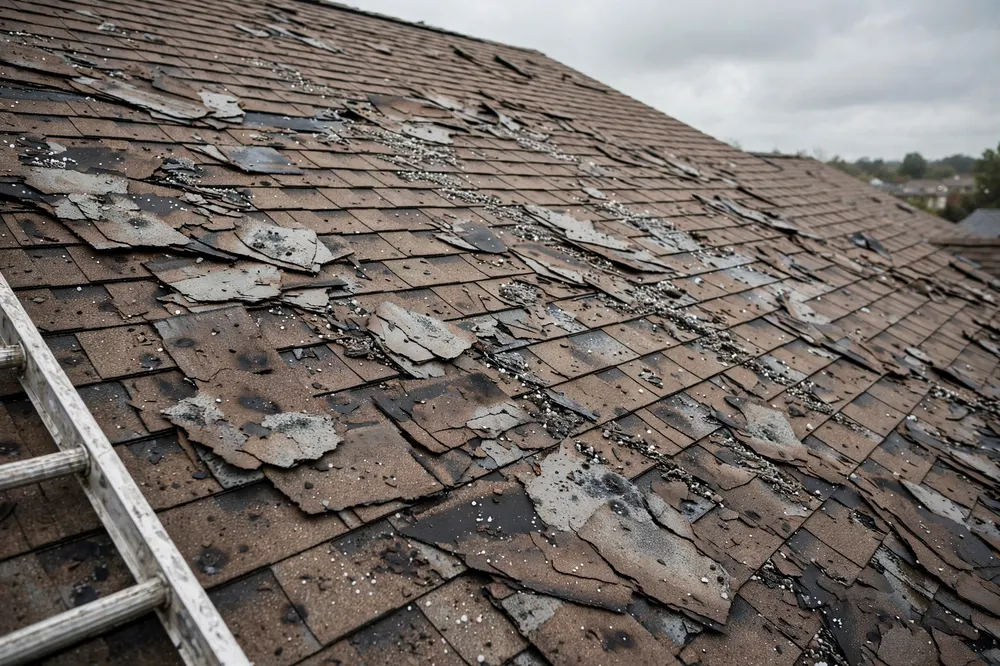
Ice-and-water shield is not hail armour: it sits under the shingles and takes no direct impacts. Its hail relevance is second-order and real. When hail cracks shingles and storms drive rain, the membrane under eaves, valleys and low slopes is the difference between a damaged roof and a wet house during the weeks the claim takes. At replacement, the hail scope is the moment the membrane gets renewed across the roof's vulnerable geography — tear-off exposes the deck and the new specification is laid fresh, to current code, not inherited from the last roof's shortcuts.
Inspectors note old membranes' state during tear-offs for the same reason: a membrane found patchy, misplaced or absent under a failed eave is part of the roof's story, and it shapes the new scope. In the claim file, it is one more photograph proving the difference between the roof that was there and the roof that should have been.
Checking Your Own Roof's Defence
You cannot see the membrane from outside the roof — which is the point of asking about it at quote stage — but its effects are legible. Ice dams that form without interior leaking suggest it is present and working. January leaks at exterior walls, staining at eaves and ceiling edges in thaw weather, on a roof with no obvious covering failure, suggest its absence or its misplacement. An attic inspection in winter can sometimes glimpse the eave construction; a replacement quote can always state the new specification in full.
Treat the membrane the way you treat the deductible clause: as a short written test of the contractor. 'Where does the ice-and-water shield go on my roof?' A roofer who answers with the wall line, the valleys and your low slopes is describing a Colorado roof. One who answers with a shrug is describing a leak scheduled for the first hard winter.
The freeze-thaw cycle works meltwater into every hail crack all winter, widening small damage a little more each cold night. Felt underlayment is the older tar-paper layer still found under many Colorado roofs, thinner protection than modern synthetics once hail cracks the shingles above it. Valley metal takes the fastest water on the roof, and hail dents along a valley are photographed because they corroborate the slope damage above. The drip edge along the eaves is thin metal that shows hail dents clearly, and pros read it as a quick first gauge of the storm. Attic ventilation decides how fast a wet roof deck dries after a leak — and how much heat and ice trouble a roof sees in winter.
Hail Damage Roof Help In Your City
Every topic in this guide lands on a real roof somewhere — city pages with their own hail records, housing data and local pros:
Ice And Water Shield — Questions Homeowners Ask
The hidden layer at the eaves: what it is, where it goes, what it saves.
Still Have Questions? Call Free
A real person answers 24/7 and connects you with a local pro who can check your roof.
📞 (800) 555-0100Reviewed By Hamza
Lead Roofing & Storm Restoration Specialist
Hamza is an exterior restoration specialist with deep expertise in hail damage assessment, storm-related leak diagnostics, and impact-resistant roofing installations across high-altitude and severe-weather climates. He works directly with homeowners to identify hidden structural bruising and ensure long-lasting, code-compliant roof repairs.
Updated October 26, 2026
Guides From The Blog
The shield's two reasons to exist: the ice dam it forgives, and the freeze-thaw that feeds it.
Re-Roofing In Colorado?
Make sure the quote names its ice-and-water shield placement — eaves, valleys, penetrations. One free call starts the inspection that produces that quote.
📞 Call (800) 555-0100Free Call · Answered 24/7 · Local Pros Near You