
Hail Damaged Roof: Your First 48 Hours, Step By Step
In This Guide
Quick Answer
The first 48 hours after a hailstorm decide most of what follows: whether water gets in, whether the evidence survives, and whether the claim opens at full strength. The order is safety first, documentation second, inspection third — and the roof itself stays untouched by everyone except a pro. This hour-by-hour guide walks Colorado homeowners through exactly what to do, and what to leave alone.
Hour Zero: Safety Before Everything
While the storm is still in earshot, the rules are few and absolute. Stay inside while hail is falling — Colorado stones reach sizes that injure. Keep people and pets away from any ceiling that is sagging or dripping, and if water is coming through a light fitting, switch that circuit off at the panel. Do not go outside to look at the roof mid-storm, and do not go on it afterwards while it is wet: nothing on a roof is worth what a fall costs.
If water is actively entering, buckets, towels and moved furniture are the whole of the inside job, plus one phone call to the emergency line. Everything else in this guide assumes the house is safe and the storm has passed; that assumption is step one, and it outranks every photograph and every claim consideration that follows.
The First Morning: The Ground Survey
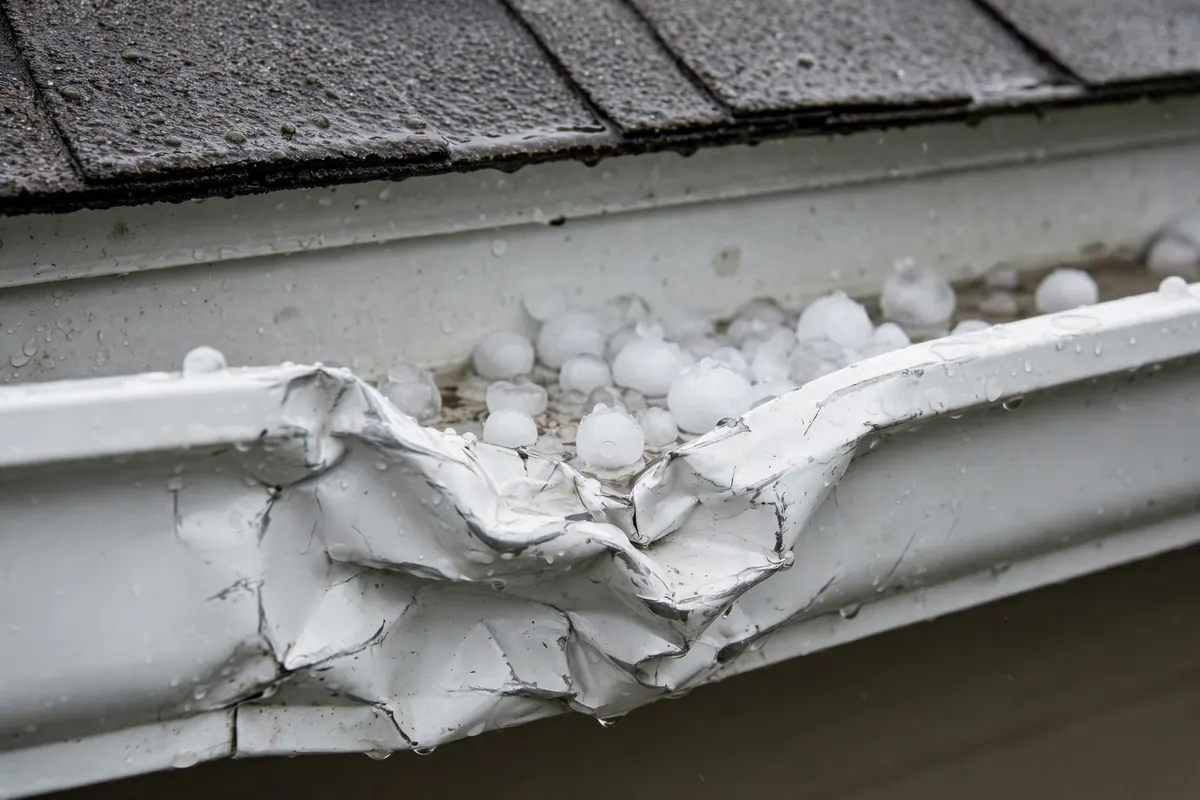
At first light, walk the property with a phone camera before anything is cleaned up. Photograph the hail itself if any remains in shaded piles — with a coin or a golf ball beside it for scale. Then the evidence circuit: dents in gutters, downspouts and vents; granules heaped where downspouts discharge; shingle fragments and debris in the yard; dents in the car, the AC unit, screens and siding. Date-stamped, unedited, comprehensive — this ten minutes is your claim's first exhibit.
Note the storm's time and the largest stones you saw, in writing, in the same folder. Then look up, from the ground, with binoculars if you have them: lifted tabs, missing shingles, anything visibly wrong. And check the ceilings inside, room by room, for the first faint rings. Nothing found is also a finding — photograph the clean ceilings too, because 'before' pictures have a way of mattering later.
Day One: Book The Inspection, Open Nothing Yet
Book the roof inspection on day one — post-storm calendars fill street by street, and the early slots go to the early callers. The inspection is free through a matching route and produces the counts and photographs your claim stands on. You will also hear, possibly within hours, from door-knockers working the street: the discipline is to accept inspections from whoever you choose, sign nothing, and let no one talk you out of your deductible — in Colorado that offer is illegal under SB38, whatever the pitch.
Whether to open the claim on day one or after the inspection is a small judgement call; the stronger order is usually inspection first, so the claim opens with counts and a storm date attached. Either way, note your policy's filing window from the declarations page now, while the folder is open — the deadline you know about is the one you will not miss.
Not Sure What Your Gutters Need?
One free call connects you with a local pro who can look at the whole roof edge — gutters, flashing and shingles — and tell you honestly what is worth fixing.
📞 Call (800) 555-0100Free Call · Answered 24/7 · Local Pros Near You
Day Two: The Roof-Level Evidence
By day two the inspector has typically been: test squares counted per slope, bruising checked by hand, metals and flashing read, attic checked. You hold a written report that separates storm damage from wear and ties the damage to a storm date in the NOAA record. That document converts yesterday's anxiety into a decision: claim or no claim, repair or replace, each now an evidence question instead of a mood.
File the report with the ground photographs, the storm notes and any emergency invoices in one folder — paper or digital — labelled with the storm date. This folder is the claim, the sale disclosure and the next inspector's briefing in one object. Building it is the single most valuable thing the first 48 hours can produce, and it costs nothing but attention.
What Not To Do In The First 48 Hours
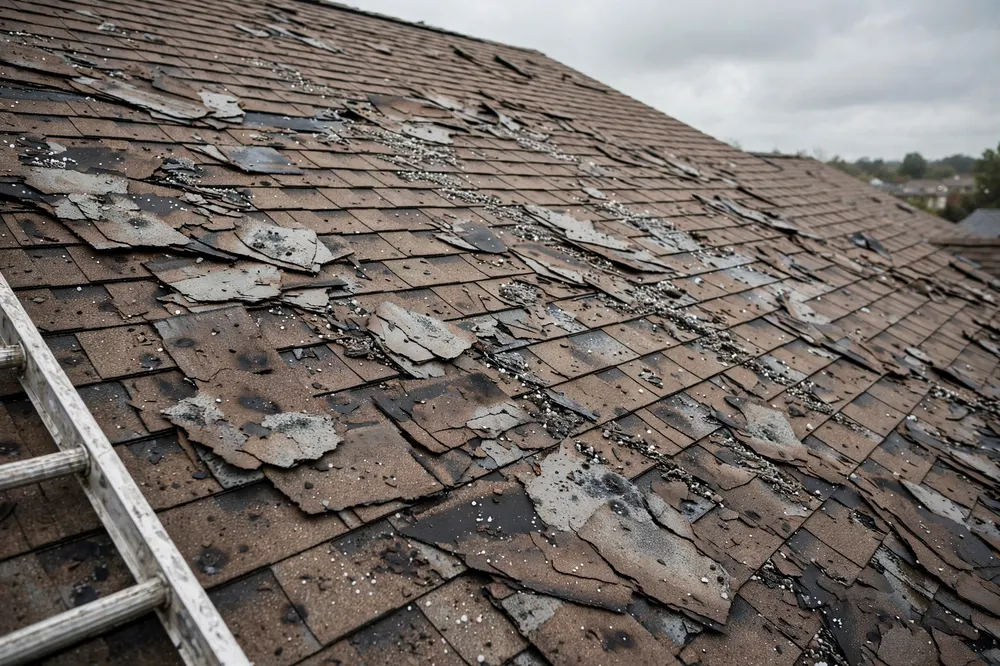
Do not climb the roof — wet, granule-stripped and possibly softened, it is at its most dangerous exactly now. Do not hose it, sweep it or 'tidy' the evidence before photographing it. Do not sign a repair contract, an assignment of benefits, or anything with a deductible promise in it. Do not let anyone start permanent repairs before the inspection and, if you are claiming, the adjuster process has had its chance to see the damage as the storm left it.
And do not conclude anything from the absence of a leak. Most hail damage leaks nothing for months. The 48-hour task list is built around evidence, not symptoms, because the claim system runs on evidence — the stain, when it comes, is merely the most expensive way to learn what the test squares would have told you on day two for free.
After 48 Hours: The Rhythm That Follows
The urgent window closes into a process: the adjuster meeting, the scope, the repair or replacement, the close-out paperwork — each covered in its own guide on this site. What the first 48 hours bought you is position: a dry house, a documented storm, a counted roof, a claim opened inside its window. Homeowners who hold that position rarely lose claims; homeowners who start from a stained ceiling and a swept yard often do.
Keep the habits the 48 hours taught: photograph after storms, file by date, inspect on the calendar rather than on symptoms. Colorado will provide the next storm on its own schedule. The folder system means you will meet it the way you met this one — with the evidence already organised.
A temporary dry-in — tarps, plastic sheeting or a sealed patch — is what stands between a damaged roof and the next storm until the crew arrives. Soft metals — vents, caps, flashing and gutter runs — dent before shingles break, so they are the first place a pro looks for the storm's signature. Colorado SB38 is the state consumer-protection law for roofing work: written contracts, honest deductible handling and no pressure tactics after a storm. The insurance adjuster who climbs your roof works from the same test squares and photos, which is why meeting them with documentation ready matters.
Hail Damage Roof Help In Your City
Every topic in this guide lands on a real roof somewhere — city pages with their own hail records, housing data and local pros:
Your First 48 Hours After Hail — Questions Homeowners Ask
The two days after the storm, questioned hour by hour.
Still Have Questions? Call Free
A real person answers 24/7 and connects you with a local pro who can check your roof.
📞 (800) 555-0100Reviewed By Hamza
Lead Roofing & Storm Restoration Specialist
Hamza is an exterior restoration specialist with deep expertise in hail damage assessment, storm-related leak diagnostics, and impact-resistant roofing installations across high-altitude and severe-weather climates. He works directly with homeowners to identify hidden structural bruising and ensure long-lasting, code-compliant roof repairs.
Updated October 26, 2026
Guides From The Blog
Two pieces of the 48 hours deserve their own guides: the tarp, and the claim.
Inside Your First 48 Hours Right Now?
Skip to the practical step: one free call books the inspection and, if water is getting in, sends the emergency pro first.
📞 Call (800) 555-0100Free Call · Answered 24/7 · Local Pros Near You