
Granule Loss After Hail: When It Is Cosmetic And When It Is Not
In This Guide
Quick Answer
Granules are a shingle's armour — the mineral layer that shields asphalt from UV, sheds impact energy and gives the roof its fire resistance. Hail strips them in patches; age sheds them gradually; either way, heavy loss exposes asphalt to the high-altitude sun and starts a countdown on that shingle's life. This guide explains how to read granule loss, how much is normal, and why adjusters treat heavy fresh loss as functional damage.
What Granules Do
A shingle's visible surface is not asphalt — it is a dense bed of ceramic-coated mineral granules pressed into the asphalt while it is hot. The granules carry the roof's interface with the world: they block ultraviolet from the asphalt beneath (the job that matters most at Colorado altitude), they present the hard face that hail strikes, they provide the fire rating's surface, they carry the colour, and their slight roughness slows water and sheds debris. Strip them and every one of those functions is locally abolished at that spot.
This is why granule findings anchor so many inspection verdicts. A shingle can survive a surprising amount of bruising; it cannot survive nakedness. The asphalt under a bald patch oxidises, crazes and erodes in the sun at several times the roof's normal ageing rate, and the patch grows as its edges loosen. The slope's remaining life is, quite literally, the life of its least-granulated square yard.
Normal Loss Versus Storm Loss
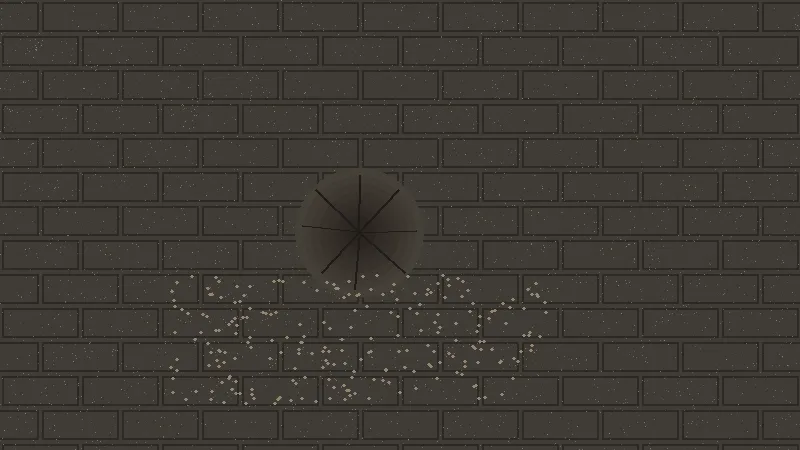
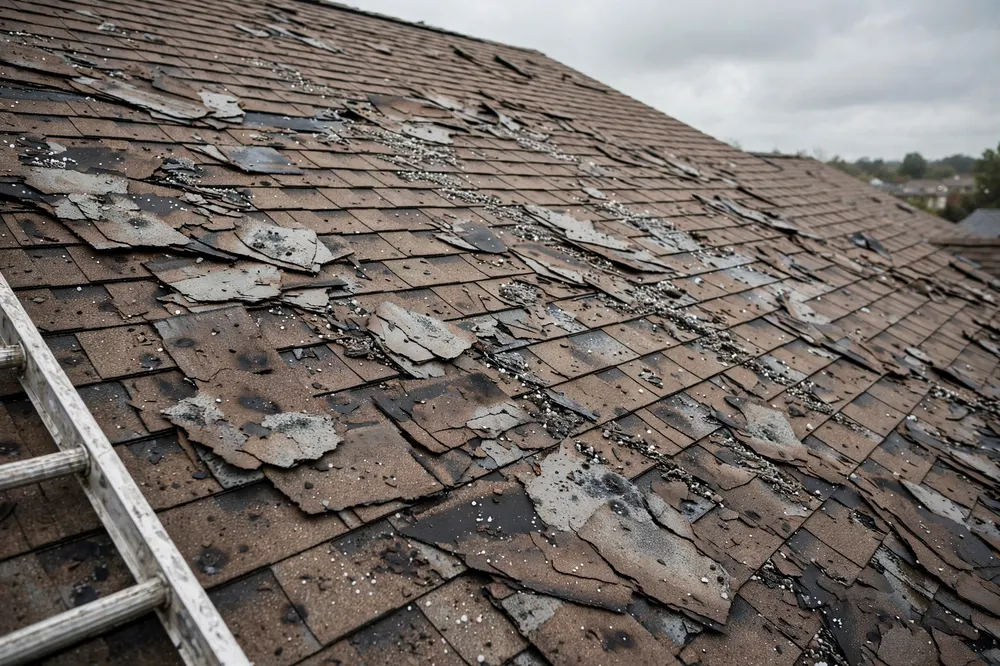
Some loss is life: new roofs shed loose excess granules in their first year (manufacturing surplus, harmless), and old roofs shed steadily as the binder ages — the slow background rate of a surface in its final years. Storm loss looks different in kind: fresh, heavy, and patterned. After hail you find granules by the handful in gutters and at downspout bases within days, bare and scuffed patches scattered across the facing slopes in the storm's random geometry, and the exposed asphalt bright and fresh-looking against the weathered field.
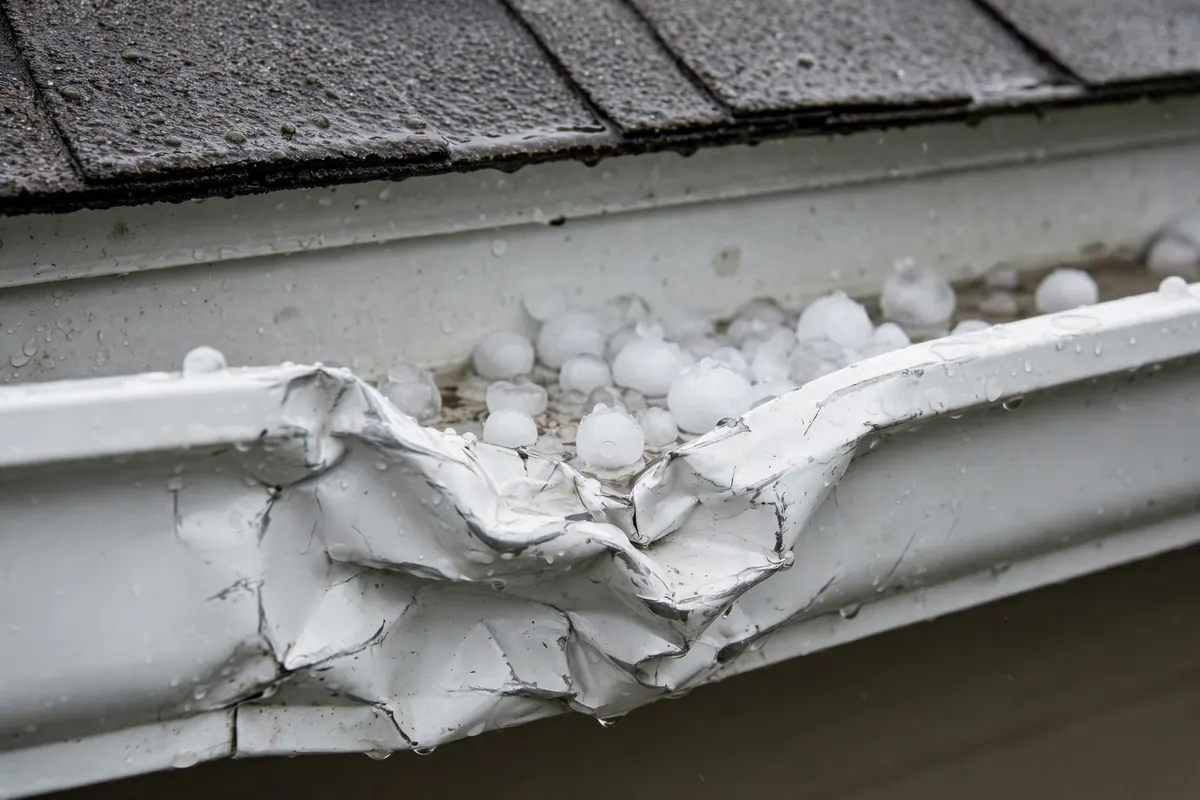
Inspectors quantify rather than admire: the volume in the drainage system, the density and freshness of bare patches per slope, and the contrast between slopes. A roof whose north face is clean and whose south face shed a gutter-load of grit in one storm has told its own story, and the photographs of the gutter line — taken before anyone cleans it — are among the most persuasive exhibits a claim file holds.
How Hail Strips Granules
The mechanism is impact mechanics: a hailstone's strike crushes the granule bed at the impact point and shocks the bond around it, knocking granules free in a disc roughly the stone's size and loosening a halo beyond it. Wind-driven rain in the same storm then washes the loosened fraction off the slope — which is why the gutter evidence appears with the first rain after the hail, sometimes during it. Repeated storms compound multiplicatively: each event strips its own pattern and re-loosens the neighbours of earlier scars.
The shingle's age sets the bond's strength. On a young roof the granules sit deep in fresh, flexible asphalt and losses per impact are modest. On an older roof the binder is oxidised and the granules sit in a harder, weaker grip — the same storm strips an old slope to the bone while scuffing a young one. Granule loss is therefore also an age instrument, read alongside the mat's feel.
Not Sure What Your Gutters Need?
One free call connects you with a local pro who can look at the whole roof edge — gutters, flashing and shingles — and tell you honestly what is worth fixing.
📞 Call (800) 555-0100Free Call · Answered 24/7 · Local Pros Near You
Why Adjusters Count It As Damage
Insurance pays for functional damage, and heavy fresh granule loss qualifies on the merits: it measurably shortens the roof's life at the affected places by exposing asphalt to UV erosion. Adjusters look for the same triad your inspector documents — volume in the drainage, pattern on the slopes, freshness of exposure — and distinguish it from the background shedding of an old roof by exactly those features. Where the storm's granule loss is heavy across a slope's field, it joins the hit counts in scoping that slope for replacement.
Disputes arise at the margins ('that roof was already shedding'), and they are settled the way all hail disputes are settled: by the pattern and the file. A pre-storm inspection record — even one that reported wear — paradoxically strengthens the claim, because it dates the baseline the storm departed from. This is one of the quiet dividends of the annual inspection habit.
The Countdown After Heavy Loss
Exposed asphalt at altitude follows a known arc: oxidation and surface crazing within the first strong summer, micro-cracking through the first freeze-thaw season, erosion and mat exposure thereafter. The shingle does not fail on a date, but its remaining life at that patch is a small fraction of its designed span, and the patches are distributed across the slope like a constellation of small clocks all started by the same storm. Repairs replace individual failed shingles; a field of stripping scopes the slope, because weaving cannot re-armour a surface.
Homeowners sometimes ask whether granules can be reapplied — they cannot, in any durable, warrantable way; coatings and broadcast granule products are cosmetic theatre over a structural finding. The honest options are the usual two: scoped replacement of what the counts condemn, or documented monitoring of what they spare, with the file dating the storm either way.
Reading Your Own Gutters
Your post-storm ground survey already includes the granule check; do it before any cleanup. Photograph the gutter runs and downspout bases with something for scale, note which elevations shed most (they will match the storm's facing slopes), and keep a small sample if you like — a jar of your roof's granules dated to the storm is oddly compelling evidence. Compare with the background: a few tablespoons after an ordinary rain on an old roof is life; cupfuls after one storm is an event.
Then let the inspection do the slope-level reading, because the gutter integrates evidence the roof still holds in detail — the per-slope pattern that scopes the work. Granules are the rare roof finding a homeowner can genuinely gather at ground level without a ladder. Gather it like evidence, because that is what it is.
UV degradation is the slow half of hail damage: once granules are gone, the high-altitude sun cooks the exposed asphalt until it turns brittle. A test square, the chalked 10-by-10-foot area marked on each slope, is how hits are counted the same way on every roof and every claim. The insurance adjuster who climbs your roof works from the same test squares and photos, which is why meeting them with documentation ready matters. The freeze-thaw cycle works meltwater into every hail crack all winter, widening small damage a little more each cold night. Roof age decides how much hail a shingle can take — the same stone that scuffs a five-year-old roof can crack a fifteen-year-old one open.
Hail Damage Roof Help In Your City
Every topic in this guide lands on a real roof somewhere — city pages with their own hail records, housing data and local pros:
Granule Loss After Hail — Questions Homeowners Ask
Granules — the armour, the evidence and the countdown.
Still Have Questions? Call Free
A real person answers 24/7 and connects you with a local pro who can check your roof.
📞 (800) 555-0100Reviewed By Hamza
Lead Roofing & Storm Restoration Specialist
Hamza is an exterior restoration specialist with deep expertise in hail damage assessment, storm-related leak diagnostics, and impact-resistant roofing installations across high-altitude and severe-weather climates. He works directly with homeowners to identify hidden structural bruising and ensure long-lasting, code-compliant roof repairs.
Updated October 26, 2026
Guides From The Blog
Granule loss's causes and consequences: the bruise beneath, and the ageing it unleashes.
Gutters Full Of Grit After The Storm?
That is evidence, not housekeeping — have it read before it is cleaned away. One free call books the inspection.
📞 Call (800) 555-0100Free Call · Answered 24/7 · Local Pros Near You