
Shingle Bruising: The Hail Damage You Cannot See From The Ground
In This Guide
Quick Answer
Bruising is hail's most important and least visible injury: the shingle's fiberglass mat fractures under the impact while the surface stays intact, leaving a soft, spongy spot that will crack and leak on a schedule of months. It cannot be seen reliably — it is found by hand, on the roof, inside the test squares — and it is the finding most argued over in Colorado claims, precisely because it needs an expert's fingers to prove. This guide explains bruising, how it is verified, and what it means for a roof.
What A Bruise Is, Inside The Shingle
An asphalt shingle is a sandwich: a fiberglass mat in the middle, asphalt coating both faces, granules on top. The mat is the skeleton — it gives the shingle its strength and tear resistance. When a hailstone strikes hard enough, the mat's fibers fracture at the impact point while the asphalt and granule surface above remain unbroken. The shingle looks nearly normal and is structurally failed at that spot: pressed with a thumb, it gives with a soft, spongy, sometimes crunchy feel utterly unlike the firm resistance of a sound shingle.
The fracture matters because the mat was the waterproofing's backbone. The asphalt over a broken mat flexes at the fracture with every thermal cycle, crazes, and opens — the bruise becomes a crack, the crack becomes a leak path, on a timeline of seasons rather than days. Bruising is functional damage at the moment it occurs; it is merely a patient one.
Why Eyes Miss It And Hands Find It
From any distance — ground, drone, even standing on the slope — a bruise is a faint mark among the thousands of marks weather writes on a roof. Photographs catch the pattern of a storm, the random scatter of hits, and they corroborate; but the certification of any individual hit as a mat fracture is tactile. Inspectors run their palms and thumbs across suspect spots inside the test squares, comparing the give at each mark against the sound shingle around it. The hand is not a rustic substitute for an instrument; for this measurement it is the instrument, and adjusters use the same one.
This is the practical reason claim-grade inspections happen on the roof rather than at the curb. A 'no damage' verdict delivered without the hand test has not tested for the commonest serious injury hail inflicts. When you choose an inspector, you are choosing, among other things, whether your roof gets felt as well as seen.
Bruising Versus The Lookalikes
Three impostors crowd the same slopes. Blistering — manufacturing or heat-driven bubbles in the asphalt — can feel soft but sits in a regular pattern unrelated to a storm's direction and lacks the fracture's crunch. Mechanical damage from feet, ladders and fallen branches fractures mats too, but clusters at access points and edges rather than scattering randomly across a slope's field in line with a storm. Age-softened shingles give everywhere uniformly, which is wear, not impact. The inspector's craft is this discrimination, performed mark by mark, and it is why counts exclude as much as they include.
The storm's own signature arbitrates disputes: bruises concentrate on the slopes that faced the storm, align with the dent pattern in the soft metals on those faces, and fall inside squares whose counts fall off across the ridge onto the sheltered faces. A finding that fits the meteorology is believed, by adjusters and by anyone else who reads the whole roof instead of one mark.
Not Sure What Your Gutters Need?
One free call connects you with a local pro who can look at the whole roof edge — gutters, flashing and shingles — and tell you honestly what is worth fixing.
📞 Call (800) 555-0100Free Call · Answered 24/7 · Local Pros Near You
The Argument: Why Bruising Is Contested
Bruising is the most contested finding in hail claims because it is the least photographable. An insurer's first-pass inspection, done fast or from limited access, can return 'no functional damage' over a roof full of bruises; the homeowner's inspector, hands on, counts them by the square. Neither party is necessarily dishonest — they used different instruments at different speeds — but only one of them measured the thing itself. The resolution mechanism is built for exactly this: a joint re-inspection where the disputed spots are pressed, by both parties' thumbs, on the same afternoon.
The supplement then carries whatever the joint count establishes. Homeowners strengthen their side of this process by choosing inspectors trained in the discrimination above — counts that exclude blisters and foot damage survive joint inspection; padded counts collapse in public and take the genuine ones' credibility with them. In bruising, accuracy is not a virtue. It is the entire strategy.
What Bruising Means For The Roof's Future
A bruised shingle is a failed shingle on layaway. The fracture line works under thermal cycling and freeze-thaw; the asphalt above it, deprived of the mat's support, cracks through; granules over the spot shed early. Multiply by the count across a slope and the slope's remaining life is no longer measured in its brochure years. This is why bruising, counted over threshold in the squares, scopes the slope for replacement: the damage is not the mark, it is the subtraction of the slope's future, and the claim exists to restore exactly that.
For slopes under threshold, the bruises are recorded and watched — the inspection file notes their map, and the annual rhythm keeps an eye on the spots where cracks will first declare. Documentation turns a latent injury into a managed one. Undocumented, it becomes next winter's mystery stain and an argument about dates that the file would have settled for free.
Getting A Bruise-Accurate Inspection
Ask the questions that reveal the method: Do you check for bruising by hand, inside test squares, on every slope? Will the report separate bruises from blisters and mechanical marks? May I see the counts per slope? An inspector who answers fluently is describing the standard Colorado practice; one who promises to 'check from the ground with a drone' is describing a survey that cannot find the injury this guide is about.
Through this page, the inspection is free and roof-level by definition — squares counted, mats felt, metals read, report left with you. After a hailstorm in this state, that is not a premium service. It is simply what the word inspection means when bruising is on the list of things that matter.
The insurance adjuster who climbs your roof works from the same test squares and photos, which is why meeting them with documentation ready matters. The freeze-thaw cycle works meltwater into every hail crack all winter, widening small damage a little more each cold night. UV degradation is the slow half of hail damage: once granules are gone, the high-altitude sun cooks the exposed asphalt until it turns brittle.
Hail Damage Roof Help In Your City
Every topic in this guide lands on a real roof somewhere — city pages with their own hail records, housing data and local pros:
Shingle Bruising — Questions Homeowners Ask
Bruising — felt, not seen: the hand test, the argument, and the timeline.
Still Have Questions? Call Free
A real person answers 24/7 and connects you with a local pro who can check your roof.
📞 (800) 555-0100Reviewed By Hamza
Lead Roofing & Storm Restoration Specialist
Hamza is an exterior restoration specialist with deep expertise in hail damage assessment, storm-related leak diagnostics, and impact-resistant roofing installations across high-altitude and severe-weather climates. He works directly with homeowners to identify hidden structural bruising and ensure long-lasting, code-compliant roof repairs.
Updated October 26, 2026
Guides From The Blog
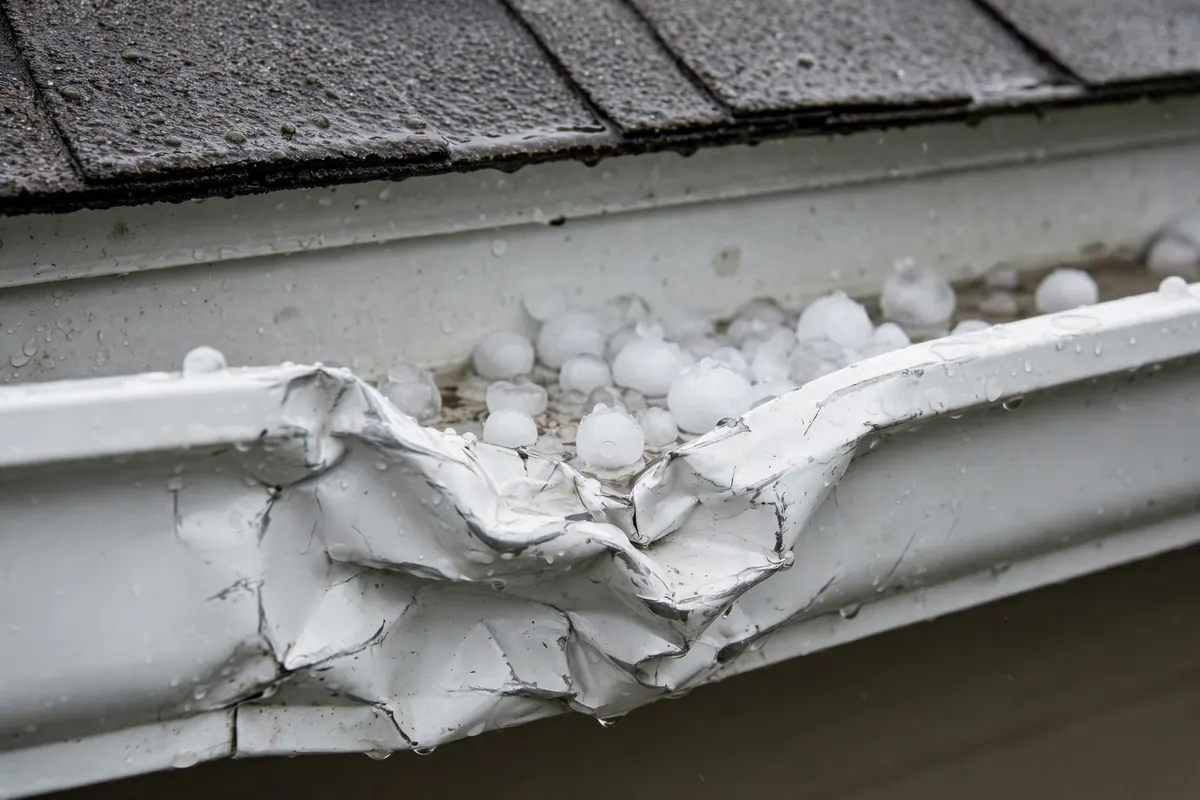
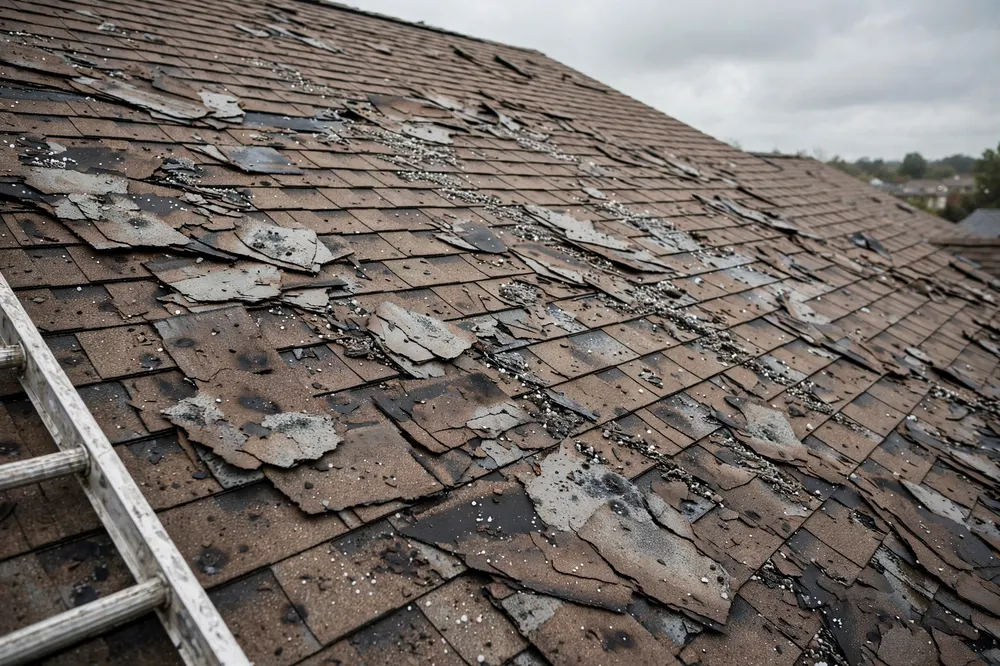
Bruising's evidence partners: the granules it sheds, and the inspection that certifies it.
Wondering What Your Roof Is Hiding?
Bruising does not show from the ground — it is found on the roof, by hand. One free call books the inspection that checks for it.
📞 Call (800) 555-0100Free Call · Answered 24/7 · Local Pros Near You