
High-Altitude UV: Why Colorado Roofs Age Faster
In This Guide
Quick Answer
Ultraviolet radiation intensifies with altitude — and Colorado roofs live a mile or more closer to the sun, under thinner, drier air. UV is the slow half of every hail story here: it cooks the asphalt that hail exposes, embrittles sealants and boots, and sets the state's roofs ageing faster than sea-level schedules suggest. This guide explains how altitude UV ages each roof component, and what owners can do about a force they cannot switch off.
Thinner Air, Stronger Sun
UV radiation increases measurably with elevation — roughly a tenth more for every thousand metres climbed, before Colorado's clear, dry air removes the haze and humidity that filter it further at lower elevations. A roof in Denver takes a materially stronger UV dose than the identical roof in Dallas; a roof in Leadville or the high suburbs takes more again. The atmosphere is the sunscreen, and at altitude there is simply less of it between the roof and the source.
Asphalt is an organic material, and UV is its solvent in slow motion: the radiation breaks the asphalt's molecular chains, the volatile oils that keep it flexible cook out, and the surface oxidises into a harder, more brittle material. Every asphalt product on the roof — shingles, sealants, boot collars, underlayment at exposed edges — runs this clock, at an altitude-set rate.
The Granule Bargain
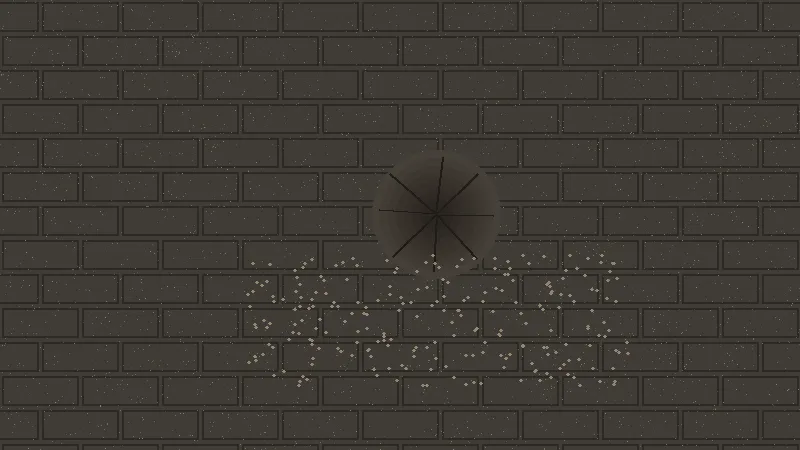
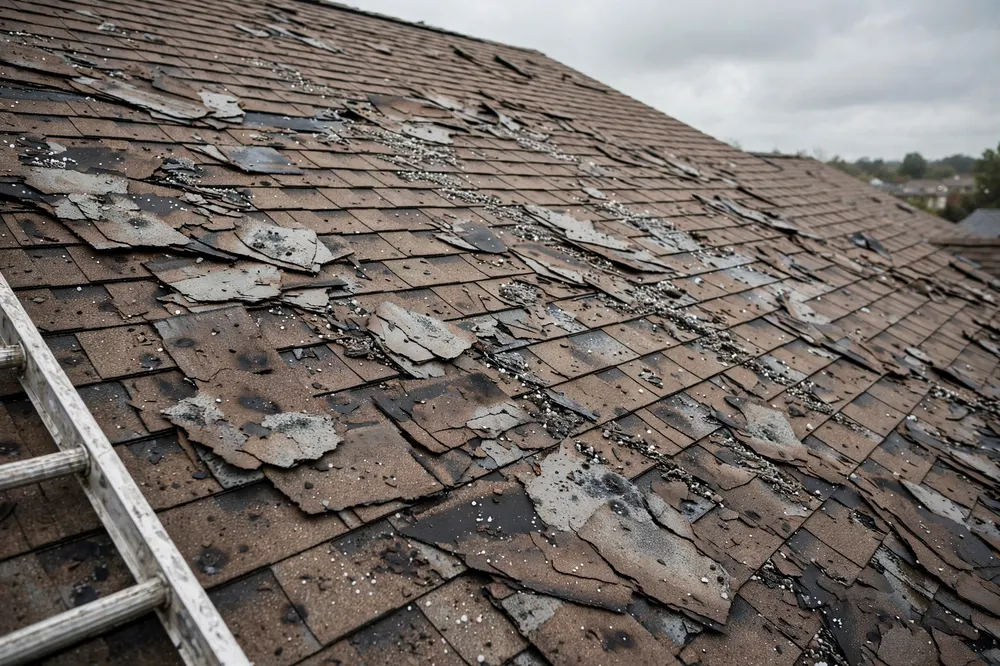
Shingles are engineered around the problem: the granule layer is the UV armour, an opaque mineral shield that takes the radiation so the asphalt doesn't have to. An intact granule coat reduces the underlying ageing to a crawl. This is why granule loss — from hail, from age, from foot traffic — is never a cosmetic finding in Colorado: every bald patch is a spot where the altitude sun now works directly on asphalt, ageing that shingle at several times its designed rate. Hail strips the armour; UV then does the killing, on a delay that confuses owners and never surprises inspectors.
It also explains the geography of wear on a single roof: south and west slopes, which take the day's strongest sun, age visibly faster than north slopes in this hemisphere — granules loosen, mats embrittle, colours fade differentially. A roof is four roofs ageing at four speeds, and inspections read them separately for exactly this reason.
Boots, Sealants And The Small Plastics
The roof's minor components age fastest under UV, because they are thin and polymer-based. Pipe boot collars are the textbook case: the rubber hardens, crazes and splits on a roughly fifteen-year clock at sea level — faster up here — opening the classic leak around the pipe. Sealant beads at flashing and penetrations skin, crack and lose adhesion on a similar schedule. Plastic vent caps chalk and embrittle. None of these failures needs a storm; the sun schedules them, and hail merely accelerates the ones it has already started.
The maintenance conclusion is disproportionately valuable: the cheapest items on the roof are the ones UV kills first, and catching them on the inspection calendar — boots swapped, sealant renewed — is a small bill that prevents the interior-sized ones. An inspection report that does not mention the boots has not finished its rounds at altitude.
Not Sure What Your Gutters Need?
One free call connects you with a local pro who can look at the whole roof edge — gutters, flashing and shingles — and tell you honestly what is worth fixing.
📞 Call (800) 555-0100Free Call · Answered 24/7 · Local Pros Near You
Colour, Heat And The Energy Side
UV ageing travels with its sibling, heat. Dark roofs at altitude absorb fierce solar load, and attic temperatures track it; the heat accelerates the same chemical ageing from the other side of the shingle and punishes inadequate ventilation. Colour choice at replacement is therefore a materials decision as well as an aesthetic one: lighter blends run cooler and age slower in this sun, at some cost in how they show the state's dust and granule patterns. Manufacturers' Colorado-appropriate lines are formulated with the region's exposure in mind — another specification to ask about by name rather than discover by decade.
Ventilation finishes the heat story. A well-vented attic carries the solar load out of the assembly, slowing both the shingle's backside ageing and the deck's. At altitude, ventilation is not an energy accessory; it is part of the roof's UV defence, working on the half of the shingle the granules cannot protect.
UV And The Claim Calendar
UV does not create claimable damage — weather events do — but it referees the claim's timeline twice over. First, it is why hail damage deteriorates on a schedule here: the exposed asphalt a storm leaves behind degrades within seasons, so 'wait and see' is a decision with a cost. Second, adjusters and inspectors read UV weathering to date damage: fresh hail fractures are bright and sharp; old ones are oxidised grey. The sun, in effect, timestamps the roof's injuries — useful evidence when it is read promptly, and a reason late inspections argue harder about which storm did what.
The filing window runs on the policy's clock, but the roof runs on the sun's. Both argue for the same behaviour: inspect promptly after storms, file inside the window with the roof's evidence fresh, and never let a damaged Colorado roof 'rest' through two summers on the theory that stillness is safety. At this altitude, the sun works on it every clear day.
Living Under A Stronger Sun
The owner's responses are unglamorous and effective: keep the granule layer's losses documented and, where hail caused them, claimed and repaired on time; replace the small UV-killed components on the inspection's schedule, not the leak's; choose replacement materials with the altitude formulation argued explicitly — granule adhesion, modified asphalts, and colours chosen for this light; and keep the attic ventilating so heat does not double the radiation's work.
None of it stops the ageing; all of it prices the ageing honestly. A Colorado roof is a twenty-to-thirty-year instrument playing in stronger weather at both ends of the year — hail in the summer, ice in the winter, and the sun, dealing UV every clear day between them. Owners who respect all three opponents keep their roofs longest.
UV degradation is the slow half of hail damage: once granules are gone, the high-altitude sun cooks the exposed asphalt until it turns brittle. Class 4 impact-resistant shingles carry the top UL impact rating and shrug off stones that would bruise a standard shingle — a common upgrade after a Colorado claim. Roof age decides how much hail a shingle can take — the same stone that scuffs a five-year-old roof can crack a fifteen-year-old one open. The insurance adjuster who climbs your roof works from the same test squares and photos, which is why meeting them with documentation ready matters. Colorado sits in Hail Alley, the Great Plains corridor where warm Gulf air and cold mountain air collide to make some of the continent's most frequent large hail.
Hail Damage Roof Help In Your City
Every topic in this guide lands on a real roof somewhere — city pages with their own hail records, housing data and local pros:
High Altitude UV Roof Ageing — Questions Homeowners Ask
Altitude, sunlight and the asphalt clock — the UV questions.
Still Have Questions? Call Free
A real person answers 24/7 and connects you with a local pro who can check your roof.
📞 (800) 555-0100Reviewed By Hamza
Lead Roofing & Storm Restoration Specialist
Hamza is an exterior restoration specialist with deep expertise in hail damage assessment, storm-related leak diagnostics, and impact-resistant roofing installations across high-altitude and severe-weather climates. He works directly with homeowners to identify hidden structural bruising and ensure long-lasting, code-compliant roof repairs.
Updated October 26, 2026
Guides From The Blog
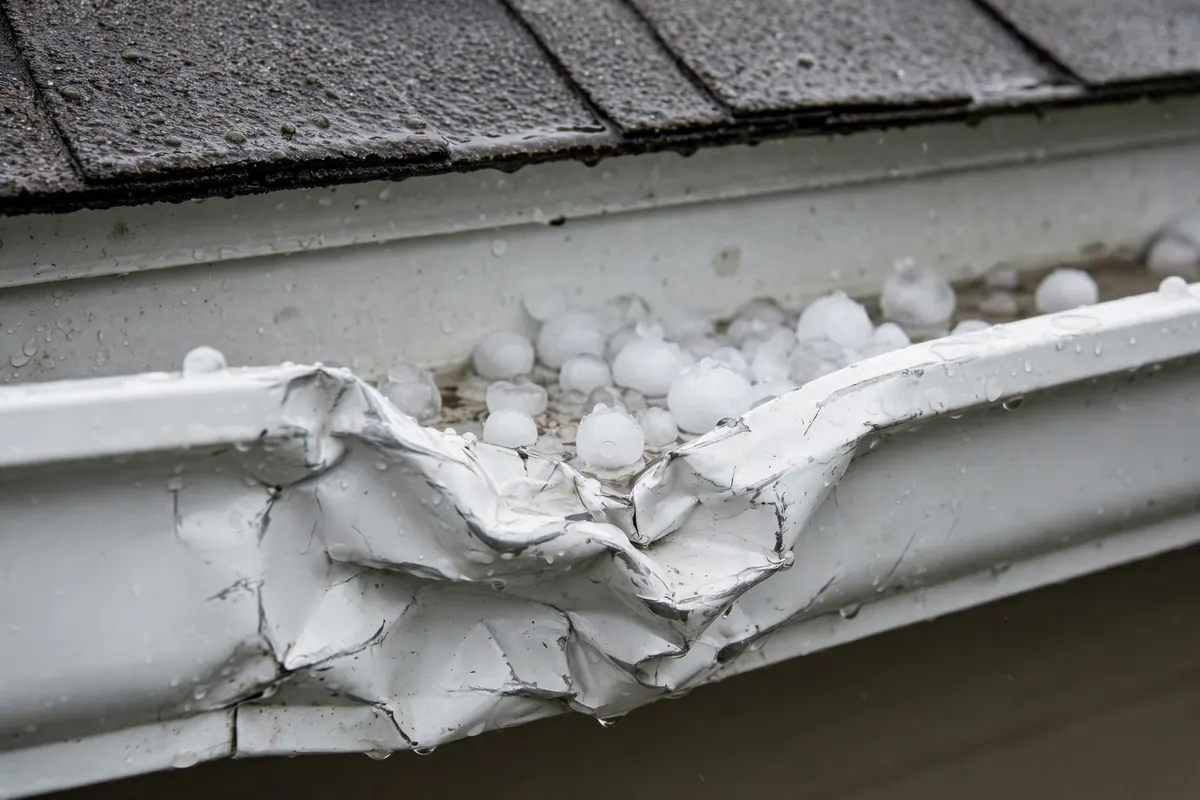
UV's two collaborators: the hail that exposes the asphalt, and the granule loss that starts the clock.
Roof Ageing Faster Than It Should?
An inspection reads UV ageing component by component — and tells you which parts are on the fast clock. One free call books it.
📞 Call (800) 555-0100Free Call · Answered 24/7 · Local Pros Near You