
Hail Damage To Siding: What To Check After A Storm
In This Guide
Quick Answer
Yes — hailstones big enough to bruise shingles routinely crack vinyl siding, dent fibre-cement and metal panels, and chip paint on the storm-facing walls of a house. Siding damage matters twice: it needs repair in its own right, and it is some of the best evidence a roof claim can have, because cracked siding records the storm's size and direction. This guide covers what hail does to each siding type and how the repair is scoped.
What Hail Does To Vinyl Siding
Vinyl is the most hail-vulnerable common siding. Stones strike and the panel cracks — typically a crescent or star crack at the impact point, often with the profile's edge split. Cold vinyl cracks more readily than warm, and older, sun-embrittled panels crack most of all. Because panels lock together in long runs, one cracked panel is easy to overlook until the wall is checked closely in raking light, which is how inspectors survey a storm-facing elevation.
A cracked panel is not merely cosmetic. The crack breaks the wall's weather skin: wind-driven rain gets behind the siding, wets the wrap and sheathing, and starts the slow damage nobody sees until the interior wall shows it. That is why insurers treat cracked siding as functional damage and why the repair — replacing the affected panels — is part of a complete hail scope, not an optional extra.
Fibre-Cement, Wood And Metal Siding
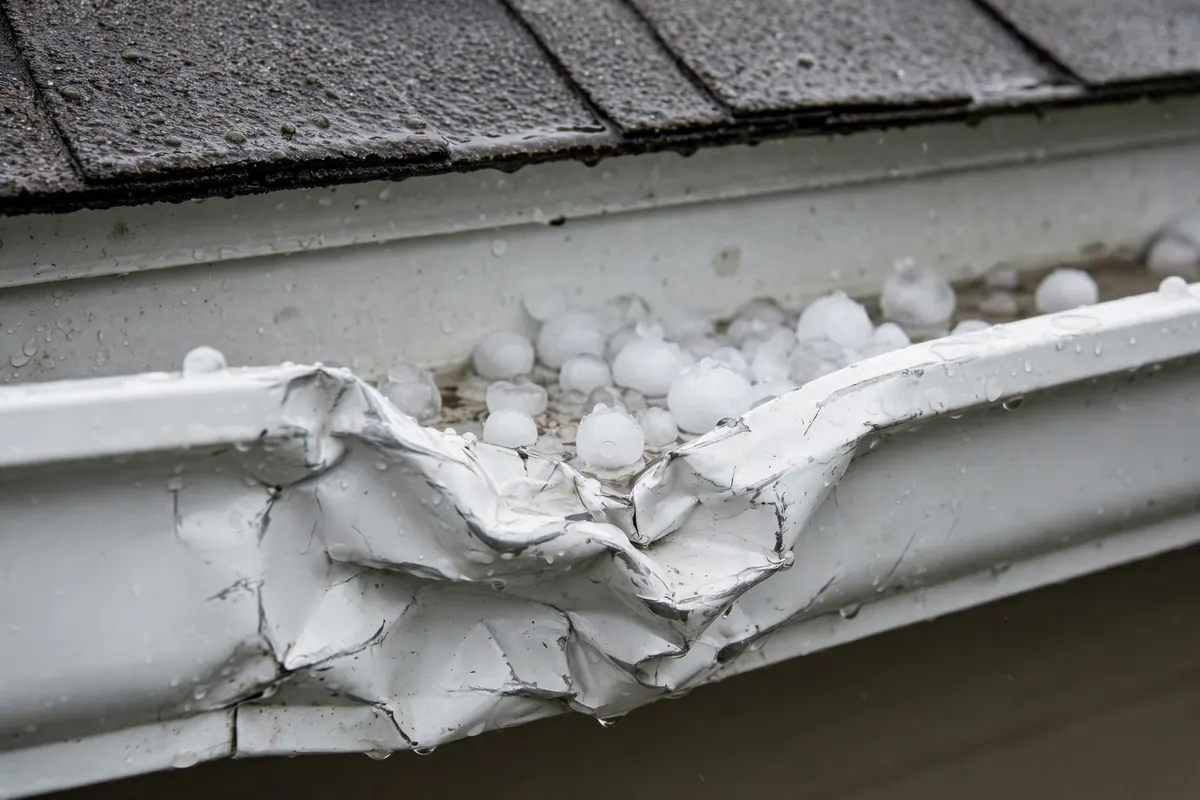
Fibre-cement resists cracking better than vinyl but chips and fractures at edges and corners under large stones, and its paint film breaks at impact points, opening the board to moisture. Wood siding dents and splits along the grain. Metal and aluminium siding dents in the same soft-metal pattern as gutters — usually cosmetic, occasionally creased enough at joints to open a water path. Each material fails in its own dialect, and the inspector reads them together.
Stucco and masonry shrug off all but the largest hail, which is itself information: a street where the vinyl is cracked and the stucco is pristine is a street where the hail was exactly the size the cracks suggest. Cross-reading materials this way is how storm size gets established on a property — and how a roof claim's weather story is corroborated.
Why Siding Damage Is Claim Gold
Adjusters believe patterns. Siding cracks concentrated on one or two elevations, at a height and spread consistent with wind-driven hail, matching dents in the gutters and hits in the roof's test squares on the facing slope — that is a coherent storm story, documented in three materials. Homeowners who photograph siding damage early hand their claim exactly that coherence. Photograph before cleanup, with something in frame for scale, and keep the storm date with the pictures.
The converse also holds: siding damage can date a storm. Fresh cracks are bright at the fracture; old ones weather grey. An inspector separating this spring's cracks from a five-year-old set is doing the same work as the test squares above — tying your house to one recorded event in the NOAA database, inside the filing window.
Not Sure What Your Gutters Need?
One free call connects you with a local pro who can look at the whole roof edge — gutters, flashing and shingles — and tell you honestly what is worth fixing.
📞 Call (800) 555-0100Free Call · Answered 24/7 · Local Pros Near You
The Repair: Panels, Matches And Honest Limits
Vinyl repair means replacing the cracked panels: the locks are unzipped with a siding tool, damaged panels come out, new ones go in, and the runs are re-locked. Fibre-cement repairs replace fractured boards and reseal and repaint the breaks. The skilled part is the match — manufacturers discontinue colours and profiles, and sun fades what is on the wall, so a perfect match is not always available; a good pro tells you that before the work, not after, and sequences repairs so any slight mismatch sits where the eye goes last.
Scope follows evidence: the storm-facing elevations with cracks, plus any wall where cracks are found, panel by panel. Beware the scope that re-sides the whole house off a handful of cracks, and the one that patches cracks with caulk and calls it done — cracks are replaced, not filled, because the panel's job is to shed water in a locked system.
Checking Your Own Siding After A Storm
Walk the walls after hail, in daylight, starting with the elevation that faced the storm. Look along the siding in raking light — cracks hide in the profile's shadow lines. Run a palm lightly over suspect areas; cracks catch skin before eyes catch them. Check the soft metals on the same wall: vents, caps, light fixtures and the AC unit's fins all dent, and each dent helps size the stones that hit your house.
Then widen the lens: the same inspection that covers the roof should cover the walls, gutters and windows as one exterior system. A claim assembled that way — roof counts above, siding cracks at eye level, gutter dents at the eaves — is the strongest kind, and it comes from one visit booked with one free call.
When Siding Damage Is The Whole Story
Sometimes the roof is fine and the siding took the storm: wind-driven hail on a steep, sheltered roof can leave shingles nearly untouched while the exposed wall is cracked in a dozen places. File it the same way — siding damage is its own claim scope, and waiting helps nothing, since cracks weather, panels get discontinued and windows close. The inspection that finds 'roof clean, siding damaged' has still done its job, and its photographs date the event.
And sometimes siding is the messenger for the roof you cannot see. If your walls are cracked, assume the facing slope needs its test squares counted before you assume anything else. The wall is where the storm introduced itself; the roof is where it usually did the expensive work.
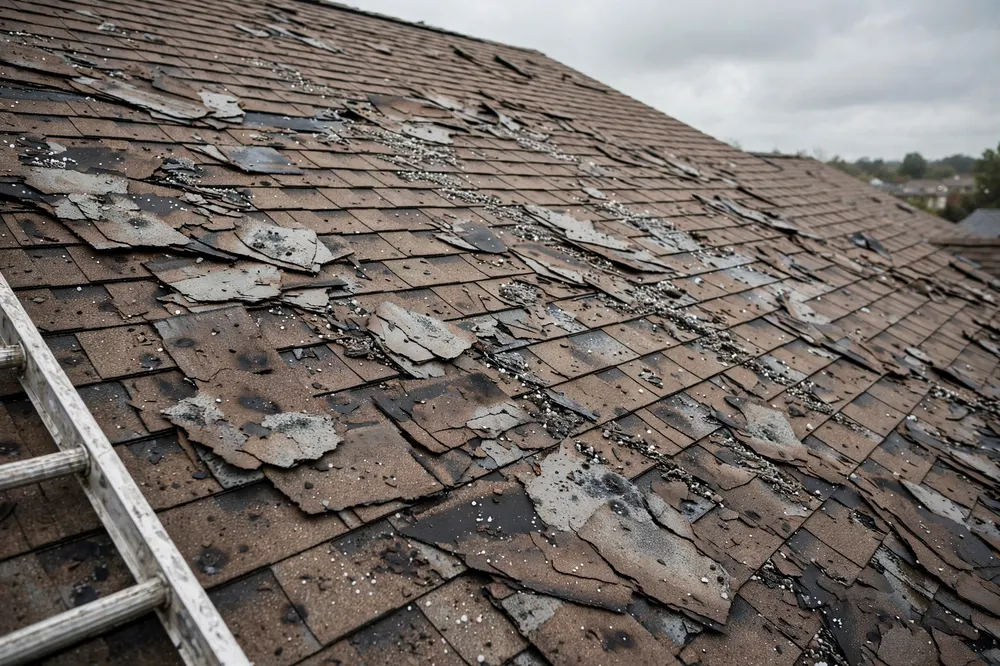
Flashing — the metal sealing every chimney, wall joint and vent — is where hail dents and wind lift combine to start the sneakiest leaks. The insurance adjuster who climbs your roof works from the same test squares and photos, which is why meeting them with documentation ready matters. The drip edge along the eaves is thin metal that shows hail dents clearly, and pros read it as a quick first gauge of the storm. Granules are the roof's sunscreen; once hail knocks them loose in quantity, the asphalt beneath ages in fast-forward.
Hail Damage Roof Help In Your City
Every topic in this guide lands on a real roof somewhere — city pages with their own hail records, housing data and local pros:
Siding Repair — Questions Homeowners Ask
Siding after hail: what breaks, what it proves, and what the repair involves.
Still Have Questions? Call Free
A real person answers 24/7 and connects you with a local pro who can check your roof.
📞 (800) 555-0100Reviewed By Hamza
Lead Roofing & Storm Restoration Specialist
Hamza is an exterior restoration specialist with deep expertise in hail damage assessment, storm-related leak diagnostics, and impact-resistant roofing installations across high-altitude and severe-weather climates. He works directly with homeowners to identify hidden structural bruising and ensure long-lasting, code-compliant roof repairs.
Updated October 26, 2026
Guides From The Blog
Siding is one half of the storm's signature; here is the gutter half, and the roof above both.
Siding Cracked In The Storm?
One free call gets the whole exterior assessed — roof, gutters and siding in a single inspection, each documented separately for the claim.
📞 Call (800) 555-0100Free Call · Answered 24/7 · Local Pros Near You