
Hail-Damaged Gutters: Repair Or Replace?
In This Guide
Quick Answer
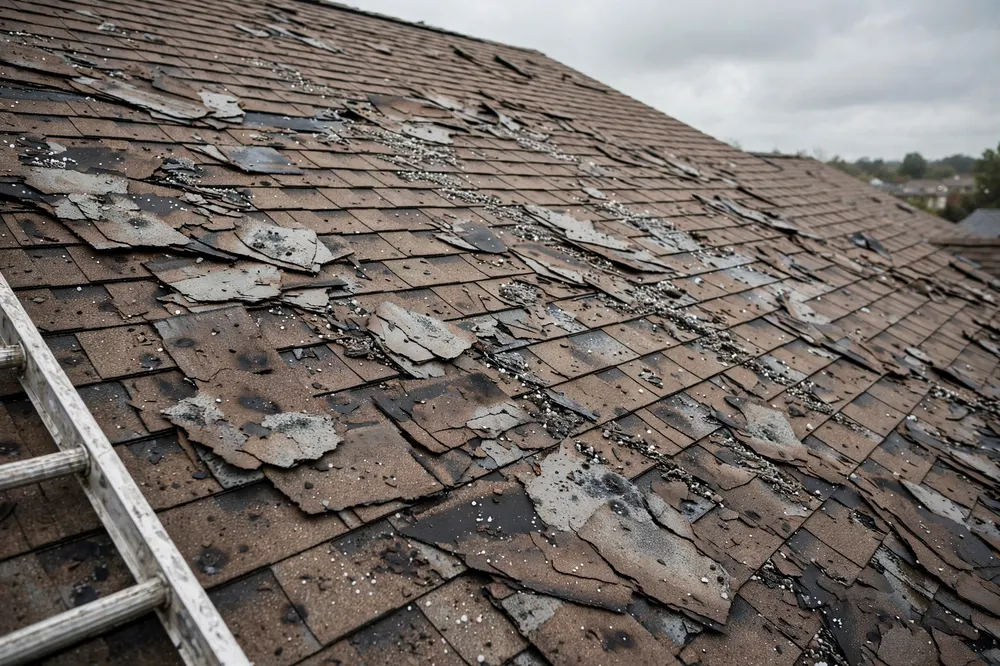
Repair hail-damaged gutters when the damage is local — a dented section, a split corner, a leaking seam. Replace the run when creases and crush damage are spread along it, when water ponds instead of draining, or when the fascia behind it has started to rot. And always check the roof above: hail strong enough to crush gutters usually marked the shingles too.
What Are The Signs Your Gutters Took Hail Damage?
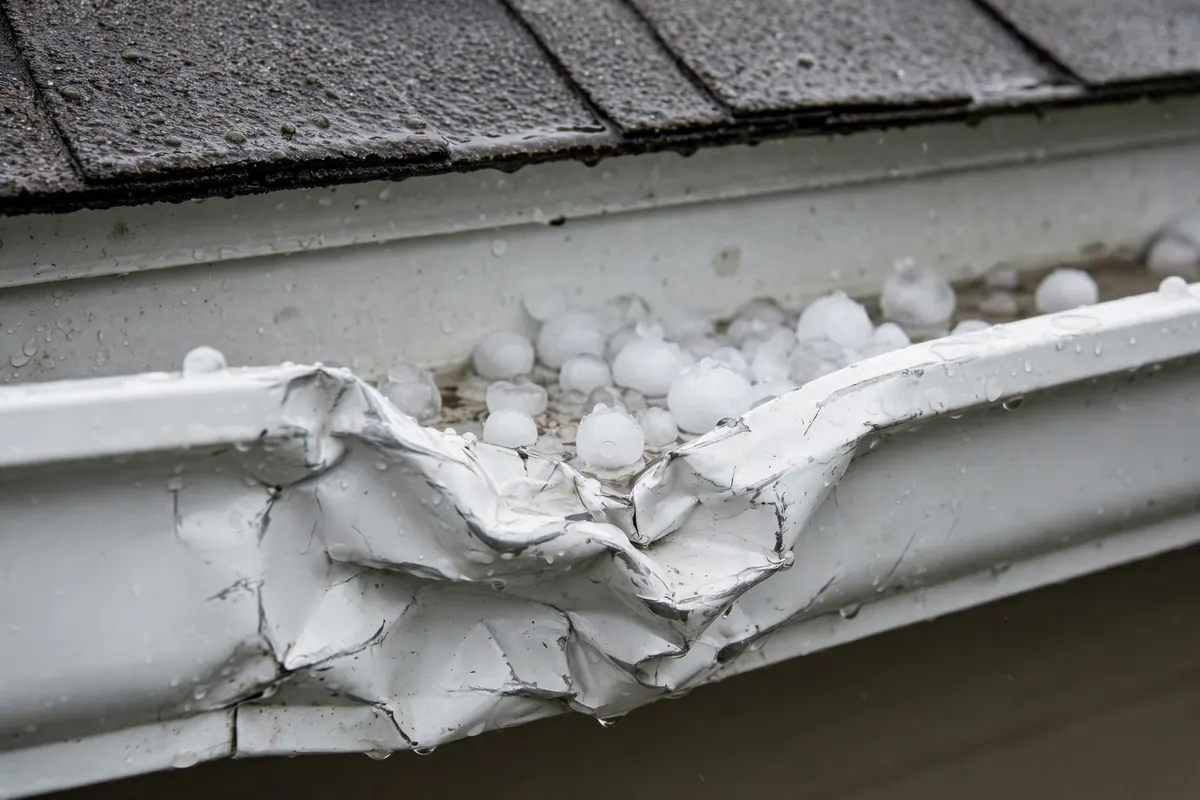
The signs are visible from the ground, which is what makes gutters such useful evidence. Look for round dents and creases along the front face of the run, crushed corners where the metal folded, splits at the seams, and sections hanging at a wrong angle or pulling away from the fascia. Inside the gutter, hailstones sitting in silt days after the storm tell their own story. Overflow streaks down the siding after the next rain mean the profile no longer holds its pitch — water is spilling instead of draining.
Read the hail impact marks themselves before you decide anything. Fresh hail dents are bright and sharp-edged, with the paint or finish knocked off the centre; old dents are dull and weathered grey. That difference matters, because it dates the damage to a specific storm — exactly what an insurer will ask. Check the soffit board above the gutter too: brown staining on the soffit means water has been spilling over the back of the run, often for seasons before the hail arrived. And look hardest at the stretch below any roof valley: a valley concentrates a whole slope's runoff into one short run, so that section takes the biggest stones at the worst angle and overflows first.
Repair Or Replace? The Honest Test
A gutter run is worth repairing when the damage is local: a dented section, a split corner, one leaking seam, hangers loosened over a short stretch. Straightening, resealing and re-hanging fix those properly. Replacement earns its money when the damage is spread out — hail rarely dents one spot — when the metal is creased so often it will never hold paint or pitch again, or when the profile is so crushed that water ponds along it. A good rule: if a pro would repair more than about a third of a run, the whole run is usually the better buy.
One more test while the ladder is up: the wood behind the gutter. Fascia that is soft at the nail line will not hold new fasteners, and the roof decking edge behind it is often in the same shape after years of overflow. Repairing a gutter onto rotten wood is money spent twice — the run will sag again within a couple of winters. Sound wood, a straight line and damage in one or two spots says repair. Soft wood, a wavy line and damage everywhere says the honest answer is replacement.
What Does A Pro Actually Do During Gutter Repair?
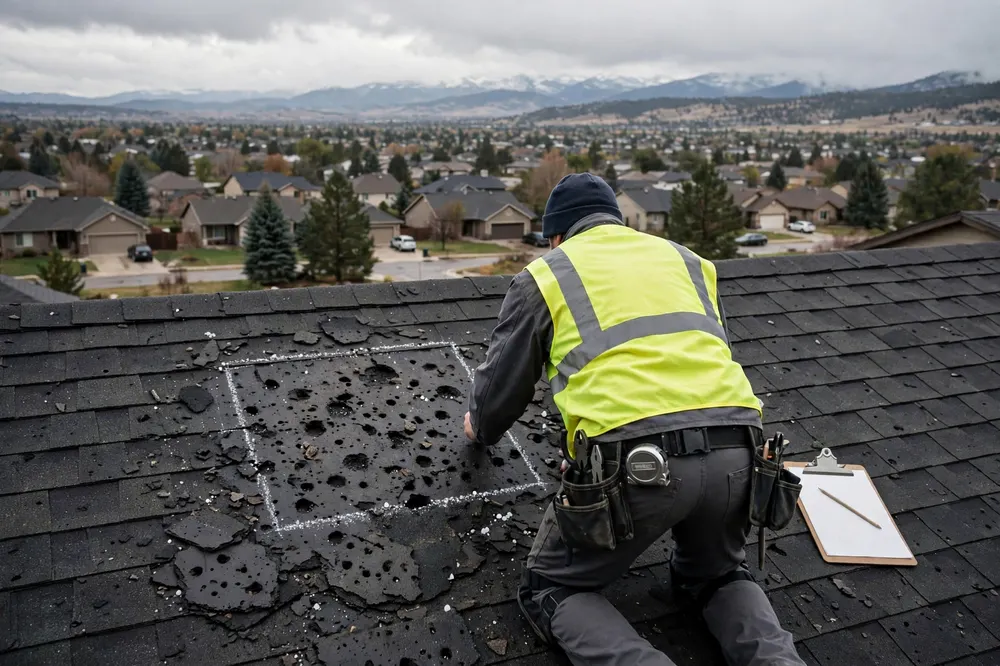
First, the whole roof edge is assessed, not just the gutter — hail that crushed the run usually marked the shingles and flashing above it too, and fixing the gutter under a bruised roof edge is doing the job twice. Then the damaged sections come down, the fascia behind them is checked for rot from any overflow, and the repair is made: sections replaced or straightened, corners mitred and sealed, hangers reset at the right spacing, and the pitch re-set so water runs to the downspout. Finally everything is water-tested with a hose before anyone calls it done.
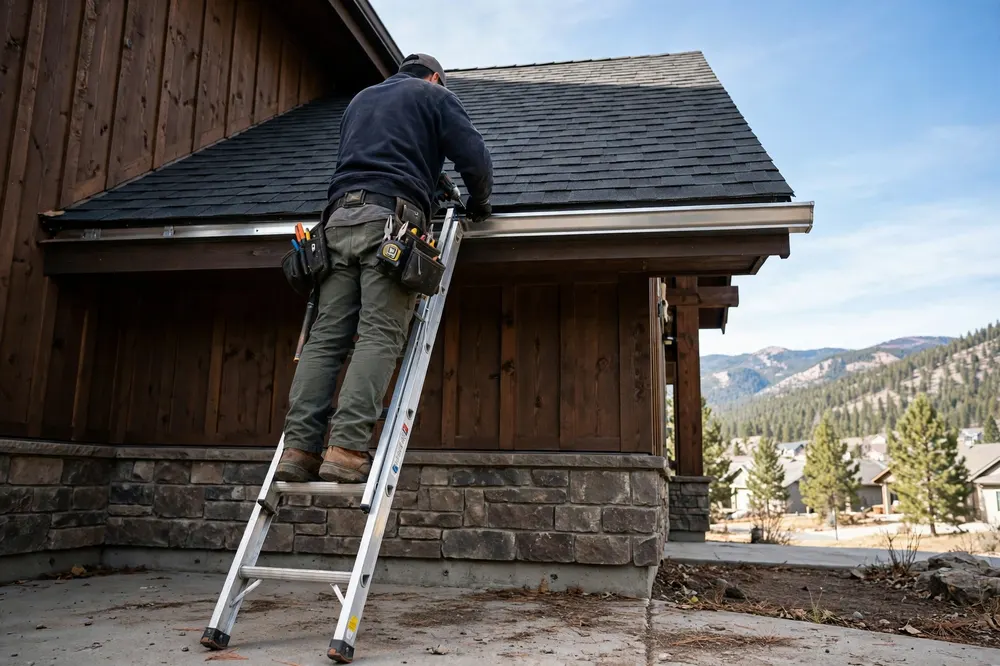
The edge of the roof gets attention while everything is open. The pro checks the drip edge for splits, and the ice & water shield at the eave — the self-sealing membrane that stops meltwater backing up under the shingles — because the same hail that crushed the gutter often cracks that shield where it folds into the run. A split shield is a small fix today and a ceiling stain in February if it is ignored. Corners are re-sealed with gutter sealant, never household caulk, and the whole system is flood-tested with a hose before the ladder comes down.
Not Sure What Your Gutters Need?
One free call connects you with a local pro who can look at the whole roof edge — gutters, flashing and shingles — and tell you honestly what is worth fixing.
📞 Call (800) 555-0100Free Call · Answered 24/7 · Local Pros Near You
What Affects The Cost Of Gutter Repair?
Nobody honest quotes gutters from a photograph of one dent. The real factors are the length of run involved, whether a section can be straightened or must be replaced, the metal gauge and profile already on the home, how many corners and downspouts are in the damaged stretch, access — a two-storey eave over a slope costs more than a ranch eave over a lawn — and whether the fascia behind the gutter has rotted from overflow. Get the figure in writing after a look at the whole edge, not a guess over the phone.
Roof pitch changes the labour more than most owners expect. A steep pitch fires runoff at the gutter with real speed — overshooting in heavy rain is a pitch problem as often as a gutter problem — and steep, high eaves need more ladder moves and safety gear per section. Keep units straight when you compare quotes, too: gutters are priced by the linear foot, while any roof work above them is priced by the roofing square, 100 square feet. A quote that blurs the two is a quote to question.
Do Gutters Count In A Hail Claim?
Yes — gutters and downspouts are part of the home's exterior, and hail damage to them belongs in the same claim as the roof. In fact, dented gutters and downspouts are often the clearest evidence an adjuster sees, because soft metals record a storm's size honestly. Photograph them early, before cleanup. One Colorado rule matters here: under Senate Bill 38, no roofer may pay or waive your deductible, so be wary of anyone who offers to fold the gutters in 'for free' against it.
Photograph the gutters before anything is touched, and keep the photos with your roof photos in one dated folder. Adjusters read soft metals — gutters, downspout elbows, vent caps — as the storm's fingerprint, because they dent at sizes that bruise shingles. A crushed gutter run can therefore support the roof claim even where the shingles themselves look borderline from the ground. If the run is replaced, keep the invoice: it belongs in the same claim file as the roof paperwork.
When Should The Whole Run Be Replaced?
When creases run the length of the gutter, when seams have split in several places, when the back edge has folded so overflow pours behind it onto the fascia, or when the existing gutter is an old, thin-gauge profile that dents if you look at it. Full replacement also makes sense alongside a roof replacement — the eaves are already being worked on, the new drip edge and gutters are fitted together, and the whole edge starts its next twenty years as one system.
Replacement is also the moment to fix the design, not just the damage. A seamless run formed on site has no joints to split mid-span; a 6-inch profile carries the cloudburst volumes that overwhelm the old 5-inch standard on bigger roofs; and box mitres at the corners outlast the screwed strip mitres that leak first. If the roof above is being replaced in the same project, sequence matters: roof first, gutters last, so ladders and tear-off debris never touch the new run.
How Do You Protect Gutters From The Next Storm?
You cannot stop hail, but you can stop it mattering so much. Heavier-gauge metal dents less and springs back better. Gutter guards with a solid, sloped profile shed stones better than fine mesh, which can itself be mashed flat by big hail — ask honestly which suits your roof. Keep runs clear so storm water has somewhere to go, and after any hailstorm, walk the eaves with your phone camera: the gutter is the cheapest inspection tool you own, because it records every storm that crossed your roof.
Hail-damaged gutters are rarely just gutters. They are the roof edge telling you what the storm really did — and the first thing a pro reads when they arrive. If yours are dented, crushed or overflowing after hail, one free call gets the whole edge checked, roof included, before the next storm adds its own damage to the list.
Prevention is mostly rhythm. Keep the runs clear twice a year — late spring after the seed fall, and late autumn after the leaves — because a clogged gutter turns every hailstorm into an overflow event against your own fascia. Keep the attic breathing, too: a clear ridge vent working with open soffit vents slows the freeze-thaw cycling that loosens gutter spikes every winter. Guards help on some homes and hinder on others — under pines they shed needles well; in hail country, choose guards rated for impact, or the next storm simply dents the guard into the gutter it was protecting.
Hail Damage Roof Help In Your City
Dented gutters are read best alongside the roof above them. City pages with their own hail records and local pros:
Gutter Repair Questions
The questions homeowners ask us about hail-hit gutters, answered straight — costs are factors, never invented prices.
Still Have Questions? Call Free
A real person answers 24/7 and connects you with a local pro who can check your roof.
📞 (800) 555-0100Reviewed By Hamza
Lead Roofing & Storm Restoration Specialist
Hamza is an exterior restoration specialist with deep expertise in hail damage assessment, storm-related leak diagnostics, and impact-resistant roofing installations across high-altitude and severe-weather climates. He works directly with homeowners to identify hidden structural bruising and ensure long-lasting, code-compliant roof repairs.
Updated October 26, 2026
Guides From The Blog
More guides from the blog — inspections and siding take the same storms your gutters do.
Need Gutter Repair Help After Hail?
One free call connects you with a local pro who can check the whole roof edge — gutters, flashing and shingles — and tell you honestly what is worth fixing. Call now.
📞 Call (800) 555-0100Free Call · Answered 24/7 · Local Pros Near You