
How To Know When You Need A New Roof
In This Guide
Quick Answer
A roof announces its end in a specific vocabulary: granules shedding by the handful, tabs curling and cracking, bruising everywhere a thumb presses, leaks that migrate, and a repair history that keeps growing. Any one sign is a maintenance item; several together are the roof's resignation letter. This guide lists the signs in the order pros weigh them — and separates the ones that mean 'repair' from the ones that mean 'replace'.
Granules: The First And Truest Sign
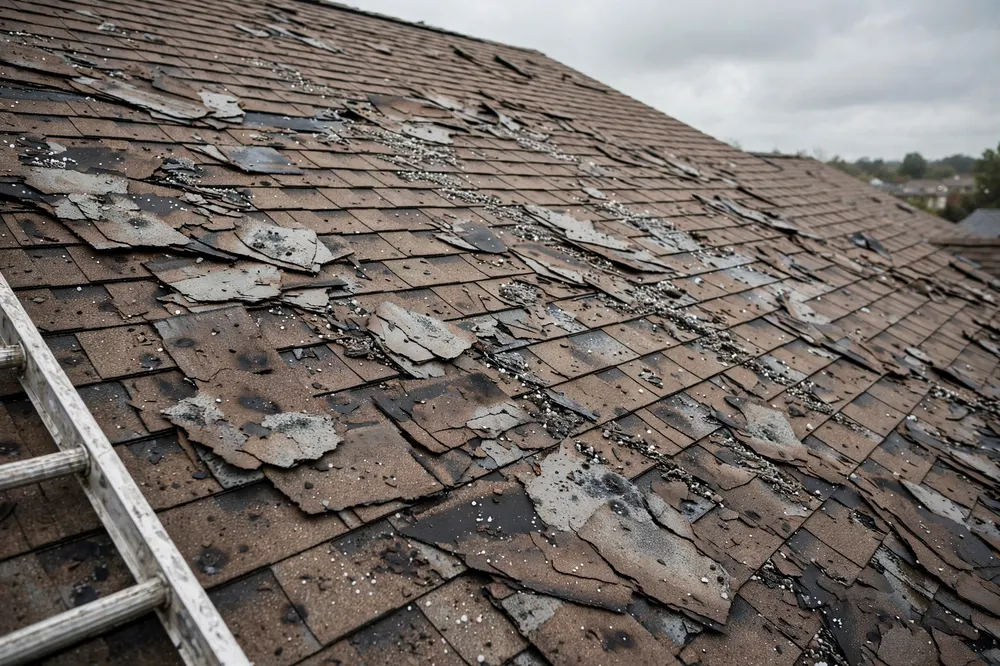
A handful of granules in the gutter after a storm is weather. Granules by the cupful, after every rain, with the downspout splash blocks gritty and the shingles themselves showing bald, shiny patches — that is the roof shedding its skin. Granules are the UV armour and the impact surface in one; their mass departure means the asphalt beneath is now ageing in direct Colorado sun, and the roof's remaining life is being spent at several times the designed rate.
Read the piles correctly: new roofs shed a little excess in their first year, and a single hailstorm strips granules violently but locally to the damage. The end-of-life pattern is different — chronic, general, worsening, and paired with the other signs in this guide. Granule loss is also the finding that most changes an inspection's verdict, because it cannot be patched: you cannot re-armour a slope.
Curling, Cracking And The Brittle Test
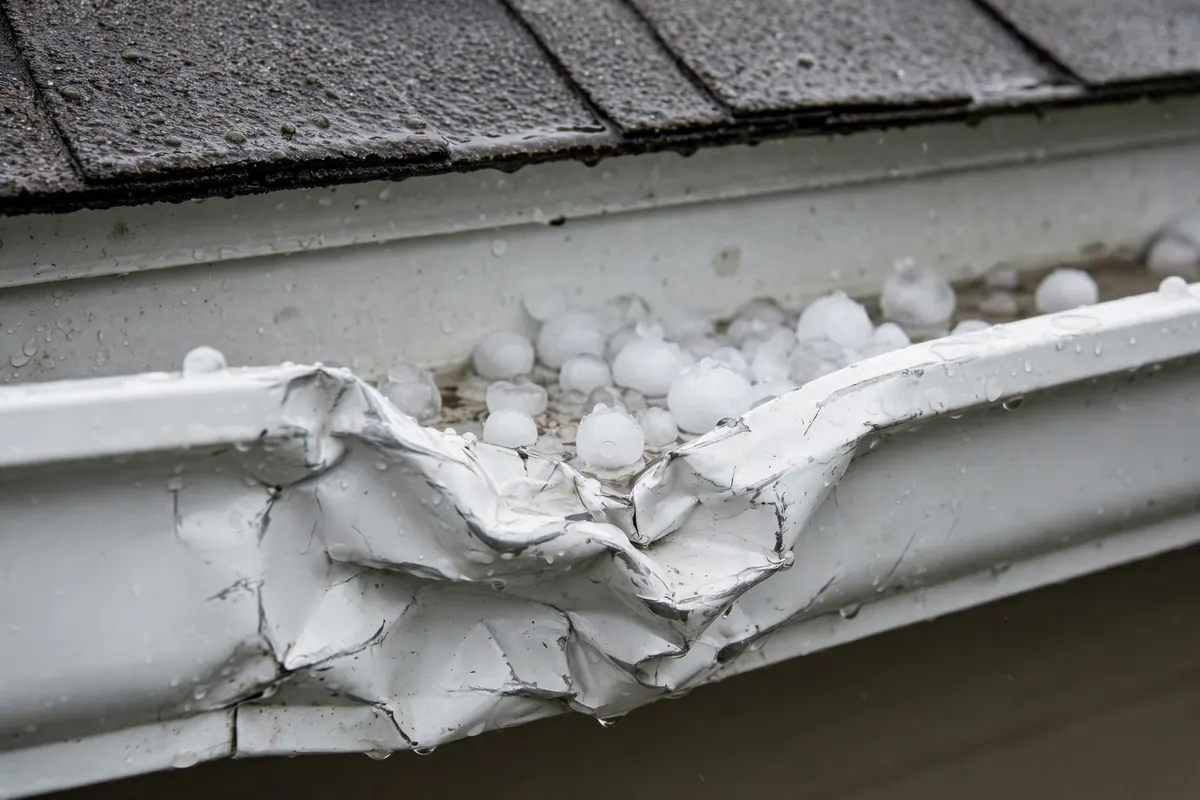
Shingles age flat-to-curled: edges lift, tabs cup, corners turn. Curled tabs catch wind, break in handling, and no longer seal to the course below, so the roof's wind and water behaviour degrades together. Cracking runs the same story in the other direction — mats that have lost their oils split along stress lines and at tab corners, and hail that a young roof would shrug off now fractures them at quarter size.
The field test is the thumb and the lift: a sound shingle flexes; an old one crackles, and its tabs resist lifting for repair because they would rather snap. When a pro tells you the roof is 'too brittle to repair', this is the physical fact underneath the phrase — the maintenance operations themselves have become destructive, which is as clear a definition of end-of-life as roofing offers.
Leaks That Migrate And Multiply
One leak at a boot or a flashing is a repair. A leak fixed here, appearing there next season, then a third at a different joint — that pattern is not bad luck; it is a system reaching its end together. Boots, sealants, flashing laps and the shingle field share a birth year and roughly a lifespan, so their failures bunch. Homeowners experience this as whack-a-mole with invoices; pros read it as a slope (or roof) asking to be renewed as a unit.
The attic tells the same story written in wood: multiple stain generations on the decking, repairs layered on repairs. When the inspection's map of past and present water paths covers several slopes, the recommendation stops being about this leak. Price the year's leaks honestly — three call-outs approach real money — and the replacement conversation starts itself.
Not Sure What Your Gutters Need?
One free call connects you with a local pro who can look at the whole roof edge — gutters, flashing and shingles — and tell you honestly what is worth fixing.
📞 Call (800) 555-0100Free Call · Answered 24/7 · Local Pros Near You
Sagging, Softness And Deck Findings
Some signs bypass the covering entirely. A visible sag or dip in a slope line, a spongy give underfoot on the roof, decking that flexes between rafters — these speak of the structure under the shingles: rot from long moisture, or decking at its limit. Coverings can be renewed over decks only when the deck is sound; a soft deck makes replacement mandatory rather than optional, because new shingles over failed wood is a photograph of a roof, not a roof.
Deck findings also rewrite repair scopes mid-job, which is why honest quotes price decking by the sheet in advance and photograph what they find. A homeowner whose 'shingle repair' quote keeps growing should ask for those photographs: legitimate deck rot is visible, documentable, and the single most common honest reason a job's scope expands once opened.
Age, History And The Repair Ledger
The calendar is a sign too. A three-tab roof at eighteen years, an architectural roof at twenty-five, in Colorado's UV — these are roofs whose remaining life is short under any reading, and every other sign should be interpreted against that backdrop. Add the repair ledger: if the last five years hold a boot, two leak calls, a flashing rebuild and a section repair, the roof has been telling you its trajectory in instalments, each cheaper than replacement and collectively approaching it.
Storms deliver the verdict on such roofs. The hail that a young street shrugs off totals the old roof — and the claim, if filed in window, converts the inevitable replacement into a covered one. This is why the inspection after hail matters most on old roofs: it is the moment the roof's age and the policy's promise briefly overlap.
The Signs That Only Mean 'Repair'
Balance matters, because the same vocabulary has honest small readings. A single split boot: repair. One leak traced to one creased flashing: repair. A few tabs lost to a wind gust on a young roof: repair. Localised hail counts on one slope of a mid-life roof: repair or one slope. A sound roof with one ageing component is a maintenance story, and a pro who reads it as replacement is selling, not inspecting.
The discipline of this guide runs both directions. Weigh the signs as a bundle — surface, flexibility, leaks, deck, age, ledger — and let the bundle's weight decide. Bundles are hard to fake and easy to photograph, which is why the verdict you should accept is the one delivered with the evidence attached, whichever way it falls.
Roof age decides how much hail a shingle can take — the same stone that scuffs a five-year-old roof can crack a fifteen-year-old one open. The roof decking under the shingles must be solid before new material goes on; hail-rotted or leak-softened boards are replaced during the tear-off. A pipe boot's rubber seal cracks with age and UV, hail speeds the cracking, and a split boot is a classic slow leak that stains ceilings months later. 3-tab shingles, still found on some older Colorado homes, barns and sheds, are the thinnest covering in common use and the first to split under hail. The insurance adjuster who climbs your roof works from the same test squares and photos, which is why meeting them with documentation ready matters. UV degradation is the slow half of hail damage: once granules are gone, the high-altitude sun cooks the exposed asphalt until it turns brittle. A test square, the chalked 10-by-10-foot area marked on each slope, is how hits are counted the same way on every roof and every claim.
Hail Damage Roof Help In Your City
Every topic in this guide lands on a real roof somewhere — city pages with their own hail records, housing data and local pros:
Signs You Need A New Roof — Questions Homeowners Ask
Reading a roof's last chapter: which signs repair, and which ones replace.
Still Have Questions? Call Free
A real person answers 24/7 and connects you with a local pro who can check your roof.
📞 (800) 555-0100Reviewed By Hamza
Lead Roofing & Storm Restoration Specialist
Hamza is an exterior restoration specialist with deep expertise in hail damage assessment, storm-related leak diagnostics, and impact-resistant roofing installations across high-altitude and severe-weather climates. He works directly with homeowners to identify hidden structural bruising and ensure long-lasting, code-compliant roof repairs.
Updated October 26, 2026
Guides From The Blog
The sign-readers: how age is estimated, and the storm that often delivers the verdict.
Seeing Several Of These Signs?
Get them read professionally and in writing: one free call books an inspection that weighs each sign and gives you the repair-or-replace verdict with evidence.
📞 Call (800) 555-0100Free Call · Answered 24/7 · Local Pros Near You