
How Much Hail Damage Does It Take To Replace A Roof?
In This Guide
Quick Answer
There is no universal number — but there is a universal method. Insurers and roofers count functional hail hits inside a chalked test square on each slope, apply the insurer's guideline threshold for that shingle type, and weigh the roof's age and granule loss. Slopes over threshold are replaced; slopes under it are repaired. This guide explains the method, the guidelines' logic, and how to make sure your count is the honest one.
The Test Square Method, Again — Because Everything Hangs On It
One square is 10 feet by 10 feet — 100 square feet of slope — chalked on each face of the roof. Inside it, every hail hit that is functional damage gets circled: fractures, splits, bruised mats confirmed by hand. The count inside the square, not impressions of the whole slope, is the unit of decision. Squares are placed as fair samples of each slope's field, and both your inspector and the adjuster use the same unit precisely so their numbers can be compared.
Everything else in this guide is commentary on that count: what counts as a hit, what number triggers replacement, and what else — age, granules, distribution — moves the line. Master the square and you can follow any scope argument in Colorado roofing.
What Counts As A Hit
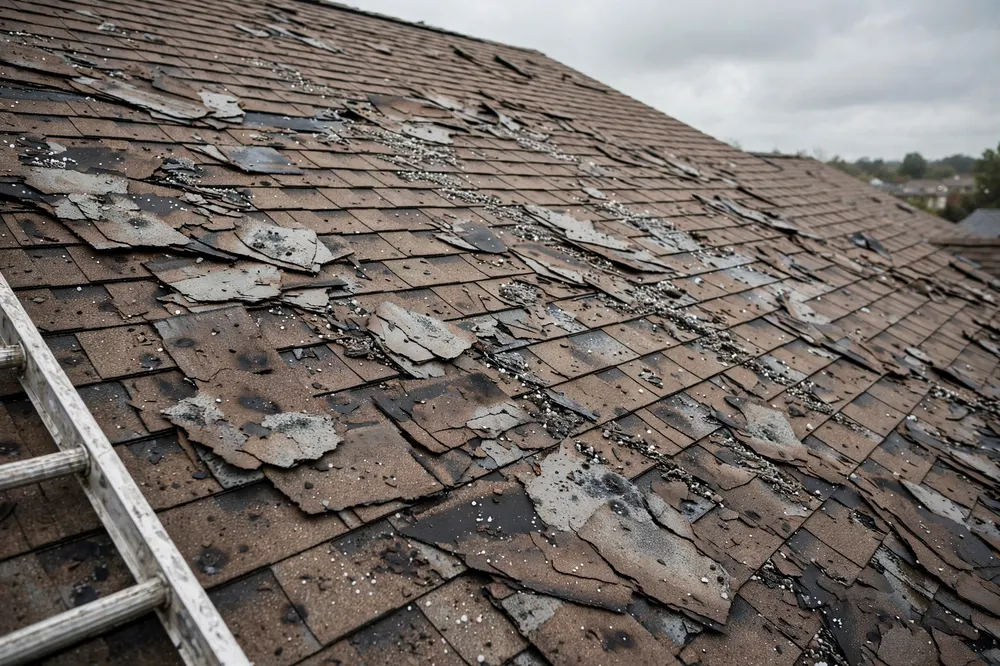
A hit counts when the stone damaged the shingle's ability to do its job: the mat fractured (the spongy bruise under hand pressure), the surface split or cracked through, or the impact stripped granules and exposed asphalt at that spot. Marks that did none of those — scuffs, superficial dents in the granule bed, manufacturing blemishes, blistering from age — do not count, and honest inspectors exclude them in front of you, because a count padded with non-damage collapses at the adjuster's own count.
The borderline cases are where inspections earn their keep: the bruise that needs the hand to certify, the mark that could be mechanical damage from a ladder or a fallen branch. Distribution helps judge — hail falls in random scatter aligned to a storm's direction; foot and tool damage clusters at access points. The pattern is evidence, and both sides read it.
The Thresholds Insurers Actually Use
Each insurer writes its own guideline — commonly expressed as a number of functional hits per test square that makes a slope eligible for replacement — and the numbers vary by company and by shingle type, with brittle or older products judged more leniently in effect because their hits more readily qualify as fractures. There is no state-published threshold; anyone quoting you one universal number for all insurers is inventing it. What is universal is the structure: count per square, guideline applied, slope decided.
Distribution can override a bare count. Damage concentrated in a repairable cluster may scope as a section even under a high total; damage spread evenly at moderate counts may fail the slope anyway, because weaving repairs across a whole face is not restoration. Adjusters weigh both, and your inspector's report should argue both — counts and map — slope by slope.
Not Sure What Your Gutters Need?
One free call connects you with a local pro who can look at the whole roof edge — gutters, flashing and shingles — and tell you honestly what is worth fixing.
📞 Call (800) 555-0100Free Call · Answered 24/7 · Local Pros Near You
Age And Granules: The Two Modifiers
Age moves the effective line because it moves what a hit means. On a young architectural roof, a counted hit is damage to an asset with decades left — insurers replace slopes to restore that. On a roof already in its final years, the same counts meet a different question — how much of this loss is the storm's and how much is time's — and ACV settlements shrink accordingly. The counts are identical; the valuation wrapped around them is not.
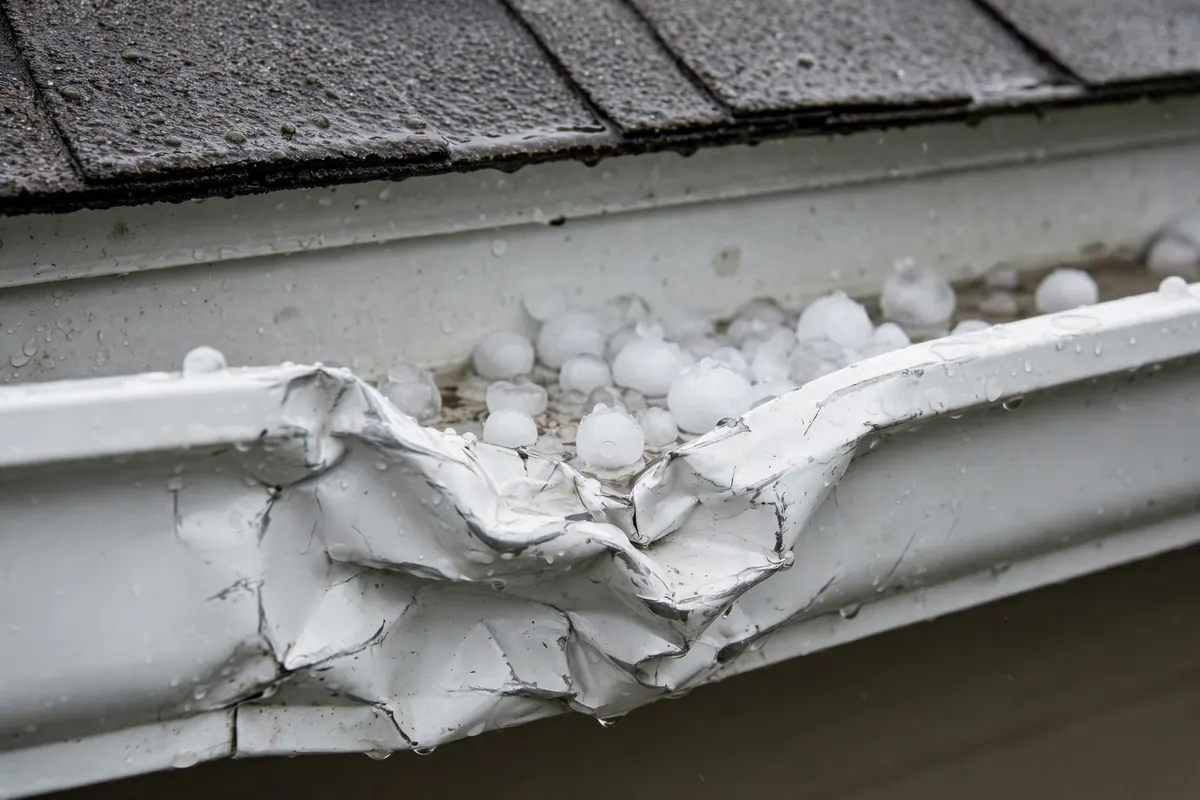
Granule loss is the second modifier, and the one homeowners most often miss. A slope can sit just under a hit threshold while having lost its UV armour across the whole field — functionally aged years in an afternoon. Thorough scopes argue granule loss as damage in itself, with gutter and downspout evidence of volume, and it tips more marginal slopes into replacement than any other single finding.
Disagreements: When Counts Collide
Your inspector counts twelve; the adjuster counts seven. This is the commonest argument in Colorado hail work, and it has a procedure rather than a shouting match: a re-inspection, ideally with both parties on the roof walking the same squares, and then the supplement, filed with photographs of the disputed hits. Mat fractures are demonstrable by hand on the spot — a fingertip settles what letters cannot — which is why joint inspections resolve most gaps.
Keep the dispute documentary and specific: this slope, these squares, these photographed hits. Vague escalation ('the whole roof is totaled') helps no one, including you. The supplement that wins reads like a recount petition — precinct by precinct, with exhibits. Build yours that way from the first inspection onward.
So: How Much Damage Replaces YOUR Roof?
The honest answer is a procedure, not a number: get your slopes counted properly, learn your insurer's guideline for your shingle, weigh the age and granule findings, and the answer falls out slope by slope. In practice, Colorado storms that drop golf-ball hail or better across a neighbourhood put most middle-aged roofs over the line on their facing slopes — which is why replacement, not repair, is the statistical norm after the big cells. But 'most' is not 'yours'.
Yours is knowable this week, for free, with chalk. That is the actual content of this guide's title: the amount of hail damage that replaces a roof is the amount a fair count finds over your insurer's line — and the only way to stand on the right side of that line is to have the count done properly, in photographs, before the argument starts.
The insurance adjuster who climbs your roof works from the same test squares and photos, which is why meeting them with documentation ready matters. Roof age decides how much hail a shingle can take — the same stone that scuffs a five-year-old roof can crack a fifteen-year-old one open. Every policy sets a filing window — often a year or two from the storm date — and hail found after it closes is usually the owner's bill. Class 4 impact-resistant shingles carry the top UL impact rating and shrug off stones that would bruise a standard shingle — a common upgrade after a Colorado claim.
Hail Damage Roof Help In Your City
Every topic in this guide lands on a real roof somewhere — city pages with their own hail records, housing data and local pros:
How Much Hail Damage To Replace A Roof — Questions Homeowners Ask
Thresholds, squares and the arguments between them — the counting questions.
Still Have Questions? Call Free
A real person answers 24/7 and connects you with a local pro who can check your roof.
📞 (800) 555-0100Reviewed By Hamza
Lead Roofing & Storm Restoration Specialist
Hamza is an exterior restoration specialist with deep expertise in hail damage assessment, storm-related leak diagnostics, and impact-resistant roofing installations across high-altitude and severe-weather climates. He works directly with homeowners to identify hidden structural bruising and ensure long-lasting, code-compliant roof repairs.
Updated October 26, 2026
Guides From The Blog
The two halves of the question: the inspection that counts, and the decision that follows.
Find Out Which Side Of The Line Your Roof Is On
One free call books the count — test squares on every slope, photographed, with the repair-or-replace verdict following the numbers.
📞 Call (800) 555-0100Free Call · Answered 24/7 · Local Pros Near You