
How Old Is My Roof? Five Ways To Find Out
In This Guide
Quick Answer
You can date most roofs within a couple of years by combining evidence: the seller's disclosures and permits, the roof's materials and style, wear patterns a pro reads at close range, and records — insurer files, satellite imagery history, and the neighbourhood's own storm history. No single clue is conclusive; together they triangulate. This guide shows how homeowners and inspectors work it out, and why the number matters so much in Colorado.
Why Roof Age Runs Everything In Colorado
Age is the master variable of Colorado roofing. It decides how much hail a shingle can survive — new mats flex, old mats crack under the same stone. It decides whether a damaged slope repairs or replaces. It sets the depreciation an ACV policy applies and the holdback arithmetic on an RCV one. Insurers price and sometimes limit cover by it. A homeowner who knows their roof's age within two years can predict most roofing conversations before they happen; one who does not is negotiating blind.
It also has a calendar consequence: an asphalt roof in this state lives roughly two to three decades depending on material and exposure, so the age tells you which decade of decisions you are in — maintenance, storm vigilance, or replacement planning. Everything in this guide is in service of placing your roof on that line with evidence rather than vibes.
The Paper Trail: Disclosures, Permits And Records
Start with documents. The seller's disclosure from your purchase may state the roof's age or replacement year outright — Colorado sellers answer for what they know. County building department records hold roofing permits, and a full replacement almost always leaves one; the permit date is the closest thing to a birth certificate a roof gets. Your insurer's file may record the roof's age from underwriting or a prior claim, and asking them is a legitimate shortcut.
Manufacturer evidence helps date ranges: shingle packaging codes where any remain in the attic, product lines whose production years are known, and the style itself — three-tab dominance, architectural profiles, discontinued colours each belong to eras. Paper rarely gives the exact year alone; it narrows the window the physical evidence then closes.
Reading Age Off The Roof Itself
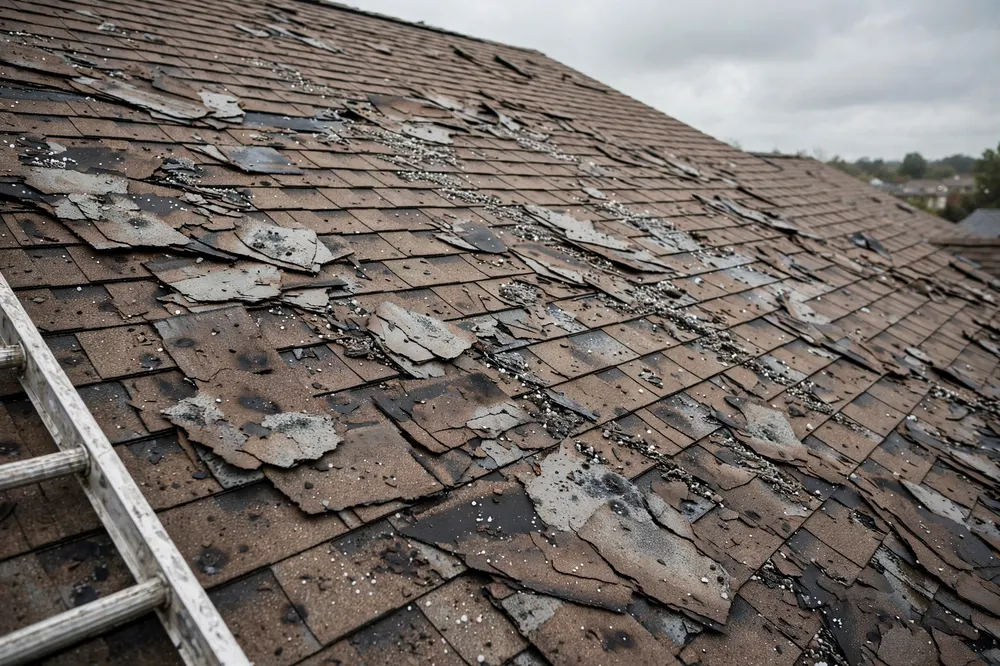
Pros read age in the surface. Granule loss is the clock's face: a young roof's gutters run clean; an old one's downspouts shed grit after every rain. Edges tell it too — shingles curl, tabs lose their seal and lift, exposed fiberglass shows at worn spots as pale threads. The mat's feel under the hand — supple versus crackling — is a decade-scale instrument, which is why age estimates from photographs alone are worth less than estimates from a ladder.
Context sharpens the reading: pipe boot rubber cracks on its own roughly fifteen-year clock; sealants, flashing condition and the state of prior repairs each carry dates. An inspector's age verdict is really a bundle of small clocks agreeing, which is why it usually lands within a couple of years of the permit record when one exists to check against.
Not Sure What Your Gutters Need?
One free call connects you with a local pro who can look at the whole roof edge — gutters, flashing and shingles — and tell you honestly what is worth fixing.
📞 Call (800) 555-0100Free Call · Answered 24/7 · Local Pros Near You
Neighbourhood And Storm Archaeology
Subdivisions were roofed in waves: built together, then re-roofed together after the big storms. If your street's roofs were replaced after a known hail year — and Colorado counties have famous ones, all sitting in the NOAA record — yours probably was too, unless it was the one holdout. Neighbours' memories, HOA records and the county's storm history triangulate powerfully. Satellite and street-imagery history adds a check: roof colour and tone changes between image years date many replacements to the season.
This archaeology has a claim use too. If the street was re-roofed after a famous storm year and yours was not, the adjuster's 'age and wear' reading of your roof gains a documented context. Conversely, a roof younger than the street's wave — replaced after a later storm — deserves its younger depreciation treatment, and the imagery is how you prove it.
Estimating Remaining Life
Age converts to remaining life through material and exposure. Standard three-tab in Colorado sun: roughly 15–20 working years. Architectural asphalt: 20–30, with altitude UV taxing the top of the range. Class 4 impact-resistant products: similar spans, dying less often by storm along the way. South and west slopes age faster here; shaded north slopes slower but ice-prone in the mountains. A roof at 70% of its span with sound decking is a maintain-and-inspect asset; the same age with heavy granule loss is a replacement conversation.
Present the estimate honestly to yourself: a range, with the evidence named, beats a single confident year. 'Installed about fifteen years ago, so roughly five to ten working years left absent a major storm' — that is a plannable statement. It is also exactly the form an inspector's written verdict takes, which is the practical way to get one.
When The Age Matters Most: Buying, Selling, Claiming
At purchase, the roof's age is money: it prices your offer, your insurer's willingness, and your first five years of housing costs. Never accept 'the roof looks fine' across a six-figure decision — an inspection with an age verdict costs little. At sale, a documented younger roof (permit, invoices) is a selling asset, and an honestly dated older one still beats a surprise found by the buyer's inspector.
At claim time, age is the depreciation argument itself: RCV policies release holdbacks against completed work, ACV policies pay today's value of a roof of that age. Knowing your number before the adjuster states theirs — with documents — is the difference between accepting a calculation and checking one. In all three moments the method is the same: paper first, surface second, street third, and write down what the three agree on.
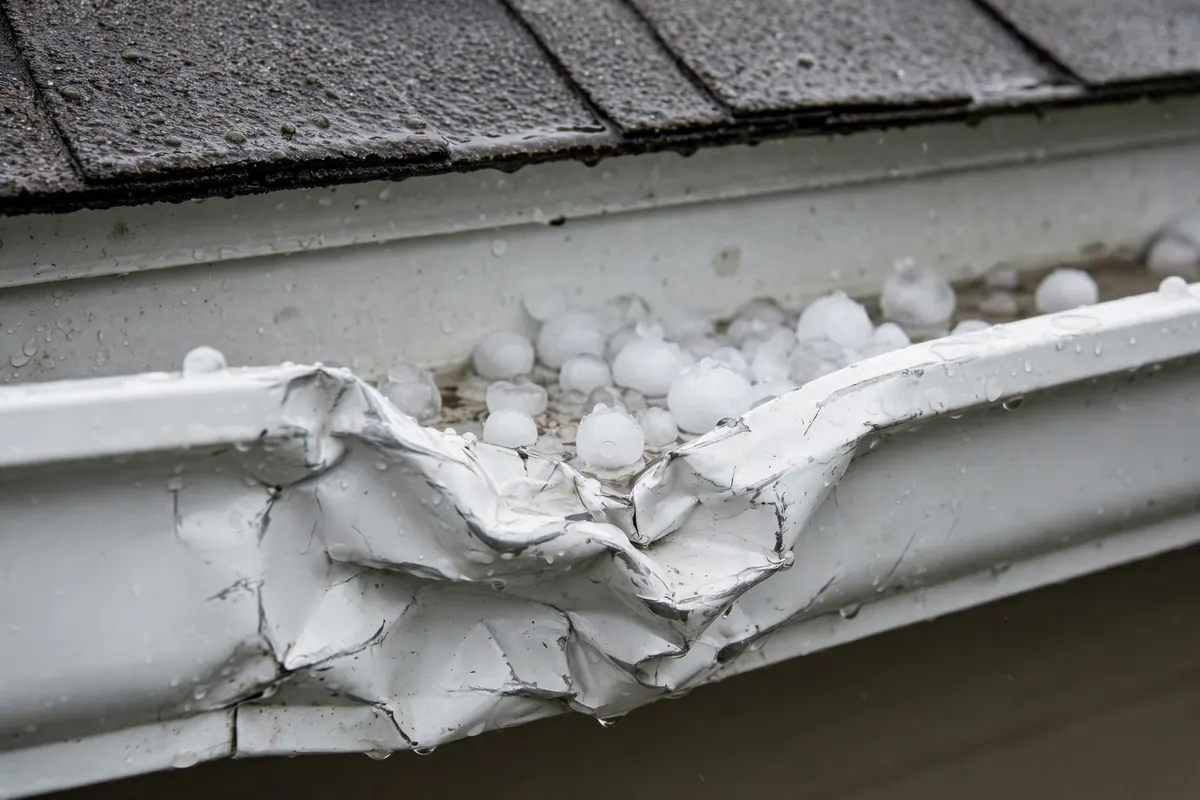
3-tab shingles, still found on some older Colorado homes, barns and sheds, are the thinnest covering in common use and the first to split under hail. UV degradation is the slow half of hail damage: once granules are gone, the high-altitude sun cooks the exposed asphalt until it turns brittle.
Hail Damage Roof Help In Your City
Every topic in this guide lands on a real roof somewhere — city pages with their own hail records, housing data and local pros:
Roof Age — Questions Homeowners Ask
Dating a roof without paperwork: the clues, in order of reliability.
Still Have Questions? Call Free
A real person answers 24/7 and connects you with a local pro who can check your roof.
📞 (800) 555-0100Reviewed By Hamza
Lead Roofing & Storm Restoration Specialist
Hamza is an exterior restoration specialist with deep expertise in hail damage assessment, storm-related leak diagnostics, and impact-resistant roofing installations across high-altitude and severe-weather climates. He works directly with homeowners to identify hidden structural bruising and ensure long-lasting, code-compliant roof repairs.
Updated October 26, 2026
Guides From The Blog
Age's two consequences: when it tips repair into replacement, and the signs it is ending.
Want A Professional Age Reading?
An inspection dates a roof as part of its report — one free call, and the number comes with photographs and a condition verdict attached.
📞 Call (800) 555-0100Free Call · Answered 24/7 · Local Pros Near You