
How To Vent A Metal Roof (Steel Roof Venting, Explained)
In This Guide
Quick Answer
A metal roof is vented the same way as any roof — cool air in at the eaves, hot air out at the ridge — but the details differ: ridge vents must be profiled to the panels, closures must seal against driven snow and embers without choking airflow, and the attic beneath obeys the same moisture physics whatever the covering. This guide covers the intake-exhaust balance, metal-specific components, and the condensation problem that brings most people here.
The Physics Hasn't Changed: Intake Low, Exhaust High
Attics ventilate by stack effect: sun-heated air rises and exits high, drawing cooler air in low. The covering — shingle, tile or metal — is irrelevant to that physics; what matters is the balance and the free area. Building practice targets roughly equal intake (soffit) and exhaust (ridge) venting, sized to the attic's floor area, with the intake slightly favoured so the attic stays positively fed rather than sucking conditioned air and moisture from the house below.
Metal roofs change none of that — but they change the hardware that achieves it, and they punish the same failures: a hot attic baking the deck in summer, and warm moist house air condensing on cold surfaces in winter. The metal itself, often blamed for both, is usually innocent; the airflow design is where both problems live.

Ridge Vents On Metal: Profiles And Closures
A ridge vent on a metal roof must marry the panel profile: vented closures — foam or mesh strips shaped to the ribs — fill the panel corrugations under the ridge cap, passing air while excluding driven rain, snow, insects and, in Colorado's fire country, embers. Purpose-built metal ridge vent systems use baffled profiles for the same job with better weather resistance. The failure mode to avoid is the flattened generic closure that seals the ridge shut: a beautiful ridge that vents nothing.
Fastening matters at altitude weather: ridge caps on metal are mechanically fixed against uplift ratings far beyond shingle country, and the vent assembly must not become the weak link. When a metal roof is re-vented or re-roofed, the ridge detail is a specified item — product named, closures specified — not a roofer's improvisation, and it belongs in the written scope where a homeowner can check it.
Soffits, Gable Vents And What Not To Mix
Intake is where most ventilation systems quietly fail, on metal roofs as on all others: soffit vents painted shut, blocked by insulation, or never installed in the quantity the ridge assumes. A powerful ridge exhaust over starved soffits does not ventilate the attic — it depressurises it, pulling moist air from the house through every ceiling gap, manufacturing the condensation the owner then blames on the roof. The inspection that matters reads intake first.
Mixing exhaust types is the second classic error: a ridge vent plus a powered fan plus gable vents can short-circuit — the fan draws from the nearest opening (the ridge) instead of the soffits, leaving the attic's far half unventilated. One coherent system, intake low and exhaust high, beats a museum of vent types competing on the same roof.
Not Sure What Your Gutters Need?
One free call connects you with a local pro who can look at the whole roof edge — gutters, flashing and shingles — and tell you honestly what is worth fixing.
📞 Call (800) 555-0100Free Call · Answered 24/7 · Local Pros Near You
Condensation: The Metal Roof Complaint That Isn't
'My metal roof is sweating' usually means the attic's warm, moist air is meeting a cold surface — the underside of the deck on a winter night — and condensing. The metal covering makes the deck colder on clear nights (it radiates heat to the sky efficiently), so the symptom appears with metal, but the cause is the house's moisture meeting inadequate ventilation or missing vapour control. The cure is in the airflow and the ceiling's air-sealing, not in condemning the roof.
In unconditioned metal buildings — barns and shops — the same physics is handled with anti-condensate membranes or insulation under the panels. In houses, the assembly is attic-floor insulation, sealed penetrations, and balanced ventilation. Either way, the diagnostic path is identical: read the attic in winter, find where the moisture is born, and fix the air before touching the roof.
Ventilation, Ice Dams And Colorado Winters
A well-vented attic stays near outside temperature, which starves ice dams of their fuel: uneven roof warmth that melts snow mid-slope and refreezes it at the cold eave. Metal roofs shed snow dramatically when it does slide — snow guards are their own conversation — but the melt pattern still begins with attic heat. In Colorado's freeze-thaw climate, ventilation is not an energy accessory; it is part of the roof's water defences, working alongside ice-and-water shield at the eaves.
Check the system in winter: a roof whose snow melts in a patchwork while neighbours' roofs stay evenly white is showing you its hot spots — usually above kitchens and bathrooms whose vents were terminated into the attic (another classic finding) instead of through the roof. Every exhaust fan in the house should exit outside; the attic is not a permissible destination for moist air.
When To Rework A Metal Roof's Venting
Rework triggers are concrete: persistent winter condensation or frost in the attic, ice dams recurring at the same eaves, summer attic temperatures extreme enough to feel through the ceiling, deck ageing patterns that track hot zones, and any re-roof — the one moment the ridge and soffit details are open and cheap to correct. On a metal roof expected to serve forty years, ventilation faults have forty years to compound; the re-roof is the chance to retire them.
Have the assessment done as a system: measured intake and exhaust areas, the attic read in the right season, moisture sources in the house identified. Ventilation advice given from the driveway is guesswork; the attic, in January, tells the truth. And keep the findings in the roof file — ventilation is a warranty condition for many coverings, metal systems included, so the record protects more than comfort.
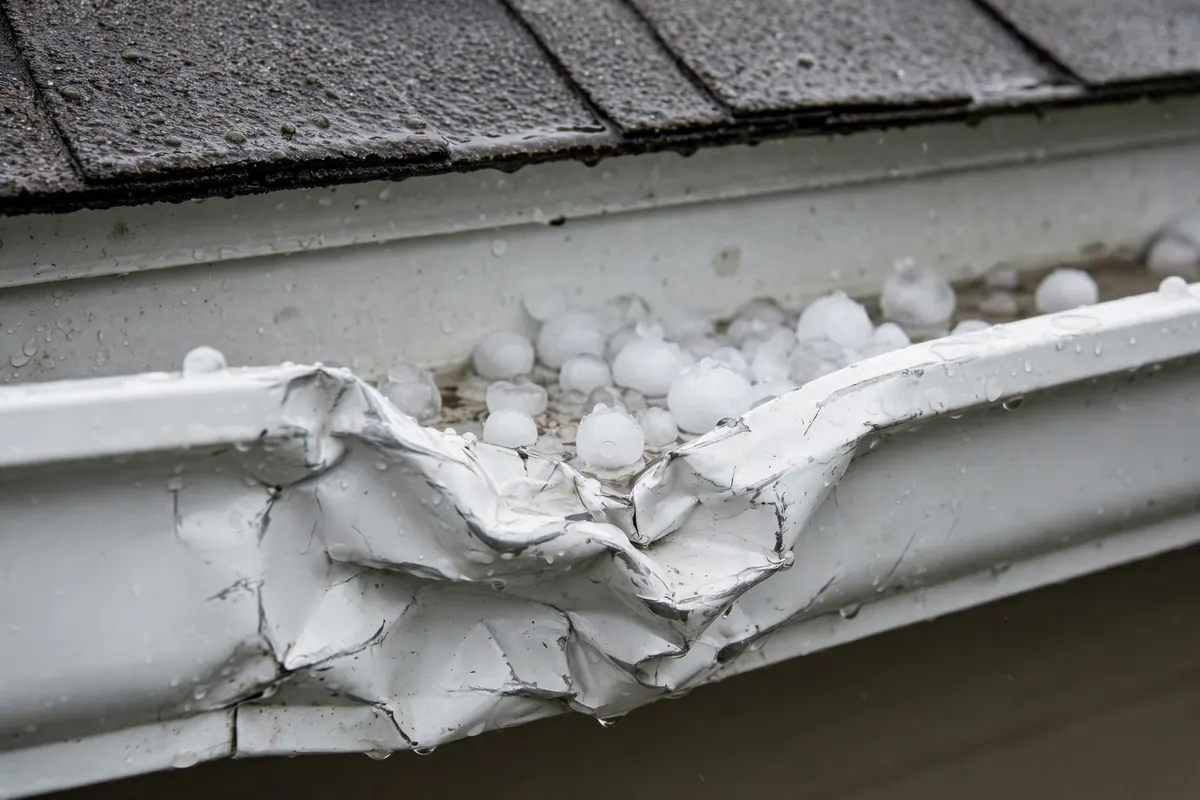
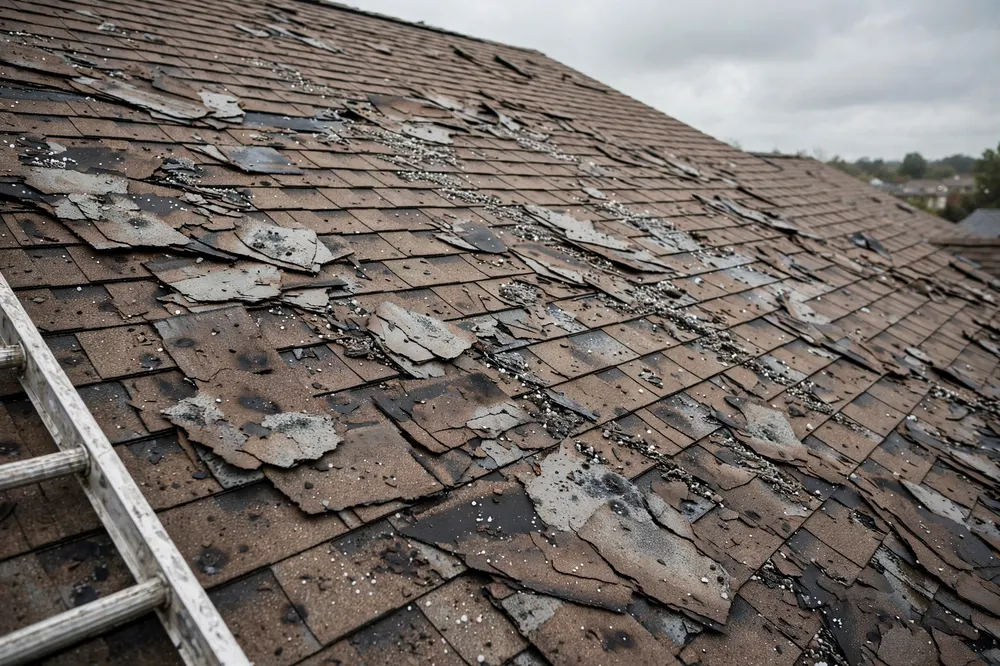
A corrugated metal roof dents visibly under hail; most dents are cosmetic, but split seams and cracked fasteners are not. The roof decking under the shingles must be solid before new material goes on; hail-rotted or leak-softened boards are replaced during the tear-off. The wildland-urban interface (WUI) is where homes meet open land and forest — Colorado's fastest-growing fire-risk zone, with its own roofing rules. Snow load is the quiet weight a Colorado roof carries for weeks at a time, and a hail-weakened deck feels it more than a sound one. The freeze-thaw cycle works meltwater into every hail crack all winter, widening small damage a little more each cold night.
Hail Damage Roof Help In Your City
Every topic in this guide lands on a real roof somewhere — city pages with their own hail records, housing data and local pros:
Metal Roof Ventilation — Questions Homeowners Ask
Metal roofs breathe through the same physics — with different hardware.
Still Have Questions? Call Free
A real person answers 24/7 and connects you with a local pro who can check your roof.
📞 (800) 555-0100Reviewed By Hamza
Lead Roofing & Storm Restoration Specialist
Hamza is an exterior restoration specialist with deep expertise in hail damage assessment, storm-related leak diagnostics, and impact-resistant roofing installations across high-altitude and severe-weather climates. He works directly with homeowners to identify hidden structural bruising and ensure long-lasting, code-compliant roof repairs.
Updated October 26, 2026
Guides From The Blog
Ventilation's two neighbours: the attic it serves, and the winter damage it prevents.
Metal Roof Running Hot Or Wet?
Ventilation faults show in the attic first. One free call books a roof-and-attic inspection that reads both sides of the covering.
📞 Call (800) 555-0100Free Call · Answered 24/7 · Local Pros Near You