
What Is A Low-Pitch Roof? Hail, Ponding And Leak Risks
In This Guide
Quick Answer
Low-pitch roofs — slopes under about 4-in-12 — take hail vertically instead of glancing it off, drain slowly so damage and water linger together, and are often covered with materials whose hail rules differ entirely from shingles. In Colorado they are where hail claims get technical: membrane punctures, ponding, and thresholds shingle thinking does not fit. This guide explains the risks and the right responses for low-slope roofs.
Why Pitch Changes The Hail Equation
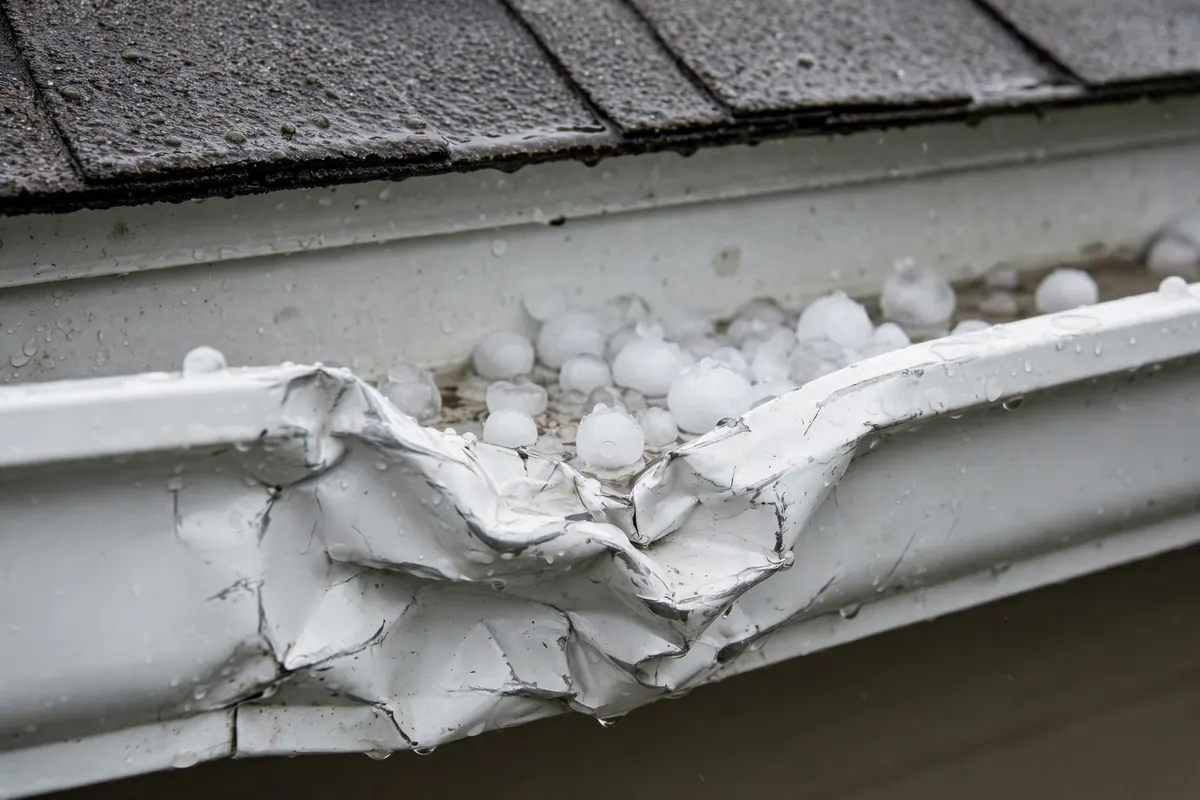
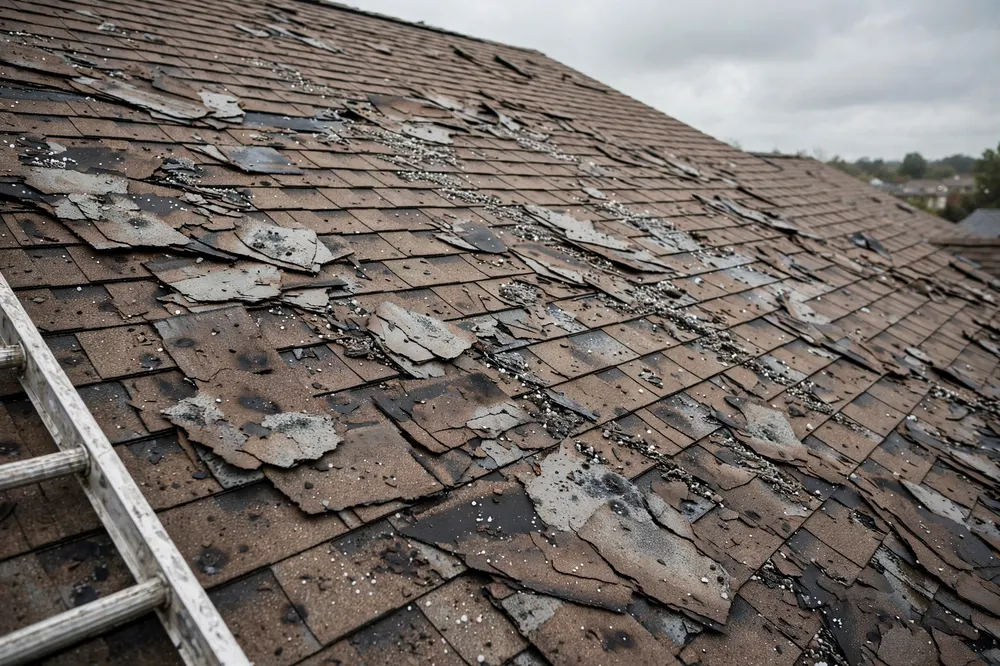
On a steep slope, a falling stone meets the roof at an angle and sheds part of its energy in the glance. On a low slope the same stone arrives almost square-on: the full vertical energy goes into the covering. Low-pitch sections — porch roofs, additions, shallow main roofs, the near-flat tops of modern designs — therefore bruise, crack and puncture at stone sizes their steep neighbours survive. Inspectors expect the damage map of a mixed house to be worst exactly where the pitch is least.
Water then compounds what hail began. A steep roof forgives a hairline crack between storms; a low slope holds water against every flaw, finds it, and keeps it wet. Damage that would be a documentation exercise on a steep roof becomes an active leak pathway on a shallow one — the same injury, a different prognosis, decided by geometry.
The Materials Up There — And Their Own Rules
True shingles are not rated for the lowest pitches: below 2-in-12 they are prohibited outright, and between 2 and 4 they need doubled underlayment or membrane beneath because water moves too slowly to trust the laps. Genuinely low sections are usually covered differently — modified bitumen, TPO or EPDM membranes, or standing seam metal — each with its own hail behaviour: membranes can be punctured or have their seams and substrate crushed by large stones; metal dents without leaking, as ever.
The inspection language changes accordingly. Test squares and bruising-by-thumb belong to shingles; membranes are read for punctures, seam integrity, and the soft spots where hail crushed the insulation board beneath, leaving a dent that ponds. A pro who assesses your membrane roof with shingle talk is telling you their speciality is elsewhere.
Ponding: The Low Slope's Chronic Condition
Ponding water — standing on the roof 48 hours after rain — is the low slope's defining defect, and hail feeds it three ways: dents and crushed substrate create new ponds; debris from the storm dams the slow drainage paths; and damaged coverings let the ponded water in rather than merely hosting it. Ponded water is heavy, relentless and patient: it tests every seam and puncture continuously, where rain on a steep roof tests them for minutes.
It also voids warranties and shortens membrane life on its own account, which is why ponding is always named in a low-slope inspection report. The fixes are drainage fixes — clearing and repairing drains and scuppers, adding taper, correcting sags — and they belong in the post-storm scope alongside the impact damage, because treating the punctures while leaving the ponds is repairing the symptom's address, not the symptom.
Not Sure What Your Gutters Need?
One free call connects you with a local pro who can look at the whole roof edge — gutters, flashing and shingles — and tell you honestly what is worth fixing.
📞 Call (800) 555-0100Free Call · Answered 24/7 · Local Pros Near You
Ice, The Second Tenant
What ponds in summer freezes in winter, and low slopes collect the Front Range's worst ice behaviour: slow melt, refreeze at the cold edges, and ice sheets that creep under laps and seams never designed to be submerged. Ice-and-water shield beneath low-slope shingle sections, and properly detailed membrane flashings, exist precisely for this tenant. A hail-cracked low-slope covering meeting its first ice season is a leak with an appointment already made.
Snow load joins the same ledger: shallow roofs hold their snow rather than shedding it, so the deck carries the full weight for weeks, on substrate that hail may have crushed in July. None of this makes low-pitch roofs mistakes — they are legitimate architecture — but it makes their storm inspections the most technical ones a Colorado homeowner will ever commission.
Inspecting And Claiming A Low-Slope Roof
The claim evidence for membranes is photographic and tactile: punctures shown with scale, seams probed, crushed-substrate areas mapped (they feel soft and read as ponds after rain), and the drainage system documented. Adjusters who know low-slope work read it fluently; the argument, when it comes, is usually about whether crushed insulation beneath an intact membrane counts as damage — it does functionally, because the pond it creates is a future leak — and core samples sometimes settle it.
For shingled low sections, the underlayment question dominates: if the original installation skipped the doubled underlayment or membrane the pitch required, hail findings and installation findings arrive together, and the honest scope separates them. Either way, the deliverable is the same: a written, photographed, system-level report — covering, substrate, drainage — not a shingle count with the flat part waved at.
Living With A Low-Pitch Roof In Hail Country
The ownership rhythm is stricter and worth it: post-storm inspections without exception (the damage hides and the water lingers), drains and scuppers cleared every season, ponding treated as a defect to fix rather than a personality trait, and seams checked on the calendar. Material upgrades at replacement should be argued in hail terms — membrane thickness and substrate density are the low-slope equivalents of the Class 4 conversation.
And at purchase or replacement, ask the pitch question out loud: which sections of this roof are under 4-in-12, what covers them, and what does the hail file say about them? In Colorado, the shallow parts of a roof write a disproportionate share of its history. Owners who know where theirs are, and what covers them, are never surprised by the chapters.
A TPO membrane roof — the white single-ply common on low-slope homes and additions — shows hail as punctures and seam stress rather than bruises. The roof decking under the shingles must be solid before new material goes on; hail-rotted or leak-softened boards are replaced during the tear-off. The insurance adjuster who climbs your roof works from the same test squares and photos, which is why meeting them with documentation ready matters. An ice dam forms when meltwater refreezes at the cold eave and creeps back under shingles — a winter leak that starts on a warm roof. Synthetic underlayment, the modern tear-resistant layer under the shingles, goes down fresh at every replacement; the storm-torn layer is never reused.
Hail Damage Roof Help In Your City
Every topic in this guide lands on a real roof somewhere — city pages with their own hail records, housing data and local pros:
Low Pitch Roof Risks — Questions Homeowners Ask
Low slopes, vertical hail and slow water: the technical questions.
Still Have Questions? Call Free
A real person answers 24/7 and connects you with a local pro who can check your roof.
📞 (800) 555-0100Reviewed By Hamza
Lead Roofing & Storm Restoration Specialist
Hamza is an exterior restoration specialist with deep expertise in hail damage assessment, storm-related leak diagnostics, and impact-resistant roofing installations across high-altitude and severe-weather climates. He works directly with homeowners to identify hidden structural bruising and ensure long-lasting, code-compliant roof repairs.
Updated October 26, 2026
Guides From The Blog
The low-slope companions: the membrane's drainage problem, and winter's version of it.
Low-Pitch Roof Up There?
It needs a low-slope-literate inspection — membranes, seams and drainage read as their own system. One free call books it.
📞 Call (800) 555-0100Free Call · Answered 24/7 · Local Pros Near You