
Hail Damage On Ranch, Barn And Outbuilding Roofs
In This Guide
Quick Answer
Ranches and rural Colorado properties carry a second roof fleet beyond the house: barns, shops, sheds, garages, pump houses and equipment shelters — mostly metal, some ageing shingle, all taking the same hail. Their damage matters (livestock, equipment, hay and workshops live under them), their claims run through different policy sections, and their repair economics differ. This guide covers outbuilding hail damage, assessment, and the claim routes for agricultural and rural roofs.
The Second Roof Fleet
Drive any rural Colorado road after a hailstorm and the damage scouts read the barns first: big metal roofs, angled to the sky, their dent fields visible from the road. A working property's outbuildings — barn, shop, garage, loafing shed, equipment cover, the old farmhouse's detached everything — can total more roof area than the house, sheltering animals, feed, machinery and livelihood beneath them. Their hail is not a footnote to the house's claim; it is a parallel claim population with its own materials, policies and priorities.
The assessment habit to build is property-wide: when the house is inspected, the fleet is walked in the same round. Dents that will be argued about in October are freshest in the week of the storm, and the file that covers every roof on the place is the one that matches how the weather actually behaved — it did not distinguish between your roofs, and neither should your documentation.
What Hail Does To Barn Roofs
Most outbuildings wear metal — corrugated or agricultural panels, often older, thinner-gauge, and fastened exposed — and hail writes on them accordingly: denting everywhere, concentrated at laps and fastener lines where the panel is stressed, seams and ridge caps battered, translucent skylight panels (the fiberglass light strips in older barn roofs) cracked or punched outright, since aged fiberglass turns brittle and hail goes through it like a window. Gutters and lean-to roofs of lighter construction fare worse again.
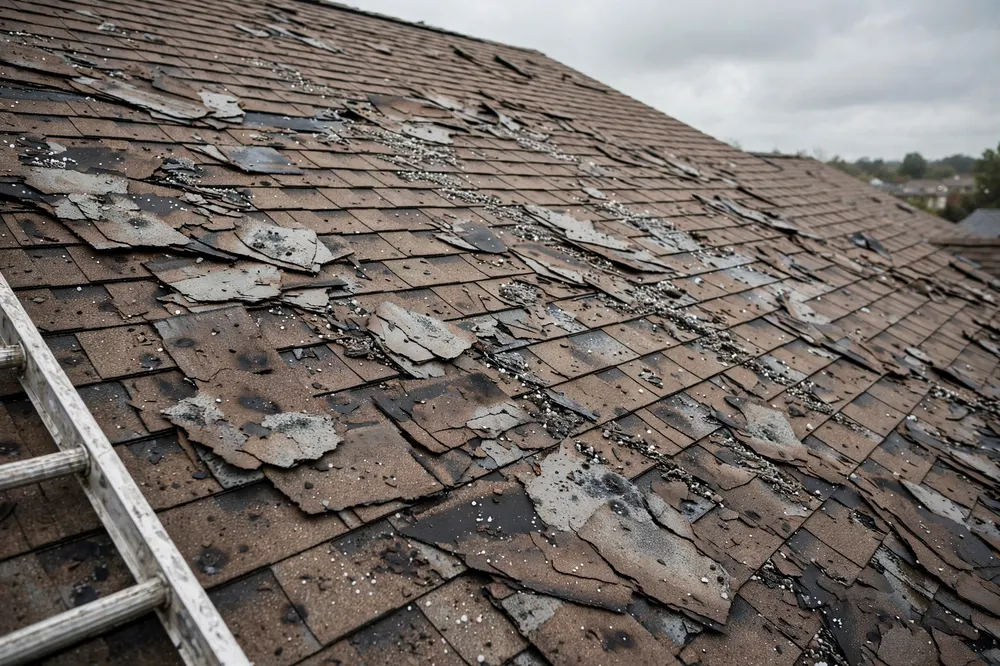
Shingled outbuildings exist too — the garage matching the house, the old bunkhouse in three-tab — and they bruise and crack with the extra handicap of age: outbuilding roofs are commonly the oldest coverings on the property, maintained longest and budgeted last. The storm reads them accordingly. A garage roof 'the same age as the house's old one' is a sentence with a claim inside it.
Animals, Equipment And The Urgency Order
Priorities after the storm follow what's underneath. Livestock shelter and feed storage come first in the emergency sense — openings over animals and hay get dried in before the house's cosmetic questions are even asked. Equipment and workshop roofs next: machinery under a punctured skylight panel is water damage compounding hourly. The purely structural questions (is the dented shop roof sound?) can take the inspection's normal timetable, but anything with a hole over something alive or valuable is emergency work by any honest definition.
This ordering is also a documentation ordering: photograph the consequential damage first — the punched panels over the stalls, the drip over the baler — because those photographs anchor both the emergency invoices and the claim's account of what the storm threatened. Rural claims are read by people who understand properties; a file that respects the working order of the place reads as credible in a way a house-only file does not.
Not Sure What Your Gutters Need?
One free call connects you with a local pro who can look at the whole roof edge — gutters, flashing and shingles — and tell you honestly what is worth fixing.
📞 Call (800) 555-0100Free Call · Answered 24/7 · Local Pros Near You
Which Policy Pays: Dwelling, Structures, Farm
Outbuildings usually sit outside the dwelling coverage: homeowners policies carry 'other structures' coverage — commonly a percentage of the dwelling limit — for detached garages and sheds used personally; barns and buildings used for business or farming frequently fall outside a standard homeowners policy entirely and belong to farm/ranch policies or scheduled coverage, sometimes with their own deductibles and valuations (ACV is common on outbuildings). The discovery to avoid is post-storm: learning that the barn was never in the policy you are claiming on.
Read the place's coverage in calm season, buildings by buildings. Where a farm policy applies, its claim rhythm mirrors the house's — document, date, counts and dents photographed — with agricultural adjusters who know metal. Either way, the evidence habit transfers whole; only the claim's address changes.
Repair Economics On Working Roofs
Outbuilding repair runs on working logic: panels replaced where punctured or seam-split, skylight strips renewed, sections over the valuable contents prioritised, and cosmetic denting usually lived with — farm metal has worn its weather honestly for a century. Overlay systems (new metal over old, on purlins) are a legitimate rural answer where the structure allows, converting a tired roof into a sound one without tear-off — an option rarely right for houses and often right for barns.
The judgement to keep is the same as the house's, in overalls: function first (does it leak, will the seams hold, is the substrate sound), evidence always, and cosmetic questions last. And the SB38 deductible law, note, is written for residential roofing claims — commercial and agricultural work sits in a different frame, though honest contracting looks identical in both.
One Property, One File
Close the round the way it opened: one property file for the storm, roofs numbered, each with its photographs, its counts or dent maps, its policy section noted, its emergency work invoiced. The house and its fleet share a storm date, a NOAA record entry and a weather story — the file should tell it as one event with several roofs, because that is the truth of it and because cross-corroboration strengthens every part: the barn's dented west face is evidence about the house's west slope, and vice versa.
Rural properties live by records more than most — wells, fences, herds, roofs. The storm file joins that shelf. When the next cell crosses the county, the place that can open last storm's file starts the new claim a week ahead of the place starting from memory.
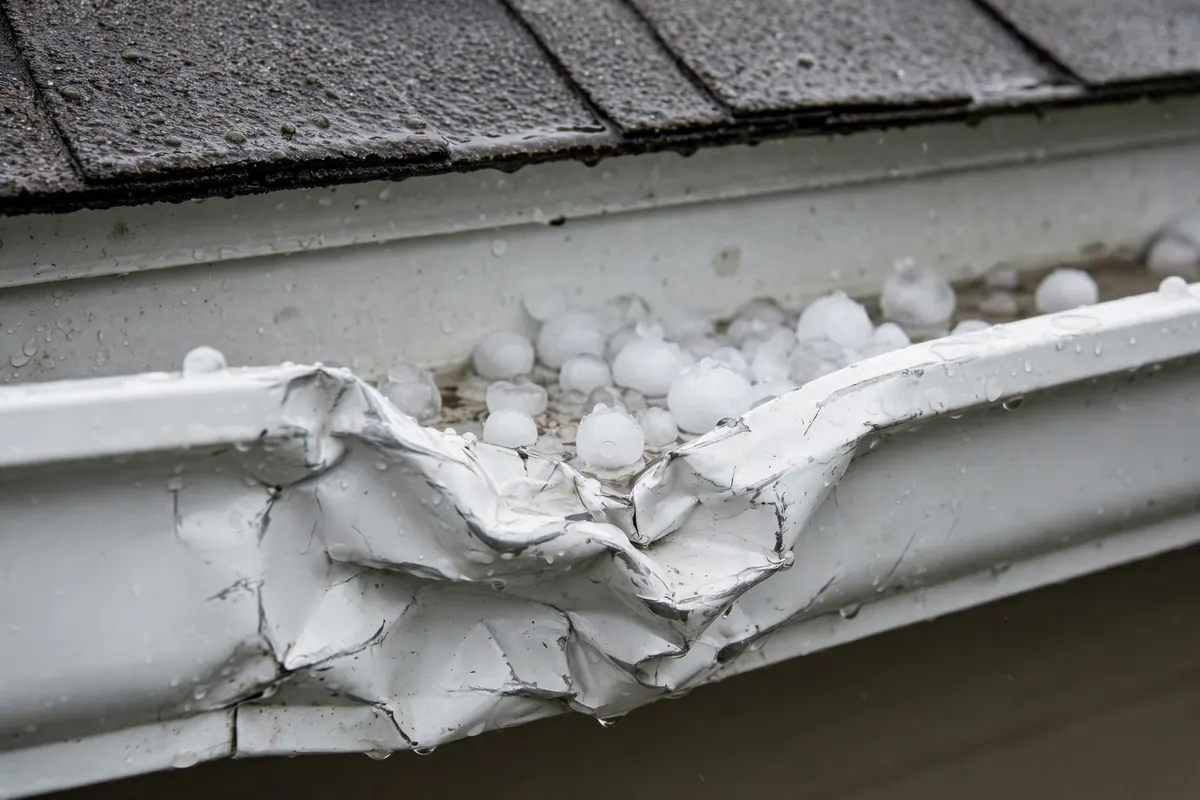
A corrugated metal roof dents visibly under hail; most dents are cosmetic, but split seams and cracked fasteners are not. A standing seam metal roof dents cosmetically in hail long before it leaks, which is why metal roofs get their own functional-versus-cosmetic argument. Flashing — the metal sealing every chimney, wall joint and vent — is where hail dents and wind lift combine to start the sneakiest leaks. The insurance adjuster who climbs your roof works from the same test squares and photos, which is why meeting them with documentation ready matters. Wind-driven hail slams stones into one or two slopes far harder than the rest, which is why damage in Colorado is rarely even across a roof. The roof decking under the shingles must be solid before new material goes on; hail-rotted or leak-softened boards are replaced during the tear-off.
Hail Damage Roof Help In Your City
Every topic in this guide lands on a real roof somewhere — city pages with their own hail records, housing data and local pros:
Barn And Outbuilding Roof Hail Damage — Questions Homeowners Ask
Beyond the house: the rural roof fleet, questioned barn by barn.
Still Have Questions? Call Free
A real person answers 24/7 and connects you with a local pro who can check your roof.
📞 (800) 555-0100Reviewed By Hamza
Lead Roofing & Storm Restoration Specialist
Hamza is an exterior restoration specialist with deep expertise in hail damage assessment, storm-related leak diagnostics, and impact-resistant roofing installations across high-altitude and severe-weather climates. He works directly with homeowners to identify hidden structural bruising and ensure long-lasting, code-compliant roof repairs.
Updated October 26, 2026
Guides From The Blog
Outbuildings' neighbours in the storm: the metal roof guide, and the low slopes so many barns wear.
Outbuildings Took The Storm Too?
Have them counted in the same inspection round as the house — one free call, and the whole property gets one evidence file.
📞 Call (800) 555-0100Free Call · Answered 24/7 · Local Pros Near You