
Roof Warranties Explained: What Is Covered, What Is Not
In This Guide
Quick Answer
A new roof usually carries two warranties: the manufacturer's, covering the shingles themselves against defects for a stated period, and the roofer's workmanship warranty, covering installation errors. They cover different failures, exclude different things — storms among them — and both live or die on documentation. This guide explains what each warranty really promises, how long roofs are actually covered, and what voids the paper.
Two Warranties, Two Promises
The manufacturer's warranty promises the product was made correctly: if the shingles themselves fail prematurely through a manufacturing defect, the manufacturer remedies it under the warranty's terms. The workmanship warranty — the roofer's own — promises the installation was done correctly: if the roof leaks because of how it was fitted, the roofer returns and fixes it. Most roof failures in the real world are installation or storm events, not factory defects, which makes the second warranty the one homeowners actually use.
Confusing the two is the classic warranty mistake. A 'lifetime warranty' headline almost always refers to the manufacturer's material coverage — limited, prorated and defect-only — while the workmanship cover behind it might be two years from a company that may not exist in three. Read both documents, with their lengths, before comparing quotes: the paper is part of the roof you are buying.
How Long Is A Roof Warranty, Really?
Manufacturer warranties on architectural shingles are marketed as 'lifetime' or 25–50 years, and their substance is narrower: full-value coverage for an initial period (often around ten years for defects), then a prorated schedule in which the manufacturer's contribution shrinks with the roof's age, typically covering material only — not the labour of replacement, or only part of it. The honest way to read the number is as a defects promise with a declining scale, not a promise the roof will serve fifty years.
Workmanship warranties run from one year to a decade or more depending on the roofer, and their value tracks the company's durability more than their length: a ten-year warranty from a two-year-old company is a hope, while a five-year warranty from a twenty-year local firm is an asset. Ask how warranty calls are handled and who, exactly, stands behind the paper in year seven.
What Warranties Do Not Cover: Storms First
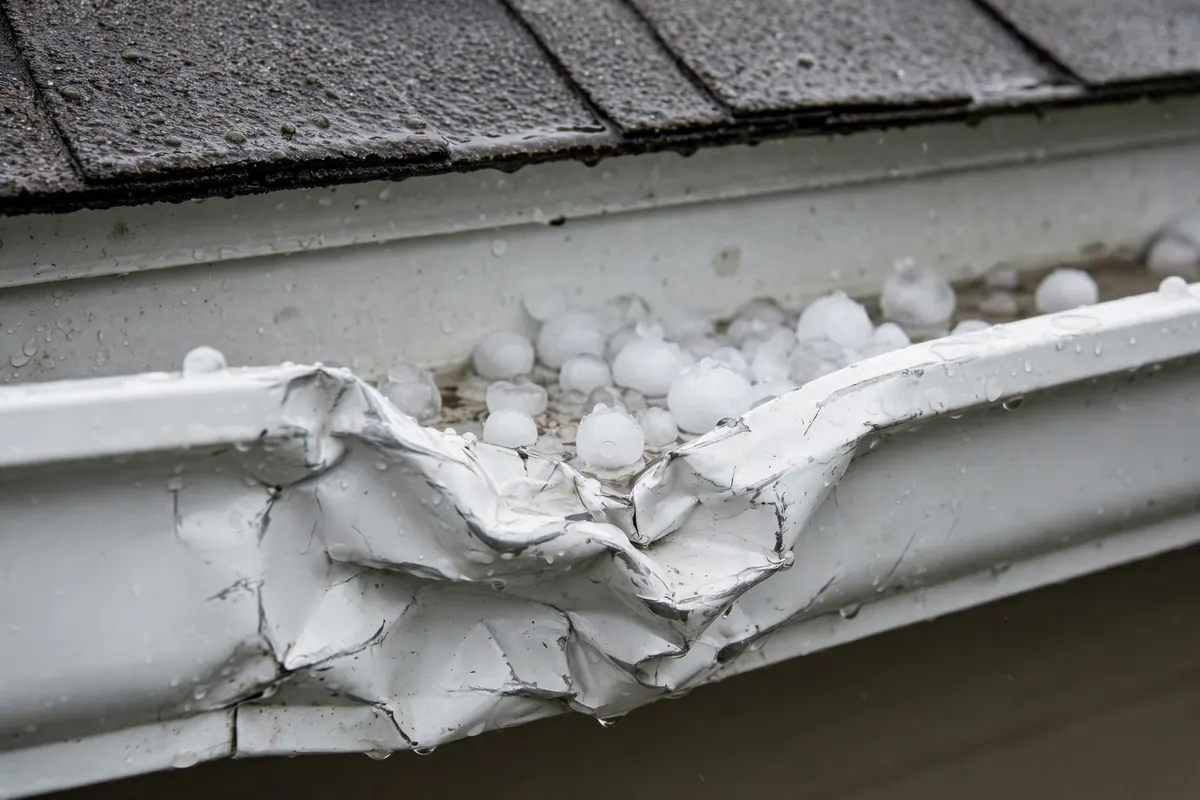
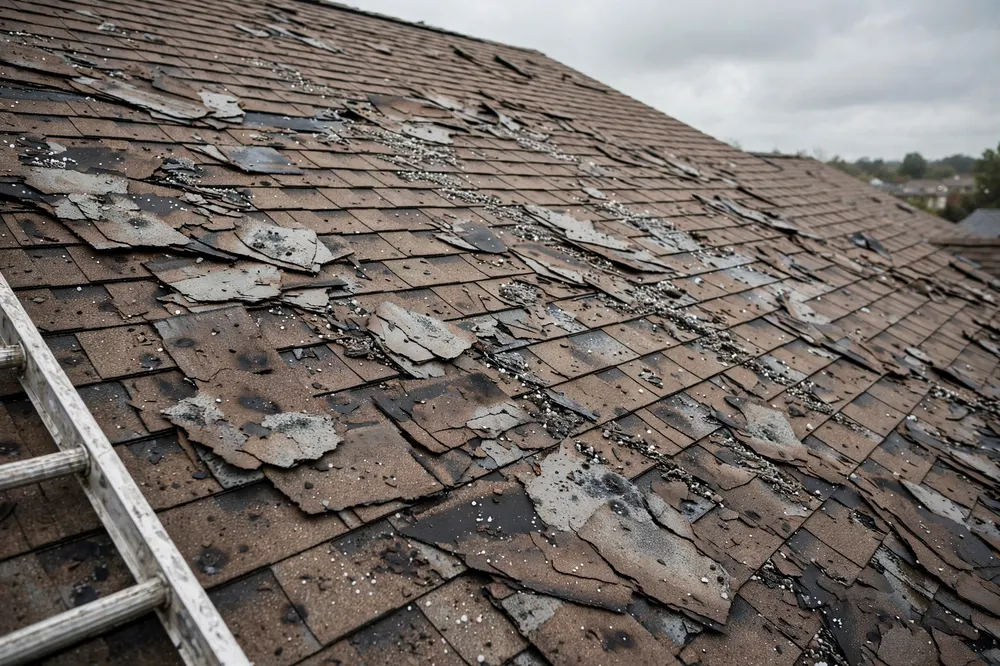
Neither warranty covers weather. Hail damage is an insurance event, not a defect — the shingles did not fail; the sky attacked them. The same exclusion logic covers wind beyond rated limits, debris impact, and damage from other trades walking the roof. Homeowners who meet a hail-totaled roof with 'but it's under warranty' learn the distinction at the worst moment; the claim route — insurer, evidence, scope — is the remedy, and it is a good one when the file is built properly.
Also excluded, typically: failures from inadequate attic ventilation, from unapproved alterations (a later skylight cut by another trade), from ponding on low-slope sections beyond specification, and from neglect of maintenance the documents name. These exclusions are why ventilation and records appear in so many guides on this site — they are warranty conditions wearing practical clothes.
Not Sure What Your Gutters Need?
One free call connects you with a local pro who can look at the whole roof edge — gutters, flashing and shingles — and tell you honestly what is worth fixing.
📞 Call (800) 555-0100Free Call · Answered 24/7 · Local Pros Near You
Installation: Where Warranties Are Won And Lost
Manufacturer coverage is conditioned on installation to their specification: correct nailing patterns and placement, specified underlayment, ventilation requirements met, compatible components. A roof thrown on carelessly can be materially defective in coverage while looking fine from the street — the warranty voided by the installation itself. This is the deep reason to choose installers on evidence of method, and to keep the installation documentation — product labels, invoices, photographs of the deck and layers as they went down.
Some manufacturers offer enhanced warranties when manufacturer-approved installers use their full system of components; those can extend non-prorated periods and add workmanship backing from the manufacturer itself. They cost more and are worth pricing on a major replacement — the enhanced paper converts the roofer's promise into a manufacturer's obligation, which survives even if the roofer does not.
Transfers, Sales And The Roof File
Manufacturer warranties commonly transfer once, to a new owner, sometimes within a window after sale and sometimes with reduced terms after transfer. Workmanship warranties vary — ask before you sell, and put the answer in the listing file. Either way, the transferable asset is the documentation: warranties, invoices, product names, permits. A roof with a file sells as a known quantity; a roof with a story sells as a question, and buyers price questions down.
This is the practical endpoint of every records habit in these guides. The storm folder and the warranty folder are the same folder. Build it at installation, feed it at every inspection and claim, and hand it over at sale — it is the roof's title deeds, and it appreciates exactly as fast as roofs depreciate.
Reading A Warranty Before You Sign
Before signing a replacement contract, take the warranties as a checklist: manufacturer and product named; the non-prorated period's length; what the prorated schedule pays (material only, or labour too); ventilation and installation conditions; the workmanship warranty's length and the company behind it; transfer terms. Compare quotes on this page as well as on price — a cheaper quote with thin paper is not the same roof at a lower price; it is a different risk at a lower price.
And file the registration. Some manufacturer warranties require the installer or owner to register the roof within a period after installation; unregistered roofs have generated more warranty grief than defective shingles ever have. Put the registration confirmation in the folder the day it arrives.
Colorado SB38 is the state consumer-protection law for roofing work: written contracts, honest deductible handling and no pressure tactics after a storm. Synthetic underlayment, the modern tear-resistant layer under the shingles, goes down fresh at every replacement; the storm-torn layer is never reused. Ice & water shield, the self-sealing membrane at eaves and valleys, matters in Colorado because meltwater backs up under shingles on cold nights. Class 4 impact-resistant shingles carry the top UL impact rating and shrug off stones that would bruise a standard shingle — a common upgrade after a Colorado claim. The insurance adjuster who climbs your roof works from the same test squares and photos, which is why meeting them with documentation ready matters. Roof age decides how much hail a shingle can take — the same stone that scuffs a five-year-old roof can crack a fifteen-year-old one open.
Hail Damage Roof Help In Your City
Every topic in this guide lands on a real roof somewhere — city pages with their own hail records, housing data and local pros:
Roof Warranties — Questions Homeowners Ask
Warranty questions, minus the brochure language.
Still Have Questions? Call Free
A real person answers 24/7 and connects you with a local pro who can check your roof.
📞 (800) 555-0100Reviewed By Hamza
Lead Roofing & Storm Restoration Specialist
Hamza is an exterior restoration specialist with deep expertise in hail damage assessment, storm-related leak diagnostics, and impact-resistant roofing installations across high-altitude and severe-weather climates. He works directly with homeowners to identify hidden structural bruising and ensure long-lasting, code-compliant roof repairs.
Updated October 26, 2026
Guides From The Blog
The warranty's neighbours: how long a roof really lasts, and the scam versions of warranty talk.
Getting A Roof With Paper That Means Something?
Start with a quote that names the products and both warranties in writing — one free call books the inspection that leads to it.
📞 Call (800) 555-0100Free Call · Answered 24/7 · Local Pros Near You