
Roofing In Wildfire Country: Class A Materials And Ember Risk
In This Guide
Quick Answer
In Colorado's wildland-urban interface — the foothills and mountain communities where homes meet forest — the roof is the house's largest surface exposed to ember attack, and its material class can decide whether the house survives a fire it never touches. Class A rated coverings, enclosed eaves, ember-proof vents and metal or tile systems are the substance of wildfire roofing here. This guide explains the risks and the specification, alongside the state's other roofing opponent: hail.
The Wildland-Urban Interface And The Ember Problem
Most homes lost in wildfires are not consumed by a wall of flame; they are ignited by embers — wind-borne firebrands that travel a mile or more ahead of the front and land, smouldering, on and around houses. The roof receives the largest share of that ember fall: its broad, often debris-holding surfaces are where embers land, gather in valleys and against walls, and find the fuel and the gaps that turn a firebrand into a house fire. In the WUI — a designation much of Colorado's foothills and mountain settlement carries — roofing is therefore fire engineering before it is anything else.
The state's fire history has made the lesson administrative as well as physical: many WUI jurisdictions now write roof coverings into code, insurers price or require by material class, and HOAs in fire country specify roofs the way hail country specifies impact ratings. A homeowner in these zones is choosing a roof under two regulatory weathers at once.
Class A: The Rating That Matters
Roof coverings carry fire ratings — Class A, B, C — earned in standardised tests of flame spread, intermittent flame and burning-brand resistance. Class A is the highest: the assembly resists severe fire exposure, including a burning brand placed on it. Most quality asphalt shingles (fiberglass-mat) are Class A by assembly; concrete and clay tile and metal are inherently non-combustible and Class A; wood shakes are the problem child — untreated shake is unrated or low-rated and is prohibited for new roofs in many WUI codes, surviving in the housing stock as the single most dangerous common covering in fire country.
Note the word 'assembly': the rating belongs to the system — covering, underlayment, deck — as tested, which is why specification at replacement is a system conversation. A Class A shingle over the wrong assembly, with open eaves and unguarded vents, is a rated field surrounded by unrated invitations.
The Details That Decide: Eaves, Vents, Valleys
Embers exploit geometry: they accumulate where air swirls them into piles — valleys, the junction of roof and wall, behind chimneys, in gutters full of needles — and they enter where the building breathes — vents with coarse mesh, open eaves, gaps at the ridge. Fire-country detailing is therefore a list of closures: enclosed (soffited) eaves rather than open rafter tails; vents screened with fine corrosion-resistant mesh or, better, ember-resistant baffled designs; valley and gutter housekeeping that denies embers their fuel piles; and non-combustible zones at the roof's edges where walls and decks meet it.
None of this conflicts with the roof's weather duties — the same valleys must shed water and hail — but it ranks the specification questions differently: every penetration and opening is interrogated twice, once for water and once for fire. This is the practical content of 'wildfire roofing': not a product, but a second pass over every detail the roof already has.
Not Sure What Your Gutters Need?
One free call connects you with a local pro who can look at the whole roof edge — gutters, flashing and shingles — and tell you honestly what is worth fixing.
📞 Call (800) 555-0100Free Call · Answered 24/7 · Local Pros Near You
The Two-Opponent Problem: Hail And Fire
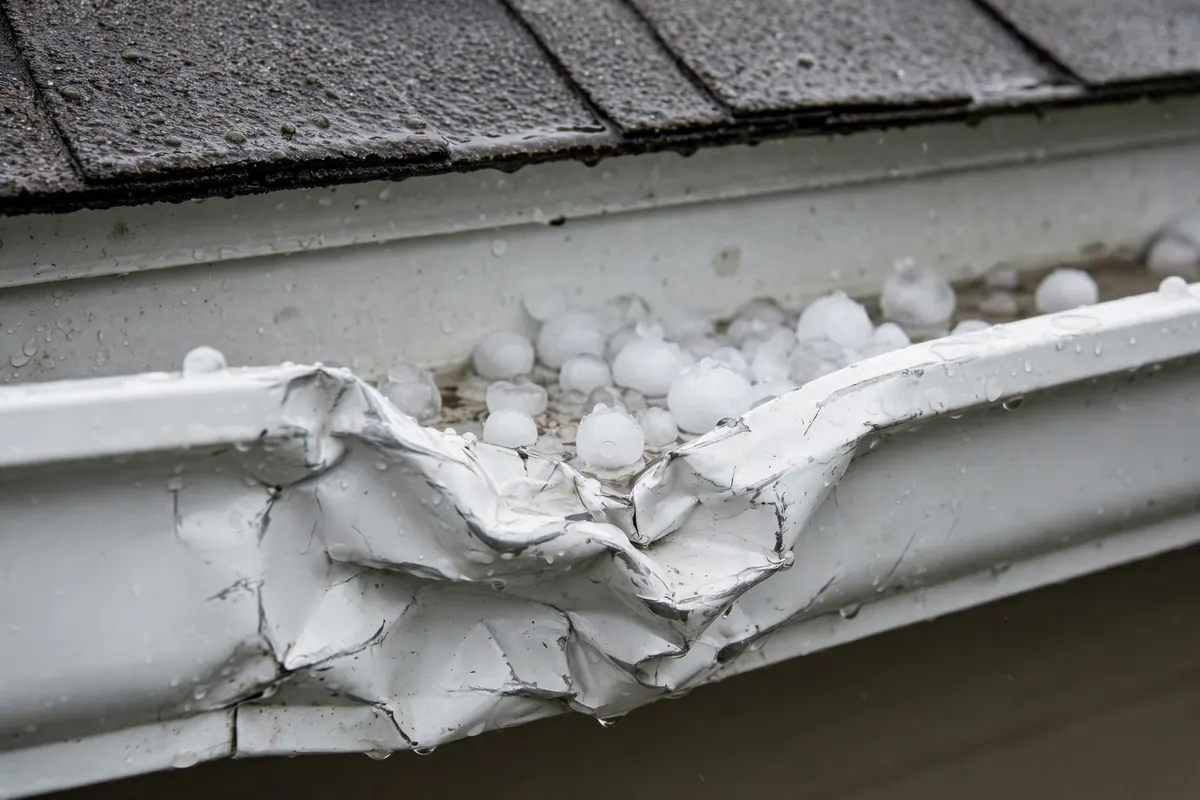
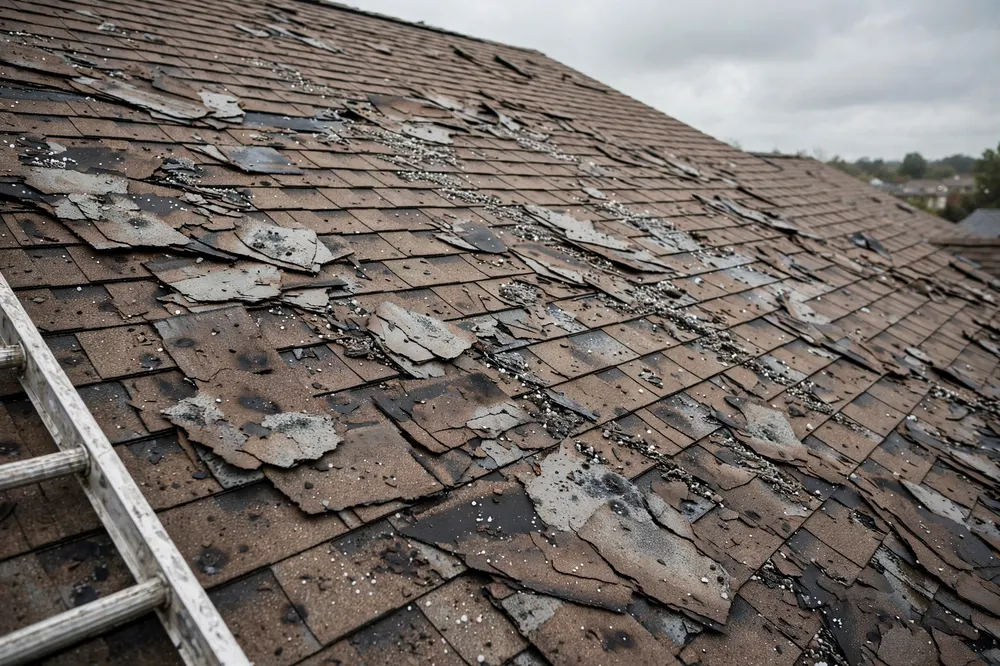
Colorado's foothills sit under both regimes at once — the WUI and the hail corridor overlap across the Front Range's western side — and the specification must answer both. The materials shortlist conveniently converges: Class 4 impact-resistant asphalt shingles on a Class A assembly satisfy both masters in one product line; standing seam metal is non-combustible, ember-shedding and hail-denting-but-sound; concrete tile resists embers superbly and small hail well, with breakage under the largest stones as its known hail cost. Wood shake fails both examinations at once — flammable and hail-fragile — which is why the state's legacy shake roofs are being replaced out of both conversations simultaneously.
Insurers sit at the same intersection, pricing WUI fire risk and hail risk into the same policy, sometimes with mitigation credits on both axes. A replacement argued in both languages — impact class and fire class, with the vent and eave details documented — is the strongest insurance conversation a foothills homeowner can have, and increasingly the one underwriters ask for by name.
Maintenance As Fire Defence
In fire country, roof maintenance acquires a second meaning: the same gutters cleared of granules and leaves for drainage are cleared of ember fuel; the valley swept for the inspection is swept of the needle drifts that host firebrands; the overhanging branch trimmed for the roof's sake is trimmed for the fire's. The defensible-space discipline around the house — the non-combustible margin, the managed vegetation zones — extends onto the roof's surfaces and into its openings, and the annual inspection in WUI country should carry a fire pass alongside the hail pass: vents' mesh intact, eaves enclosed and sealed, debris gone, the covering's class documented.
This is not a counsel of anxiety; foothills residents live with the fire calendar the way plains residents live with the hail calendar, as a known season with known preparations. The roof file in fire country simply gains a column: the fire specification, the mitigation photographs, the dates the details were verified. Insurers increasingly ask; the prepared homeowner answers from the file.
Replacing A Roof In The WUI
The replacement brief in the interface writes itself: Class A assembly as the floor, not the upgrade; impact class argued from the county's hail record; vents and eaves detailed to ember standards; metal flashings and enclosed edges; and the whole specification priced against the insurer's mitigation schedule as well as the roofer's quote. HOA and county WUI codes may mandate parts of it — discoverable before the quote, not at the permit desk. Where a legacy shake roof is being retired, expect the deck and assembly conversation to be part of the scope, since the rating lives in the system.
And keep the two-opponent file: the hail documentation this site teaches, beside the fire specification and mitigation record, in one folder. A foothills roof lives a double life in two kinds of weather. Its paperwork should be as bilingual as its specification.
A Class A fire rating is the highest fire-resistance class for roof coverings — the rating wildfire-zone building codes ask for. Cedar shake splits along the grain under big hail, and split shakes leak from the first rain that follows. Attic ventilation decides how fast a wet roof deck dries after a leak — and how much heat and ice trouble a roof sees in winter. The insurance adjuster who climbs your roof works from the same test squares and photos, which is why meeting them with documentation ready matters. HOA roofing rules in many Colorado communities dictate shingle class, colour and even material — worth checking before the claim, not after the tear-off.
Hail Damage Roof Help In Your City
Every topic in this guide lands on a real roof somewhere — city pages with their own hail records, housing data and local pros:
Roofing In Wildfire Zones — Questions Homeowners Ask
Embers, Class A ratings and the hail-versus-fire specification puzzle.
Still Have Questions? Call Free
A real person answers 24/7 and connects you with a local pro who can check your roof.
📞 (800) 555-0100Reviewed By Hamza
Lead Roofing & Storm Restoration Specialist
Hamza is an exterior restoration specialist with deep expertise in hail damage assessment, storm-related leak diagnostics, and impact-resistant roofing installations across high-altitude and severe-weather climates. He works directly with homeowners to identify hidden structural bruising and ensure long-lasting, code-compliant roof repairs.
Updated October 26, 2026
Guides From The Blog
The WUI roof's two neighbours: the venting that must exclude embers, and the metal that answers both threats.
Roof In The Foothills Or Mountains?
Its specification is a two-opponent problem — hail and embers. One free call books an inspection that reads the roof for both.
📞 Call (800) 555-0100Free Call · Answered 24/7 · Local Pros Near You