
Shingle Roof Repair After Hail: What A Pro Actually Fixes
In This Guide
Quick Answer
Shingle repair after hail means replacing the shingles the storm functionally damaged — cracked, split and bruised beyond service — woven into the slope so the repair sheds water like the original roof. Whether that is six shingles or six slopes is decided by the test-square counts. This guide covers how shingle damage is judged, how the repair is actually done, and the matching problem nobody warns you about.
How Shingle Hail Damage Is Judged
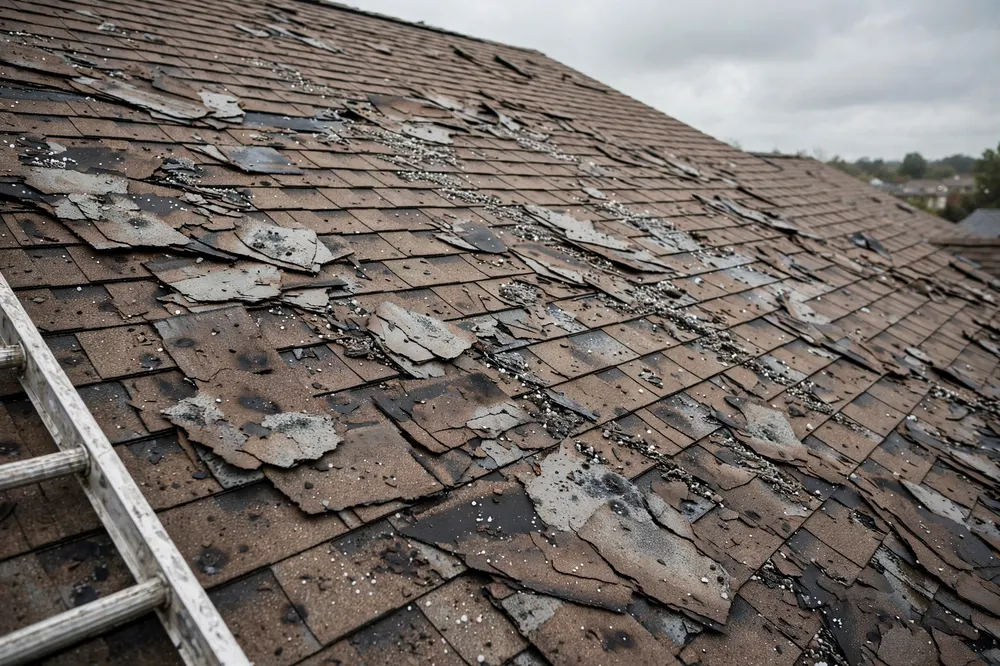
A shingle is damaged, for repair purposes, when hail has compromised its job: the mat is fractured (felt by hand as a soft, spongy bruise), the surface is split or cracked through, or granule loss has exposed asphalt that will now cook in the sun. Scuffs and marks that touch none of those are weather, not damage. The test square turns that judgement into numbers — hits per 100 square feet, per slope — and the numbers scope the repair.
Age referees every close call. A new architectural shingle flexes and absorbs; a fifteen-year-old shingle has lost its oils and cracks under stones a young roof shrugs off. That is why two neighbours under one storm get different scopes, and why 'their roof was fine' is no evidence about yours. The count is per-roof, per-slope, every time.
The Repair, Course By Course
Replacing shingles properly is weaving, not patching. The damaged shingles and the course above them are carefully lifted, nails drawn, the failed shingles slid out and new ones slid in, nailed on the line and the lifted courses re-sealed. Done right, the slope's water path is restored exactly: every lap sheds onto the course below, no exposed fasteners, no reversed overlaps. Done wrong — face-nailed, smeared with cement — the patch becomes the next leak's address.
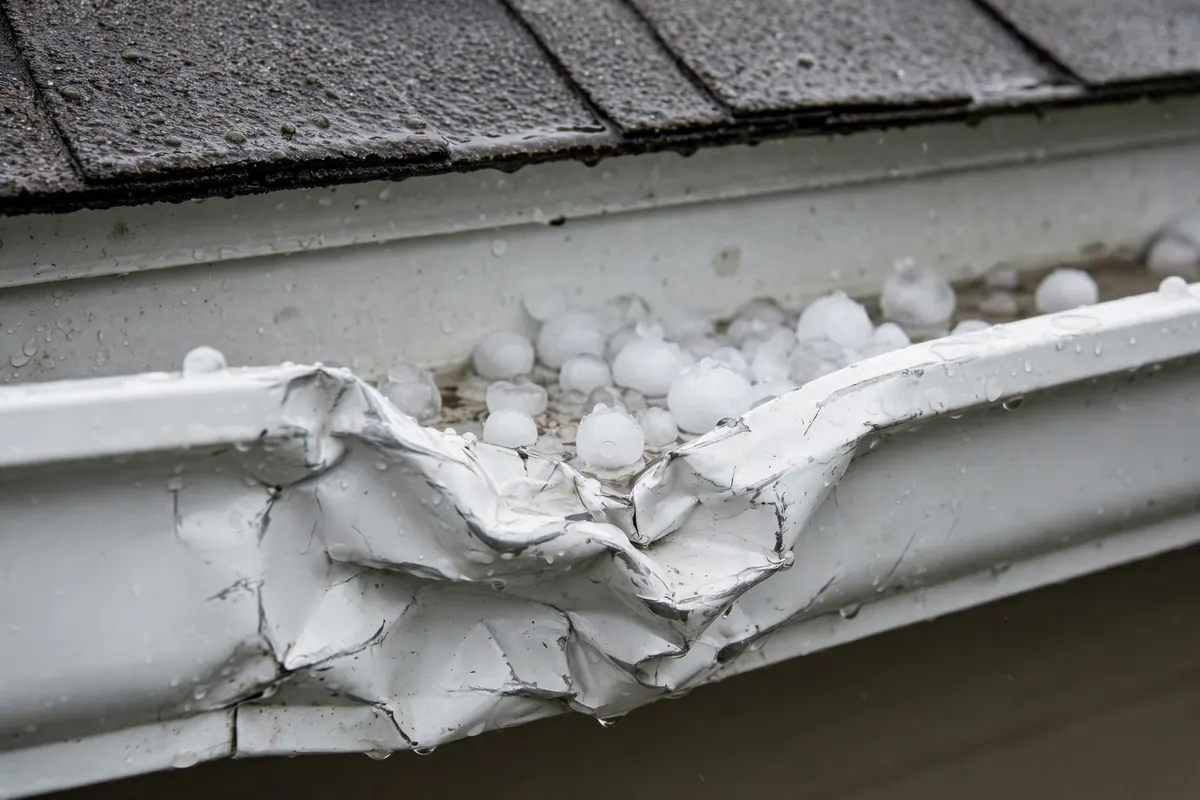
Around the shingles, the same visit handles what the storm hurt nearby: split boots swapped, creased flashing replaced, ridge caps renewed where they cracked. A shingle repair scoped only to the visible tabs, ignoring the boot that split in the same storm, is half a repair — and the half that leaks is the half that was left.
The Matching Problem
New shingles do not match weathered ones — not in colour, which fades and granulates differently over years, and sometimes not in size or profile, since manufacturers revise lines. On a back slope nobody sees, that is a footnote. On the front elevation of the house, a woven repair can read as a chequerboard. Honest pros raise this before the work: insurers have their own rules about matching, and where matching is impossible the scope discussion may widen to the slope — the visible, uniform unit.
What you should not accept is the reverse: a whole roof demanded on matching grounds alone, without the counts to support functional damage. Matching is a legitimate scope argument built on top of real damage; it is not a substitute for it. Photographs of the slope in daylight, before and after a sample repair, settle most arguments better than adjectives do.
Not Sure What Your Gutters Need?
One free call connects you with a local pro who can look at the whole roof edge — gutters, flashing and shingles — and tell you honestly what is worth fixing.
📞 Call (800) 555-0100Free Call · Answered 24/7 · Local Pros Near You
Three-Tab, Architectural And Class 4: Repair Differences
Three-tab shingles — the thin, flat, older standard — crack most readily and repair least gracefully: their tabs tear at the keyways, and brittle old three-tab can break faster than it can be woven. Architectural (dimensional) shingles, thicker and laminated, take more hail and repair more cleanly, though their bruises hide better and demand the hand-check. The replacement choice after a repair is where Class 4 impact-resistant shingles enter: same woven repair, upgraded material.
Where a slope is being substantially rebuilt anyway, ask for the Class 4 price difference on that scope. The UL 2218 Class 4 rating is the top impact grade, some insurers discount premiums for it, and in Hail Alley the next storm is a scheduling question, not a possibility. Upgrading within a repair is the cheapest moment to buy that resilience.
When Repair Is The Wrong Answer
Repair is wrong when the counts say the slope is finished: functional hits throughout the test squares, granule loss across the field, a roof already at the end of its service life. Weaving forty shingles into a dying slope buys months, not years, and spends claim-window time doing it. It is also wrong when decking is soft — new shingles over rotten deck are a photograph, not a roof.
The discipline runs both ways, and it is the same discipline: counts first, then scope. A pro who recommends replacement shows you squares that justify it; a pro who recommends repair shows you the same squares. Either recommendation, evidenced, is professional. The recommendation that arrives before the ladder does is neither.
After The Repair: Records And Watches
Keep the repair's paperwork with the claim file: what was replaced, where, the photographs before and after, and the product installed — future inspections, claims and buyers all read that file. Then watch the repair the way you watch any roof: ceilings after the first hard rains, the attic in the next thaw. A woven repair that sheds its first storm season cleanly has declared itself; most do.
And reset the inspection rhythm. A repaired roof re-enters the annual cycle like any other — spring check, post-storm check — with the repair areas on the watch list. Hail country roofs are not maintained by single heroic interventions; they are maintained by a calendar and a camera, which is the unglamorous moral of every guide on this site.
3-tab shingles, still found on some older Colorado homes, barns and sheds, are the thinnest covering in common use and the first to split under hail. Granules are the roof's sunscreen; once hail knocks them loose in quantity, the asphalt beneath ages in fast-forward. A pipe boot's rubber seal cracks with age and UV, hail speeds the cracking, and a split boot is a classic slow leak that stains ceilings months later. The insurance adjuster who climbs your roof works from the same test squares and photos, which is why meeting them with documentation ready matters. Every policy sets a filing window — often a year or two from the storm date — and hail found after it closes is usually the owner's bill.
Hail Damage Roof Help In Your City
Every topic in this guide lands on a real roof somewhere — city pages with their own hail records, housing data and local pros:
Shingle Roof Repair — Questions Homeowners Ask
Shingle repair, from the count to the colour match.
Still Have Questions? Call Free
A real person answers 24/7 and connects you with a local pro who can check your roof.
📞 (800) 555-0100Reviewed By Hamza
Lead Roofing & Storm Restoration Specialist
Hamza is an exterior restoration specialist with deep expertise in hail damage assessment, storm-related leak diagnostics, and impact-resistant roofing installations across high-altitude and severe-weather climates. He works directly with homeowners to identify hidden structural bruising and ensure long-lasting, code-compliant roof repairs.
Updated October 26, 2026
Guides From The Blog
The shingle's neighbours in the storm: the metal roof comparison, and the inspection that counts the hits.
Shingles Cracked By Hail?
One free call books the count. If the repair is small, you will be told so — with the photographs to prove what 'small' means on your roof.
📞 Call (800) 555-0100Free Call · Answered 24/7 · Local Pros Near You