
Soft Or Rotted Decking: What It Means For Your Repair Or Claim
In This Guide
Quick Answer
Decking is the wooden skin under your shingles — plywood or OSB nailed to the rafters — and it fails quietly: long moisture from leaks and backed-up water rots it soft, hail-side damage lets the water in, and nobody sees it until a foot goes spongy on the roof or the tear-off exposes it. Soft decking cannot hold nails, cannot be roofed over honestly, and is replaced sheet by sheet during re-roofing. This guide explains the causes, the detection, and the claim's treatment of deck rot.
What The Deck Is And Does
Strip a roof to its bones and the deck is the continuous wooden surface — plywood or oriented strand board (OSB) sheets, sometimes plank boards on older Colorado homes — nailed across the rafters. Everything above it depends on it: shingles nail into it, underlayment lies on it, and the roof's wind resistance is, mechanically, the grip of thousands of nails in that wood. It is structure and substrate in one, and it has a single mortal enemy: sustained moisture.
Sound decking is firm underfoot, holds a nail against withdrawal, and presents a clean, dry face to the attic. The deck's condition is therefore inspected twice in a roof's life: indirectly, by the feel of the roof under an inspector's feet and the attic's view of its underside; and directly, once, at tear-off — the only moment in decades when the whole surface is visible. What that moment reveals drives many a scope.
How Decking Rots: The Moisture Diary
Rot is fungal digestion of wet wood, and roofs feed it from a short menu: chronic leaks at boots, flashing and valleys that wet the same boards for seasons; ice-dam meltwater backing under eaves and soaking the deck edge winter after winter; attic condensation from failed ventilation dripping and dampening the underside; and hail-opened damage whose slow leaks were painted over indoors instead of traced. Each source writes in the same place — the board goes dark, softens, delaminates (OSB swells and flakes at its edges), and finally offers a foot no resistance at all.
The geography is diagnostic. Rot at the eaves tells the ice story; rot around a penetration tells the boot story; a soft valley line tells the flashing story. A roofer reading the deck at tear-off is reading the old roof's leak history in wood, and the new roof's details get adjusted accordingly — the cricket widened, the membrane extended, the boot changed for a better design.
Finding It Before The Tear-Off
The inspector's foot is the first instrument: a sound roof feels uniformly firm, and soft spots announce themselves as a give between rafters, often near eaves, valleys and penetrations. From the attic, the underside shows the earlier chapters — water staining, darkened board, daylight at failures, insulation matted where it has been repeatedly wet. A roof can carry localised deck rot for years under intact-looking shingles; the covering's job is shedding water, and it can look respectable while the substrate beneath one valley quietly turns to compost.
Homeowners get two ground-level clues: a visible sag or ripple in a slope's line (the deck no longer holding its plane) and the leak history — any leak that ran for more than a season has been watering something. Both belong in the inspection request, because they tell the inspector where to press.
Not Sure What Your Gutters Need?
One free call connects you with a local pro who can look at the whole roof edge — gutters, flashing and shingles — and tell you honestly what is worth fixing.
📞 Call (800) 555-0100Free Call · Answered 24/7 · Local Pros Near You
At The Tear-Off: The Moment Of Truth
Replacement day opens the roof, and the deck gets its audit: every sheet walked, pressed and photographed. The standard is unforgiving because the mechanics are — shingles cannot be nailed to rot and hold in a Colorado wind, and no honest roofer covers soft wood and warrants the result. Failed sheets come out and new ones go in, cut to the rafters, before underlayment is laid. It is fast, unglamorous work, and it is the main reason replacement quotes carry a per-sheet decking price agreed in advance: nobody can count the bad sheets until the roof is open, so the unit price is contracted and the quantity is photographed.
For the homeowner, the photographs are the relationship's safeguard: before-and-after of every replaced area, filed with the claim. Rot 'found' without photographs is a story; rot photographed is a scope item — for you, for the insurer, and for the next person who ever questions the job.
Decking And The Insurance Claim
The claim treatment follows the cause. Decking rotted by water that entered through storm damage — the hail-opened valley, the storm-split boot whose leak ran — belongs to the claim's scope as resulting damage, normally by supplement when discovered at tear-off, evidenced by the photographs and the rot's location matching the storm's water path. Decking rotted by age-long maintenance failures — a boot that split in 2016 and leaked for a decade — is the owner's maintenance history, and no storm claim honestly absorbs it. The line is causation, and the deck's own geography usually testifies clearly about which side a given soft sheet sits on.
Either way, the work is identical and unavoidable: the sheet is replaced as part of the re-roof, priced at the contracted unit rate. The claim conversation is about who pays, and it goes best when the photographs were taken before the sheet hit the dumpster — one more instalment of this site's single doctrine: document at the moment of visibility.
Preventing The Next Rot
Deck rot is slow, which makes it preventable at several points: leaks traced and repaired at the source rather than repainted at the ceiling; boots and flashing renewed on the inspection's schedule; ice-and-water shield at eaves and valleys so meltwater meets a membrane, not bare wood; ventilation kept working so the attic's underside stays dry; and gutters maintained so eave overflow stops soaking the deck edge. Each item is small; collectively they are the difference between a deck that serves three roofs and one that serves one and a half.
At replacement, protect the investment the same way: insist the deck audit is part of the job's documentation — photographs of the prepared deck before the underlayment hides it, and the replaced sheets' count agreed against the unit price. The deck is the roof you never see. Govern it by records, since you cannot govern it by looking.
A pipe boot's rubber seal cracks with age and UV, hail speeds the cracking, and a split boot is a classic slow leak that stains ceilings months later. The insurance adjuster who climbs your roof works from the same test squares and photos, which is why meeting them with documentation ready matters. Synthetic underlayment, the modern tear-resistant layer under the shingles, goes down fresh at every replacement; the storm-torn layer is never reused.
Hail Damage Roof Help In Your City
Every topic in this guide lands on a real roof somewhere — city pages with their own hail records, housing data and local pros:
Soft And Rotted Roof Decking — Questions Homeowners Ask
Under the shingles: the deck's quiet failures and loud consequences.
Still Have Questions? Call Free
A real person answers 24/7 and connects you with a local pro who can check your roof.
📞 (800) 555-0100Reviewed By Hamza
Lead Roofing & Storm Restoration Specialist
Hamza is an exterior restoration specialist with deep expertise in hail damage assessment, storm-related leak diagnostics, and impact-resistant roofing installations across high-altitude and severe-weather climates. He works directly with homeowners to identify hidden structural bruising and ensure long-lasting, code-compliant roof repairs.
Updated October 26, 2026
Guides From The Blog
The deck's context: the leaks that rot it, and the supplement that pays to fix it.
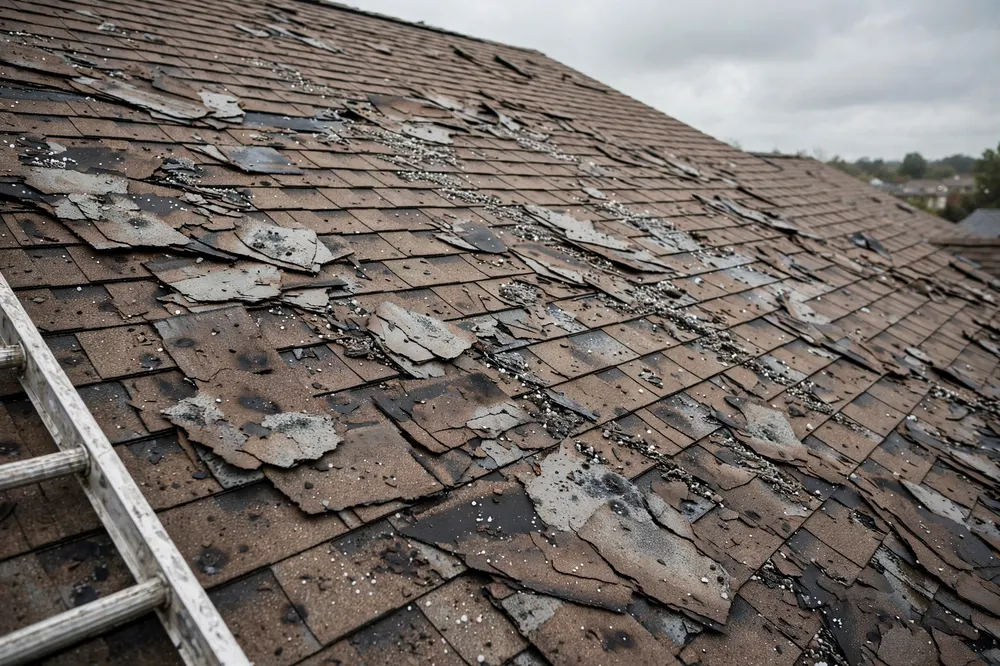
Spongy Feel Underfoot Up There?
Decking is assessed during a proper inspection and fully at tear-off. One free call starts the process with the roof above it counted honestly.
📞 Call (800) 555-0100Free Call · Answered 24/7 · Local Pros Near You